



| HEADLINE |

|
BB to announce Cautious Monetary Policy on Tuesday
Published : Monday, 29 June, 2026 at 7:35 PM
Observer Online Report


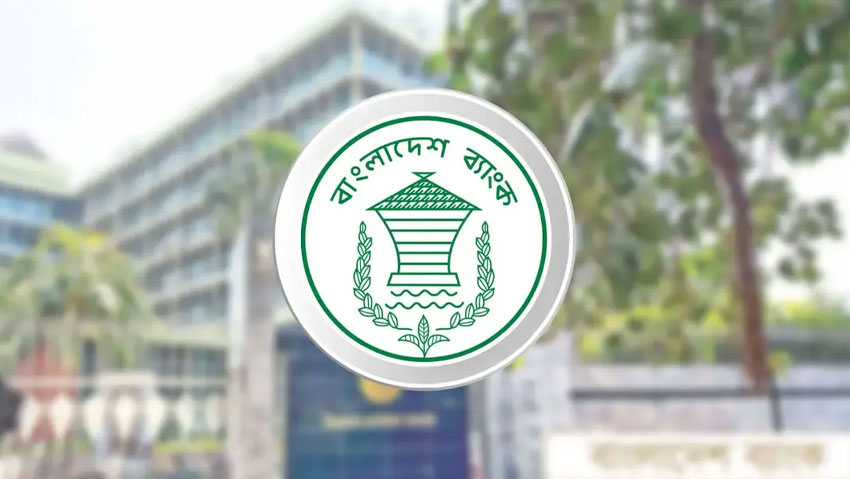
Bangladesh Bank is set to announce a cautious monetary policy on Tuesday for the first half of the 2026-27 fiscal year, aiming to balance inflation control with the need to sustain investment and economic activity.
Governor Md. Mostakur Rahman will unveil the new monetary policy statement at 3 PM, marking his first policy announcement as well as the first under the current BNP-led government. The central bank’s board has already approved the framework.
Officials said the policy is likely to keep the key policy interest rate unchanged, reflecting the central bank’s continued focus on curbing inflation while avoiding further pressure on credit growth and investment.
At the same time, policymakers have warned that liquidity expansion, driven by government stimulus measures, sectoral support, and foreign exchange reserve management through dollar purchases, could add new inflationary pressures. Recent inflation trends have also prompted a cautious stance.
Bangladesh Bank typically announces its monetary policy twice a year, outlining targets for money supply, domestic credit, and external assets to maintain a balance between price stability and economic growth.
In the national budget for the next fiscal year, the government has set a target to reduce average inflation to 7.5% while achieving 6.5% GDP growth. The central bank is expected to align its inflation target with the same level, although current inflation remains significantly higher.
According to Bangladesh Bureau of Statistics data, point-to-point inflation rose to 9.42% in May, with food inflation at 9.06% and non-food inflation at 9.71%.
Earlier, Bangladesh Bank raised the repo rate by 50 basis points to 10% in October 2024. However, in the current monetary framework, the standing lending facility rate remains at 11.50% while the standing deposit facility rate has been reduced to 7.5% and is expected to remain unchanged.
Private sector credit growth has remained weak, falling to a historic low of 4.72% in March, well below the annual target of 8 percent. Economists and bankers attribute the slowdown to weak investment sentiment, business uncertainty, and structural constraints including energy shortages.
Officials noted that although political uncertainty has eased after recent developments, underlying structural challenges continue to hinder investment and business expansion.
TZ
Governor Md. Mostakur Rahman will unveil the new monetary policy statement at 3 PM, marking his first policy announcement as well as the first under the current BNP-led government. The central bank’s board has already approved the framework.
Officials said the policy is likely to keep the key policy interest rate unchanged, reflecting the central bank’s continued focus on curbing inflation while avoiding further pressure on credit growth and investment.
At the same time, policymakers have warned that liquidity expansion, driven by government stimulus measures, sectoral support, and foreign exchange reserve management through dollar purchases, could add new inflationary pressures. Recent inflation trends have also prompted a cautious stance.
Bangladesh Bank typically announces its monetary policy twice a year, outlining targets for money supply, domestic credit, and external assets to maintain a balance between price stability and economic growth.
In the national budget for the next fiscal year, the government has set a target to reduce average inflation to 7.5% while achieving 6.5% GDP growth. The central bank is expected to align its inflation target with the same level, although current inflation remains significantly higher.
According to Bangladesh Bureau of Statistics data, point-to-point inflation rose to 9.42% in May, with food inflation at 9.06% and non-food inflation at 9.71%.
Earlier, Bangladesh Bank raised the repo rate by 50 basis points to 10% in October 2024. However, in the current monetary framework, the standing lending facility rate remains at 11.50% while the standing deposit facility rate has been reduced to 7.5% and is expected to remain unchanged.
Private sector credit growth has remained weak, falling to a historic low of 4.72% in March, well below the annual target of 8 percent. Economists and bankers attribute the slowdown to weak investment sentiment, business uncertainty, and structural constraints including energy shortages.
Officials noted that although political uncertainty has eased after recent developments, underlying structural challenges continue to hinder investment and business expansion.
TZ
Loading...
Loading...
Also read








Editor : Iqbal Sobhan Chowdhury
Published by the Editor on behalf of the Observer Ltd. from Globe Printers, 24/A, New Eskaton Road, Ramna, Dhaka.
Editorial, News and Commercial Offices : Aziz Bhaban (2nd floor), 93, Motijheel C/A, Dhaka-1000.
Phone: PABX- 41053001-06; Advertisement: 41053012; 01793317829, 01550707291, E-mail: [email protected], [email protected] Online: email: [email protected] 41053014; 01550707297 Advertisement: 01550707296
Published by the Editor on behalf of the Observer Ltd. from Globe Printers, 24/A, New Eskaton Road, Ramna, Dhaka.
Editorial, News and Commercial Offices : Aziz Bhaban (2nd floor), 93, Motijheel C/A, Dhaka-1000.
Phone: PABX- 41053001-06; Advertisement: 41053012; 01793317829, 01550707291, E-mail: [email protected], [email protected] Online: email: [email protected] 41053014; 01550707297 Advertisement: 01550707296


