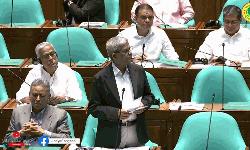
Opposition Leader Dr Shafiqur Rahman on Monday urged the government to allocate funds for Qawmi madrasah education in the proposed national budget, along with increased support for ibtedayi madrasahs and non-MPO private educational institutions.
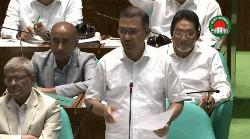
Speaking during the 18th day of the budget session in Parliament for FY2026-27, Dr Rahman said education must remain the “backbone of the nation” and called for comprehensive reforms to improve quality and global competitiveness.
He said Bangladesh’s education system is failing to meet international standards despite having a large number of public and private universities, adding that the absence of a clear national vision has contributed to declining academic performance.
The Opposition Leader noted that no specific allocation has been made for Qawmi madrasah education, despite its large student population. He said concerns among Qawmi institutions that government funding may undermine their autonomy could be addressed through dialogue with the Al-Haiatul Ulya Lil-Jamiatil Qawmia Bangladesh.
He suggested that the government engage with the apex Qawmi body to ensure that any support is provided in line with their guidance and preserving the system’s independence.
Dr Rahman also demanded that ibtedayi madrasahs and qualified non-MPO educational institutions be brought under the Monthly Pay Order (MPO) system without political considerations, through a transparent evaluation process conducted by an independent committee.
He said delaying MPO inclusion for eligible teachers for years amounted to injustice and called for swift resolution of pending cases.
The Opposition Leader further argued that while private education may exist for the affluent in developed countries, it is ultimately the state’s responsibility to ensure quality public education for all citizens.
He called for targeted investment in education, communication and healthcare for underprivileged communities in the hill tracts, saying such steps would help integrate them into the national mainstream.
Dr Rahman also proposed transforming at least five universities into research-focused institutions with special funding to strengthen innovation and reduce dependence on imports by building domestic production capacity.
TZ