



| HEADLINE |

|

How deep the Deep State's roots in Bangladesh?
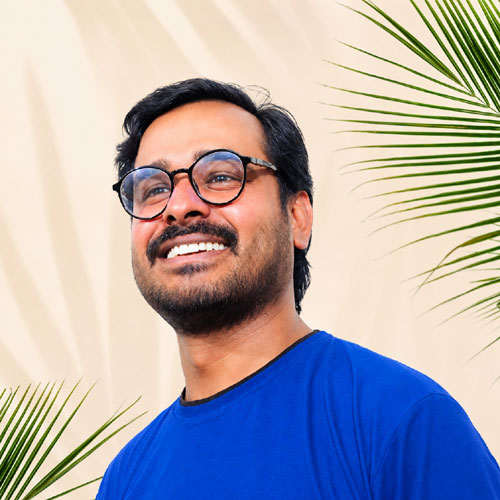


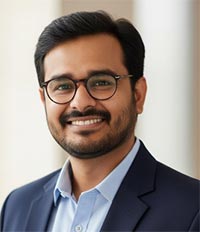 Since the fall of Sheikh Hasina's government on August 5, 2024, some in her party claimed that the student movement was an eyewash driven by a "deep state" working behind the scenes. Recently Asif Mahmud Shojib Bhuiyan, a former adviser to the interim government led by Professor Muhammad Yunus and spokesperson of the NCP, claimed that "deep state" offered them to remain in power until 2029. Mr. Asif, whether said it after drinking Frutika or made intentionally, his remark has only added fuel to a long-standing, unproven political assumption.
 Asif Mahmud's "deep state" claim within the Dr Yunus led interim government is nothing new. Former information adviser Mahfuz Alam, once described by Dr Yunus as the "mastermind" of "meticulously designed" July Uprising, alleged in a media interview that "Old Guards" used students to secure their interests, while Brigadier General (Retd.) M Sakhawat Hossain said that the government functioned through a "Kitchen Cabinet," with key decisions taken informally. In this framing, "Deep State," "Old Guards" and "Kitchen Cabinet" are seen as different labels for the same shadow power structure.
So, when a former statesmen, themselves alleged to be a product of that same "deep state," speak about its role, it becomes harder to dismiss. It reinforces the idea that the change was not driven only by street protests, but also shaped by a deeper intervention of invisible forces and international geopolitics.
From a conventional view, the "deep state" is described as a hidden network of actors, sometimes framed as foreign powers, elite groups such as the Vatican and the Jesuits, minority communities such as Jews, corporate society and central banks, as well as supranational secret organizations like Freemasons. It is seen as an unseen structure that shapes who comes to power, steers policy, and maintains influence through bureaucracy, intelligence, and military systems. Some argue that post colonial bureaucracies can also be drawn into this dynamic, where tensions between elected leadership and administration are used to advantage.
The term "deep state" is originate in Turkiye as Derin Devlet, tracing its roots to 1915 to 1920 when the Armenian Revolutionary Federation allegedly planned assassinations of Ottoman and Azerbaijani officials linked to the Armenian Genocide, shaping the idea of a hidden power structure. In modern narratives, it is attributed to David Rockefeller, who formed the Trilateral Commission in 1973 with 87 influential figures aiming at "New World Order," including Zbigniew Brzezinski (co founder and mentor to Barack Obama), Lucas Papadopoulos, and Mario Monti, alongside claims that figures such as Bush, Clinton, Dick Cheney, Al Gore, and World Bank presidents were connected to or influenced by it.
In 2014, former congressional aide Mike Lofgren argued that the Deep State is the red thread that runs through the war on terrorism, the financialization and deindustrialization of the economy, the rise of a plutocratic social structure and political dysfunction. The influential actors like the Council on Foreign Relations, Royal Institute of International Affairs, Bilderberg Group, CIA, MI6, and financial institutions such as the World Bank, IMF, and Bank for International Settlements place representatives or exert control to gain access to sensitive global information that can be used for leverage, while extending influence into military and defence ministries, maintaining ties with religious leaders, and potentially affecting the judiciary, including senior judges and attorney generals across countries.
Accounts citing former army chief Moeen U Ahmed claim Muhammad Yunus was initially considered for the post-1/11 caretaker role but declined a short term appointment, after which IMF linked and US based Fakhruddin Ahmed was appointed as Chief Adviser to the then interim government with Yunus's support. Besides, the Dr Yunus led administration has also been labelled "NGO-cratic" due to the presence of NGO linked figures in key positions. Another point to note is that during this period, IMF relations reportedly strengthened, though later donor conditions allegedly required an elected government, increasing pressure for elections. What do these reflect?
However, when asked about the "deep state" in Bangladesh, Asif Mahmud told Daily Prothom Alo that it involves "many parties, including foreign ones." Even if American CIA and FBI, Indian RAW, Israeli Mossad and Pakistani ISI are considered international influencers, the question remains who the local actors are. Recent media analyses suggest the Deep State in Bangladesh mainly consists of high ranking military generals, influential civil bureaucracy leaders, and key agencies such as DGFI and NSI. Outside this core, it also includes a class of intellectuals, journalists, and some elite businessmen. But one thing is definite that its international mentors or masters are involved with the Deep State.
Within this interpretation, Bangladesh is seen as a contested geopolitical space where major powers including the United States, India, China and Russia compete through intelligence influence, policy engagement and soft power, using instruments such as finance, media, civil society and proxy actors.
Attention has also been drawn to a Dhaka meeting between Open Society Foundations' Alex Soros and Muhammad Yunus, while in Indian BJP leaders, following allegations involving Gautam Adani, accused the US State Department, OCCRP, George Soros and Rahul Gandhi of coordinated destabilisation efforts.
In a related perspective, Trevor Aronson's 'The Terror Factory' argues that US agencies such as the FBI and CIA operate through or with intelligence agencies of all countries of the world to manufacture terrorists in the name of counterterrorism. He also claimed that they invent various things and incite wars, internal conflicts, and social unrest between different countries. Many recent narratives extend the concept globally to claim that the United States has been linked to regime change and instability in countries including Guatemala, Indonesia, Chile, Iraq, Libya, Ukraine, Iran, Afghanistan, Venezuela and Nepal.
Returning to focal point, Asif also alleged that the Deep State had set strategies to sideline BNP Chairperson and current Bangladesh Prime Minister Tarique Rahman without overturning his convictions, which is relatable to the post-1/11 "minus two formula." The 1/11 refers to 11 January 2007, when a military backed interim government took power, which some view as the beginning of a parallel military bureaucratic power structure often with a "deep state" narrative.
The narrative also recalls claims that after winning Nobel Prize in 2006, Dr. Yunus attempted to form a political platform called 'Nagorik Shakti', which ultimately failed, and is said by some to be linked to the "minus two formula." The post Uprising youth led political party NCP also uses the term "Shakti" across its affiliated wings, including Chhatra Shakti, Juba Shakti, and Nari Shakti. This has raised questions about possible links among "deep state" agencies, Professor Yunus, and the NCP.
Besides, the Non-Disclosure Agreement (NDA) with the USA just before the interim government's power transfer has further intensified allegations of deep state influence.
According to conspiracy theories, if the "Deep State" reflects the agenda of 'Secret Society', then its roots are portrayed as deep, its goals far reaching, and its methods as part of a well scripted plan hidden behind flow of events, allegedly pushing the world toward a "New World Order." Whatsoever, the concept of the "deep state" in Bangladesh is, on the one hand, an analysis of political reality and, on the other, an expression of concern about the power structure. It is not a fictional conspiracy theory but a perceived presence of influential unelected groups within the state that may hinder democratic process.
The writer is a journalist at The Daily Observer and a lawyer

Loading...
Loading...
Also read



Editor : Iqbal Sobhan Chowdhury
Published by the Editor on behalf of the Observer Ltd. from Globe Printers, 24/A, New Eskaton Road, Ramna, Dhaka.
Editorial, News and Commercial Offices : Aziz Bhaban (2nd floor), 93, Motijheel C/A, Dhaka-1000.
Phone: PABX- 41053001-06; Advertisement: 41053012; 01793317829, 01550707291, E-mail: [email protected], [email protected] Online: email: [email protected] 41053014; 01550707297 Advertisement: 01550707296
Published by the Editor on behalf of the Observer Ltd. from Globe Printers, 24/A, New Eskaton Road, Ramna, Dhaka.
Editorial, News and Commercial Offices : Aziz Bhaban (2nd floor), 93, Motijheel C/A, Dhaka-1000.
Phone: PABX- 41053001-06; Advertisement: 41053012; 01793317829, 01550707291, E-mail: [email protected], [email protected] Online: email: [email protected] 41053014; 01550707297 Advertisement: 01550707296


