



| HEADLINE |

|
Country’s merchandise exports drop nearly 20pc in March
Published : Thursday, 2 April, 2026 at 8:38 PM
Observer Online Report


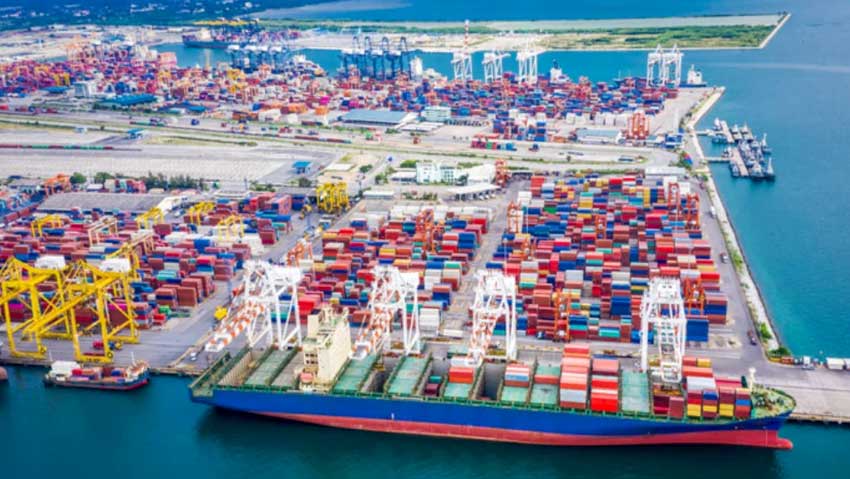
Bangladesh’s merchandise export earnings fell sharply in March, declining 19.78 percent year-on-year, as a combination of fewer working days, weakening global demand and domestic production constraints weighed on shipments.
Provisional data from National Board of Revenue (NBR) showed that the country exported goods worth $3.39 billion in March, down from $4.23 billion in the same month last year. Export volume stood at around 420 million kilograms.
Industry insiders partly attributed the decline to the Eid-ul-Fitr holidays, which reduced effective working days by 8�"10 days, limiting shipments.
However, they noted that broader global factors had a more significant impact, including subdued demand in key Western markets and intensified price competition.
Retaliatory tariffs in the United States have led to a drop in orders from American buyers, while Chinese exporters, redirecting shipments from the US, are offering lower prices in European markets, putting Bangladeshi products under additional pressure.
The latest figures reflect a continued slowdown in the 2025�"26 fiscal year. After posting about 25 percent growth in July, export performance has weakened almost every month since. In February, earnings were $3.50 billion, a marginal 0.50 percent decline year-on-year.
The ready-made garment (RMG) sector, which accounts for over 80 percent of Bangladesh’s export earnings, has been particularly affected, recording consecutive declines for seven months from August to February.
Mohammad Hatem, president of Bangladesh Knitwear Manufacturers and Exporters Association (BKMEA), described the situation as a “perfect storm” of global and domestic challenges.
He highlighted declining orders from the US and EU due to retaliatory tariffs and noted that ongoing tensions in the Middle East are further affecting prospects for recovery.
Hatem also pointed to domestic bottlenecks, including diesel shortages impacting factory operations, and urged the government to ensure uninterrupted fuel and energy supplies to sustain industrial production.
The NBR figures are based on customs data and include actual exports, sample exports, and deemed exports (raw materials supplied to export-oriented industries).
The Export Promotion Bureau (EPB) has yet to release its official monthly export data.
SH
Provisional data from National Board of Revenue (NBR) showed that the country exported goods worth $3.39 billion in March, down from $4.23 billion in the same month last year. Export volume stood at around 420 million kilograms.
Industry insiders partly attributed the decline to the Eid-ul-Fitr holidays, which reduced effective working days by 8�"10 days, limiting shipments.
However, they noted that broader global factors had a more significant impact, including subdued demand in key Western markets and intensified price competition.
Retaliatory tariffs in the United States have led to a drop in orders from American buyers, while Chinese exporters, redirecting shipments from the US, are offering lower prices in European markets, putting Bangladeshi products under additional pressure.
The latest figures reflect a continued slowdown in the 2025�"26 fiscal year. After posting about 25 percent growth in July, export performance has weakened almost every month since. In February, earnings were $3.50 billion, a marginal 0.50 percent decline year-on-year.
The ready-made garment (RMG) sector, which accounts for over 80 percent of Bangladesh’s export earnings, has been particularly affected, recording consecutive declines for seven months from August to February.
Mohammad Hatem, president of Bangladesh Knitwear Manufacturers and Exporters Association (BKMEA), described the situation as a “perfect storm” of global and domestic challenges.
He highlighted declining orders from the US and EU due to retaliatory tariffs and noted that ongoing tensions in the Middle East are further affecting prospects for recovery.
Hatem also pointed to domestic bottlenecks, including diesel shortages impacting factory operations, and urged the government to ensure uninterrupted fuel and energy supplies to sustain industrial production.
The NBR figures are based on customs data and include actual exports, sample exports, and deemed exports (raw materials supplied to export-oriented industries).
The Export Promotion Bureau (EPB) has yet to release its official monthly export data.
SH
Loading...
Loading...
Also read








Editor : Iqbal Sobhan Chowdhury
Published by the Editor on behalf of the Observer Ltd. from Globe Printers, 24/A, New Eskaton Road, Ramna, Dhaka.
Editorial, News and Commercial Offices : Aziz Bhaban (2nd floor), 93, Motijheel C/A, Dhaka-1000.
Phone: PABX- 41053001-06; Advertisement: 41053012; 01793317829, 01550707291, E-mail: [email protected], [email protected] Online: email: [email protected] 41053014; 01550707297 Advertisement: 01550707296
Published by the Editor on behalf of the Observer Ltd. from Globe Printers, 24/A, New Eskaton Road, Ramna, Dhaka.
Editorial, News and Commercial Offices : Aziz Bhaban (2nd floor), 93, Motijheel C/A, Dhaka-1000.
Phone: PABX- 41053001-06; Advertisement: 41053012; 01793317829, 01550707291, E-mail: [email protected], [email protected] Online: email: [email protected] 41053014; 01550707297 Advertisement: 01550707296


