



| HEADLINE |

|
Dhaka not yet ready for LDC graduation: Amir Khasru
Published : Monday, 6 April, 2026 at 12:00 AM
Business Correspondent


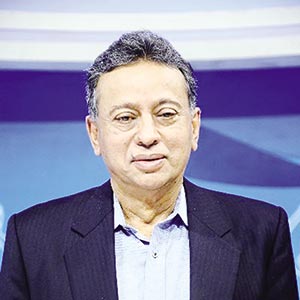 Despite fresh questions being raised about the country's goal of graduating from the Least Developed Country (LDC) list in the current economic reality, Finance and Planning Minister Amir Khasru Mahmud Chowdhury has said that the country is not yet fully prepared to achieve that goal.
It is not just the fuel crisis, it is affecting all types of goods, food items and the entire supply system. As a result, there is no doubt that prices of commodities will increase in the coming days, he said.
He said this while talking to reporters after a multilateral consultation meeting held at the NEC Conference Room in Sher-e-Bangla Nagar on Sunday.
The UN agency UN OHRLLS has completed an independent assessment to review the country's graduation readiness, the main points of which were presented in the meeting.
He said that the pressure of foreign and domestic debt, the risk of borrowing at high interest rates, and the weakness of overall financial management have become major challenges for the country.
Amir Khasru Mahmud Chowdhury said that the fuel crisis is not a problem of a single country; rather, it is an effect of the global situation. Oil prices have doubled in the United States, and have increased by about 25 per cent in Sri Lanka. But it has not been raised in Bangladesh yet, but it is not possible to say how long it will be possible.
He said that as an elected government, efforts are being made to keep the pressure on the people low. However, it may become difficult for the government to bear this pressure at some point. If government funds it difficult to manage, then ultimately its impact will be on the people. Therefore, a decision will be taken considering the reality of the matter.
The Minister said that the energy crisis and disruption of the global supply system could have a long-term impact on the country's economy. Its impact will not be limited to the energy sector, but will also affect the market of daily necessities including food, which will increase inflation.
He also said that the government does not want to suddenly create additional pressure on the people. But if expenditure from government funds continues, it will ultimately affect the people. Therefore, in the current situation, there is a need to take economic decisions very carefully, so that on the one hand the interests of the people can be protected and on the other hand the long-term stability of the economy can be ensured.
Describing the current situation as dealing with a daily crisis, the Minister said that almost all the indicators of the country's economy are downward. The government is now trying to revive the economy, but the pressure is increasing due to heavy subsidies in the energy sector, price increases in the global market and import dependence.
Stating that capacity building is the most important thing in overcoming the crisis, he said that the economy will be placed on a solid foundation through necessary reforms and skill development. He said that work is being done in coordination with specific policies in this regard.
The Minister also said that there is currently an opportunity to postpone the LDC transition process for some time and plans have been made to strengthen the fundamental indicators of the country's economy during this period. If the necessary reforms are implemented within the stipulated time, transition will become a realistic goal in the future.
Also present at the meeting were Minister of Foreign Affairs Dr Khalilur Rahman, Minister of Commerce Khandaker Abdul Muktadir, Adviser on Finance and Planning Dr Rashed Al Mahmud Titumir, Senior UN Official Rabab Fatima and Minister of State for Planning Mohammad Jonayed Abdur Rahim Saki.
Loading...
Loading...
Also read



Editor : Iqbal Sobhan Chowdhury
Published by the Editor on behalf of the Observer Ltd. from Globe Printers, 24/A, New Eskaton Road, Ramna, Dhaka.
Editorial, News and Commercial Offices : Aziz Bhaban (2nd floor), 93, Motijheel C/A, Dhaka-1000.
Phone: PABX- 41053001-06; Advertisement: 41053012; 01793317829, 01550707291, E-mail: [email protected], [email protected] Online: email: [email protected] 41053014; 01550707297 Advertisement: 01550707296
Published by the Editor on behalf of the Observer Ltd. from Globe Printers, 24/A, New Eskaton Road, Ramna, Dhaka.
Editorial, News and Commercial Offices : Aziz Bhaban (2nd floor), 93, Motijheel C/A, Dhaka-1000.
Phone: PABX- 41053001-06; Advertisement: 41053012; 01793317829, 01550707291, E-mail: [email protected], [email protected] Online: email: [email protected] 41053014; 01550707297 Advertisement: 01550707296


