The World Bank (WB) on Wednesday warned that Bangladesh’s economy faces mounting challenges, including slowing growth, rising poverty, persistent inflation and a stressed banking sector, all compounded by global uncertainties.
In its latest Bangladesh Development Update, the World Bank projected that economic growth will slow to 3.9% in FY2025-26, marking a third consecutive year of deceleration alongside rising poverty levels.
The report highlighted that ongoing conflict in the Middle East could further strain the economy through higher inflation, increased energy subsidy burdens and pressure on the current account driven by costlier imports, weaker exports and declining remittances.
“With thin foreign exchange buffers, tight fiscal and monetary conditions and a fragile banking sector, Bangladesh has limited capacity to absorb a prolonged shock and mitigate its impact on the population, particularly the most vulnerable,” the report said.
However, the World Bank noted that sustained political stability following the 2026 elections and rapid progress on structural reforms could support a stronger recovery.
The report underscores the urgent need for policy and institutional reforms to restore macroeconomic stability, boost revenues, strengthen the financial sector and improve the business environment to create jobs and ensure inclusive growth.
World Bank Division Director for Bangladesh and Bhutan, Jean Pesme, said resilience has underpinned Bangladesh’s growth story.
“But without decisive structural reformsâ€"particularly in revenue mobilisation, the financial sector, and the business environment; this resilience cannot last. Bold and immediate reforms will be essential to return to a more resilient and inclusive growth path and to create more and better-paid jobs,” he said.
The report noted that inflation remained high at 8.5% in FY26, with both food and non-food prices elevated. Wages for low-income workers have not kept pace with inflation, reducing their purchasing power.
Poverty rates also rose, with the national poverty rate increasing to 21.4% in 2025 from 18.7% in 2022, adding 1.4 million more poor people. Prior to the Middle East conflict, about 1.7 million people were projected to rise out of poverty in 2025; now only 0.5 million are expected to do so.
Financial sector vulnerabilities remain a concern. The non-performing loan ratio stood at 30.6% in December 2025, while aggregate capital adequacy fell below the regulatory minimum, leaving several banks with limited loss-absorbing capacity and highlighting the need for prompt action.
External sector pressures eased in FY25 and the first half of FY26, supported by strong remittances. The adoption of a more flexible exchange rate regime in mid-2025 helped stabilize the Taka and rebuild foreign exchange reserves.
However, exports remain vulnerable to external shocks, and foreign direct investment remains low. In FY25, Bangladesh’s tax-to-GDP ratio fell below 7% for the first time in 15 years, limiting government capacity to invest in priority sectors.
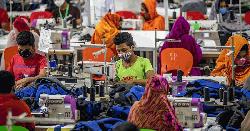
While a small group of large, export-oriented firms, such as those in the ready-made garments sector, have driven growth, most small and medium enterprises face high regulatory costs, unreliable infrastructure and limited access to finance.
The report recommends targeted deregulation, stronger competition policy, competitive neutrality for state-owned enterprises, streamlined trade policies, and improved electricity reliability as critical measures to support private-sector-led growth and job creation.
“Improving the business environment is central to sustaining growth and absorbing a rapidly expanding workforce,” said Dhruv Sharma, Senior Economist and lead author of the report. “Reducing regulatory uncertainty, offering targeted deregulation, strengthening competition, and easing constraints to firm growth will help unlock private investment and jobs.”
The Bangladesh Development Update is a companion piece to the South Asia Economic Update, the World Bank Group’s regional report examining economic prospects and policy priorities across South Asia, which was also released on Wednesday.
South Asia’s growth is expected to slow to 6.3% in 2026 from 7% in 2025 due to disruptions in global energy markets, with a projected recovery to 6.9% in 2027. Despite the near-term slowdown, South Asia continues to grow faster than other emerging-market and developing economies.
SH