



| HEADLINE |

|
REHAB Polls Set for High-Stakes Showdown Amid Intensifying Tax Squeeze
Published : Friday, 17 April, 2026 at 12:00 AM
Mizanur Rahman


 At a time when Bangladesh's real estate sector is struggling under sluggish sales and mounting pressure from rising taxes and registration costs, the biannual election of the Real Estate and Housing Association of Bangladesh (REHAB)-the apex body of developers-is set to take place on April 18, charged with unusual intensity and high expectations.
More than 613 members in Dhaka and 61 in Chattogram are expected to cast their votes to elect a 29-member executive body for the next two years, in what is shaping up to be one of the most closely contested elections in the organisation's recent history.
Three panels are in the fray, turning the election into a vibrant and highly competitive affair. Campaigning has gathered pace across the housing sector, with candidates engaging in door-to-door outreach, presenting policy agendas, development visions and reform pledges to woo voters. Meetings, seminars and promotional activities have infused REHAB circles with a palpable election fervour.
Industry insiders say this year's contest goes far beyond a routine leadership change. The outcome is expected to play a crucial role in shaping REHAB's future direction at a time when the housing sector faces deep structural challenges. A strong and credible leadership, they argue, could inject fresh dynamism into the sector and open new avenues to safeguard developers' interests.
Early assessments suggest that the 'Real Estate Businessmen's Unity Council' panel enjoys relatively strong backing among members. Led by the incumbent president and senior vice-president, the panel comprises several experienced and widely recognised figures within the organisation. Its promises-centred on improving the business climate, strengthening policy support and protecting member interests-have resonated positively with voters.
The panel has also pledged to prioritise the construction of a dedicated REHAB building.
Dr Harun Or Rashid has outlined an ambitious reform agenda, pledging to address the sector's pressing challenges through a phased implementation of 15 programmes. Plans include launching construction of a modern REHAB Training Institute on one bigha of land in Uttara, revising the Detailed Area Plan (DAP), updating regulatory frameworks, and resolving TDS-related complexities through closer government coordination.
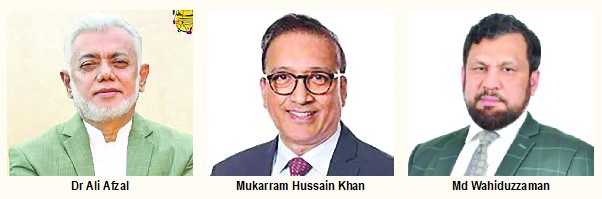
Meanwhile, the incumbent leadership-headed by President Md Wahiduzzaman and Senior Vice-President Liaquat Ali Bhuiyan-has presented a comprehensive panel, promising not only organisational management but also a stronger advocacy role in shaping national policy and addressing real business needs.
Adding further intrigue, the 14-member 'Jagran' panel, led by former REHAB president Mukarram Hussain Khan and current vice-president Engineer Abdul Latif, has also entered the race. Although it could not field a full slate, its participation has intensified competition and heightened the prospects of a closely fought contest.
Taken together, the election has generated a charged and competitive atmosphere, with members increasingly aware that their choice of leadership could prove decisive in steering the sector which is facing tough time for low sales and high taxes.
The stakes are particularly high as Bangladesh's housing sector continues to grapple with a heavy fiscal burden. Rising taxes and registration costs have dampened real estate activity, squeezed developer margins and eroded investor confidence-placing home ownership further beyond the reach of millions.
Industry leaders warn that the cumulative tax burden, now estimated at around 11.5 per cent on land and property transactions, is distorting market dynamics, inflating prices and undermining transparency. Without urgent reforms, they caution, the sector risks further slowdown with broader implications for investment and economic stability.
At a recent pre-budget consultation for the 2026-27 fiscal year at the National Board of Revenue (NBR), stakeholders reiterated calls for a rationalised tax structure. The Bangladesh Land Developers Association (BLDA) proposed reducing registration fees and taxes to a consolidated 6 per cent, arguing that a simplified regime would improve compliance, enhance transparency and boost revenue collection.
REHAB leaders also highlighted the burden of dual taxation-VAT on both construction and land development-which significantly raises project costs and is ultimately passed on to buyers.
Policymakers acknowledged the structural inefficiencies, noting that although sellers are formally responsible for certain costs, these are often transferred to buyers in practice.
Developers further argued that high transaction costs are fuelling widespread underreporting, as buyers seek to minimise tax liabilities by declaring lower property values-leading to revenue leakage and reduced fiscal efficiency.
To revive the sector, industry bodies have proposed a mix of fiscal incentives, including reduced taxes in the secondary market and targeted tax holidays to encourage development beyond Dhaka and ease pressure on urban housing demand.
Against this backdrop of economic strain and policy uncertainty, the REHAB election assumes critical importance. Sector insiders say a capable and forward-looking leadership could help restore investor confidence, push for meaningful reforms and reinvigorate one of Bangladesh's most vital economic sectors.
As voting day approaches, all eyes are now on whether the new leadership will be able to navigate the sector out of its current sluggish business trends-or whether the sector itself will deepen in the absence of decisive policy support.
Loading...
Loading...
Also read



Editor : Iqbal Sobhan Chowdhury
Published by the Editor on behalf of the Observer Ltd. from Globe Printers, 24/A, New Eskaton Road, Ramna, Dhaka.
Editorial, News and Commercial Offices : Aziz Bhaban (2nd floor), 93, Motijheel C/A, Dhaka-1000.
Phone: PABX- 41053001-06; Advertisement: 41053012; 01793317829, 01550707291, E-mail: [email protected], [email protected] Online: email: [email protected] 41053014; 01550707297 Advertisement: 01550707296
Published by the Editor on behalf of the Observer Ltd. from Globe Printers, 24/A, New Eskaton Road, Ramna, Dhaka.
Editorial, News and Commercial Offices : Aziz Bhaban (2nd floor), 93, Motijheel C/A, Dhaka-1000.
Phone: PABX- 41053001-06; Advertisement: 41053012; 01793317829, 01550707291, E-mail: [email protected], [email protected] Online: email: [email protected] 41053014; 01550707297 Advertisement: 01550707296


