



| HEADLINE |

|

Heatwaves deepen country's power crisis
Published : Friday, 24 April, 2026 at 12:00 AM
Md Shihab Uddin


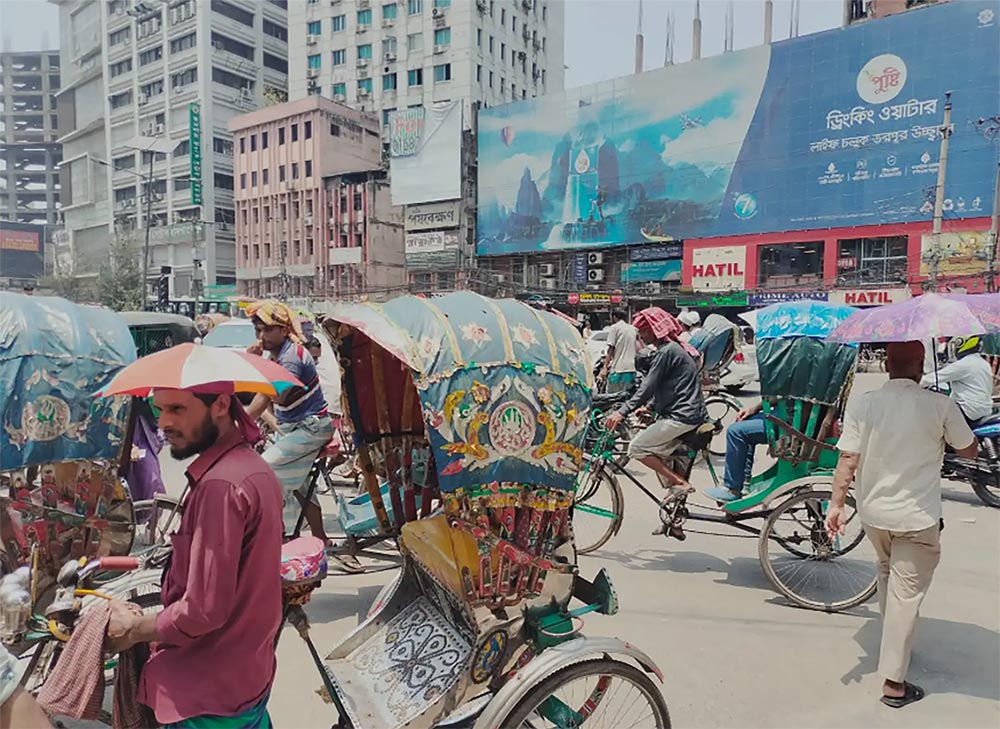 Over the last few years, whenever summer arrives, Bangladesh has been repeatedly struck by severe heatwaves. It has become almost unbearable to step outside during peak hours, and even staying indoors with fans or air conditioners running often provides little comfort. Now imagine the situation when electricity suddenly goes out in the middle of such suffocating heat. It is a reality many of us are now familiar with. While discussions on climate change often focus on floods, cyclones, or rising sea levels, its most immediate and silent impact is increasingly being felt in our power sector. A simple but striking pattern has emerged: severe heatwaves drive up electricity demand, which in turn leads to shortages and load shedding.
In normal weather conditions, electricity demand remains within a predictable range. However, during extreme heat in April, May, and June, this balance breaks down completely. To escape unbearable temperatures, air conditioners, fans, and cooling systems in homes, offices, and shops operate at full capacity. This is not limited to urban areas; rural electricity consumption has also increased significantly. Agriculture adds further pressure, as farmers rely heavily on irrigation pumps to protect crops from drying out. When all these demands combine, the national grid faces an unexpected and massive surge. A system that typically handles around 10,000 to 11,000 megawatts suddenly needs 16,000 to 17,000 megawatts or even more. The key question is whether the country has the immediate capacity to meet such sudden spikes.
Bangladesh has made remarkable progress in electricity generation over the past decade. Achieving near-universal electrification is a major national success, and installed generation capacity has exceeded 25,000 megawatts on paper. Yet, despite this progress, load shedding still occurs during peak summer months. The main reason lies in fuel dependency and supply instability. Most power plants rely on natural gas, coal, or furnace oil. However, domestic gas reserves are declining, forcing greater dependence on imported liquefied natural gas and coal. When global fuel prices rise or foreign currency shortages occur, imports become difficult. As a result, many power plants cannot operate at full capacity. Thus, while demand increases sharply due to heatwaves, supply often falls short due to fuel constraints, creating a critical gap that leads to load shedding.
The impact of this energy crisis extends far beyond temporary discomfort. It directly affects public health, education, industry, and agriculture. During extreme heat, power outages place children, the elderly, and vulnerable groups at serious risk of heatstroke and dehydration. Students struggle to study in unbearable conditions, and sleep deprivation reduces productivity in daily life and workplaces. Industrial sectors, especially garment factories, face significant disruptions. Many factories are forced to rely on costly backup generators, increasing production expenses and reducing global competitiveness. Agriculture also suffers when irrigation systems fail due to electricity shortages, threatening crop yields and, ultimately, food security.
Looking ahead, the situation is likely to become more challenging as climate change intensifies. Heatwaves are expected to grow longer, more frequent, and more severe. Despite Bangladesh's progress in power generation, its preparedness for climate-driven demand shocks remains insufficient. However, this crisis is not without solutions if addressed with urgency and planning.
First, a transition toward renewable energy is essential. Bangladesh still depends heavily on fossil fuels, which are both costly and environmentally harmful. Solar energy, in particular, offers a strong alternative. Rooftop solar systems on factories, government buildings, and households can significantly reduce pressure on the national grid. Agricultural irrigation can also be powered by solar pumps, reducing dependence on electricity during peak daytime demand.
Second, the country must modernize its power transmission and distribution system. A smart grid can help manage sudden demand fluctuations more efficiently. With better forecasting and real-time monitoring, electricity distribution can be optimized to reduce system failures and prevent large-scale outages. Upgrading outdated infrastructure is equally important to minimize technical losses and improve stability.
Third, energy diversification and regional cooperation should be prioritized. Relying on a narrow range of fuel sources increases vulnerability. Strengthening cross-border energy trade, particularly with countries like Nepal and Bhutan that have strong hydropower potential, can provide access to cleaner and more stable electricity through long-term agreements.
Finally, public awareness and energy conservation play a crucial role. Simple habits such as turning off unused appliances, using energy-efficient devices, and designing buildings with better ventilation and natural lighting can collectively reduce demand pressure. Sustainable energy use must become a shared responsibility between the government and citizens.
Climate change is no longer a distant threat; it is a present reality shaping our daily lives. The growing intensity of heatwaves and the resulting power crises serve as a clear warning. Bangladesh has overcome many challenges in its history, and this is another test of resilience. However, overcoming it requires long-term planning, strong investment in renewable energy, and transparent implementation. The future livability of the country depends on the choices we make today. If we act now, we can move toward a stable and sustainable energy future; if we delay, the costs will only grow heavier for both our economy and our daily survival.
The writer is a student, Folklore and Social Development Studies, University of Rajshahi

Loading...
Loading...
Also read



Editor : Iqbal Sobhan Chowdhury
Published by the Editor on behalf of the Observer Ltd. from Globe Printers, 24/A, New Eskaton Road, Ramna, Dhaka.
Editorial, News and Commercial Offices : Aziz Bhaban (2nd floor), 93, Motijheel C/A, Dhaka-1000.
Phone: PABX- 41053001-06; Advertisement: 41053012; 01793317829, 01550707291, E-mail: [email protected], [email protected] Online: email: [email protected] 41053014; 01550707297 Advertisement: 01550707296
Published by the Editor on behalf of the Observer Ltd. from Globe Printers, 24/A, New Eskaton Road, Ramna, Dhaka.
Editorial, News and Commercial Offices : Aziz Bhaban (2nd floor), 93, Motijheel C/A, Dhaka-1000.
Phone: PABX- 41053001-06; Advertisement: 41053012; 01793317829, 01550707291, E-mail: [email protected], [email protected] Online: email: [email protected] 41053014; 01550707297 Advertisement: 01550707296


