Before the break of dawn, those who set the wheels of the city in motion rarely find themselves in the spotlight; and even as the day draws to a close, they return home with exhausted bodies, only to rise again and face yet another cycle of struggle. These individuals are, in every sense, the silent architects of civilization-on whose shoulders rest the construction of roads, cities, institutions, and the seamless functioning of our everyday lives. Yet, despite their indispensable contributions, their rightful recognition, security, and dignity are often pushed to the back burner and remain shrouded in neglect.
As Martin Luther King Jr. profoundly stated, “All labor that uplifts humanity has dignity and importance,” a principle which not only serves as a moral compass but also stands as a defining benchmark of a truly civilized society. While the nature of work may vary across professions, the dignity of labor, under no circumstances, should be subject to double standards. Indeed, from sanitation workers and security personnel to transport workers, artisans, farmers, and professionals, every segment of society contributes to an intricately interconnected system; and if even one cog in the machine ceases to function, the entire structure risks falling apart. Ironically, however, those who bear the brunt of the most physically demanding labor often find themselves grappling with the greatest uncertainty.
Labor, at its core, is a form of silent sacrifice that continuously shapes the world around us; it is through the sweat of workers that towering urban skylines rise, industries keep running like clockwork, and economic systems remain afloat. Yet, more often than not, the true value of such labor slips through the cracks, leaving its recognition incomplete. Reflecting on this, Aristotle asserted that “Dignity does not consist in possessing honors, but in deserving them,” thereby reinforcing the idea that labor itself lies at the heart of human worth.
For countless workers, however, the reality remains harsh and unforgiving, as long working hours, limited wages, and hazardous working conditions are not exceptions but part and parcel of everyday life; and while their labor fuels economic growth, it simultaneously underpins social stability. Therefore, acknowledging the value of labor is not merely an economic obligation-it is, fundamentally, a moral and humanitarian imperative.
May Day: A Legacy Written in Struggle
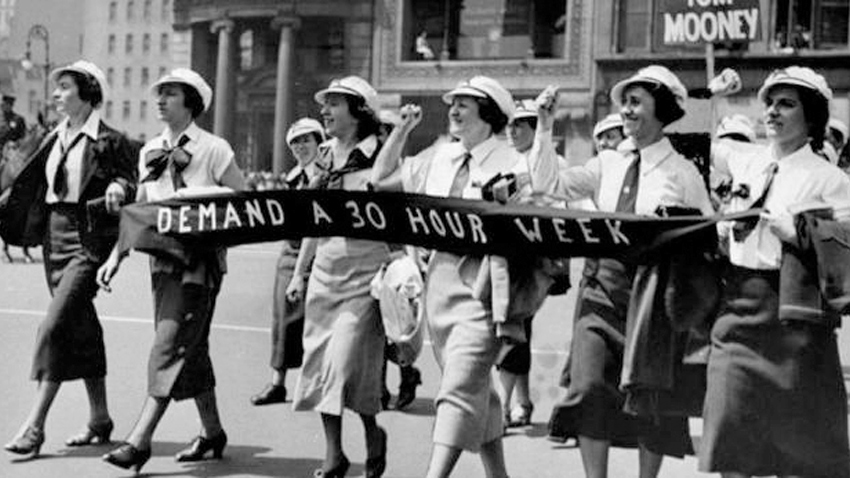
The historical roots of International Workers’ Day can be traced back to 1886 in Chicago, where workers took to the streets demanding an eight-hour workday at . At the time, laborers were subjected to grueling shifts ranging from 12 to 16 hours a day, prompting over three hundred thousand workers to go on strike starting May 1.
However, what began as a peaceful movement soon took a tragic turn; on May 4, during a gathering at Haymarket Square, a sudden explosion followed by police gunfire led to multiple casualties, while several labor leaders were unjustly prosecuted and executed. In recognition of these sacrifices, the Second International, convened in Paris in 1889, officially declared May 1 as International Workers’ Day- a day that has since come to symbolize the global struggle for workers’ rights and justice.
Global Differences in the Observance of May Day
International Workers’ Day (May Day) is not uniformly observed as an official public holiday across the world, reflecting diverse historical, political, and socio-economic contexts surrounding labor movements. The United States and Canada observe Labour Day in September instead of May 1, a practice historically shaped by efforts to distinguish national labor recognition from the international socialist origins associated with May Day. Japan and Israel do not designate May 1 as a statutory public holiday, although labor-related events, rallies, and awareness activities are still organized. In several Gulf states, including Saudi Arabia and the United Arab Emirates, May Day is not formally included in the national holiday calendar, as labor observance is structured within distinct administrative and policy frameworks. The United Kingdom does not officially recognize May Day as International Workers’ Day, although a May bank holiday may occasionally coincide with it. In contrast, Bangladesh officially observes May 1 as a public holiday, aligning itself with the global framework of labor rights, dignity, and international solidarity. These differences largely reflect varying historical trajectories, ideological influences, and national policy approaches toward labor organization and its symbolic significance.
Workers’ Rights and Legal FrameworkIn the modern era, the protection of workers’ rights has been reinforced through both international and national legal frameworks. At the global level, the (ILO) plays a pivotal role in setting standards related to working hours, minimum wages, occupational safety, the elimination of child labor, and the protection of fundamental rights.
In recent developments, the ILO has expanded its focus beyond traditional concerns; notably, in 2022, it recognized a safe and healthy working environment as a fundamental right, thereby bringing workplace well-being to the center stage. At the same time, as the nature of employment evolves, efforts are underway to ensure that gig workers- such as freelancers and delivery riders- are not left in a legal grey area, with Bangladesh also taking steps in this direction.
At the national level, Bangladesh has enacted the Bangladesh Labour Act 2006, which serves as the cornerstone of labor governance, addressing issues related to wages, working conditions, health, and safety. This is further supported by the Bangladesh Labour Rules 2015, which aim to translate legal provisions into practical implementation.
Recent amendments and ordinances (2025�"2026) have introduced significant reforms, strengthening workers’ protections in several key areas:
a. Maternity leave has been extended from 112 to 120 days, reflecting increased attention to maternal welfare.
b. Trade union formation has been simplified, reducing previous requirements and enabling workers to organize more effectively.
c. Festival leave has been increased from 11 to 13 days, acknowledging social and cultural needs.
d. Workplace harassment prevention measures have been strengthened, with mandatory complaint committees that ensure female representation.
e. Blacklisting practices have been declared illegal, making unjust exclusion from employment a punishable offense.
In addition, initiatives such as Employment Injury Insurance, currently in a pilot phase with ILO support, aim to provide compensation and financial protection to workers affected by workplace accidents.
However, despite these progressive measures, the gap between policy and practice remains a cause for concern, as weak enforcement and lack of awareness often prevent these laws from bearing fruit; consequently, for many workers, unsafe conditions and economic vulnerability continue to be the harsh reality.
A Call Beyond CommemorationOn the occasion of May Day, Md. Shamsul Alam Shibly, Deputy Director of Public Relations and Publications at MBSTU, emphasized both the global significance and ethical dimensions of labor dignity. Drawing upon Islamic teachings, he referenced the saying of Prophet Muhammad (peace be upon him), which urges that a worker’s wages be paid before their sweat dries- an idea that underscores the urgency of fairness and justice in labor practices.
He further noted that May Day stands as a proud reminder of the long-standing struggle for workers’ rights, while also highlighting the importance of collective efforts in ensuring dignity, fairness, and social justice. Referring to the university context, he stated that MBSTU firmly believes the contributions of workers- from cleaners and security personnel to transport staff-are indispensable in sustaining academic activities; and extending this perspective globally, he called for renewed commitment to safeguarding workers’ rights, ensuring safe working environments, and fostering respect for all professions. At the same time, he urged the younger generation to step up and take the baton forward in building a humane, equitable, and justice-based society.
May Day, therefore, is not merely a day of remembrance; rather, it is an opportunity to take stock of present realities and to confront the challenges that persist. A society, after all, is not defined solely by its policies, but by how it treats those who keep it afloat.
Respecting the sweat, sacrifice, and aspirations of workers is not just an act of acknowledgment�"it is the hallmark of a truly civilized nation. And the day we learn to value every profession equally, ensuring that no worker is taken for granted, the spirit of May Day will finally come full circle.