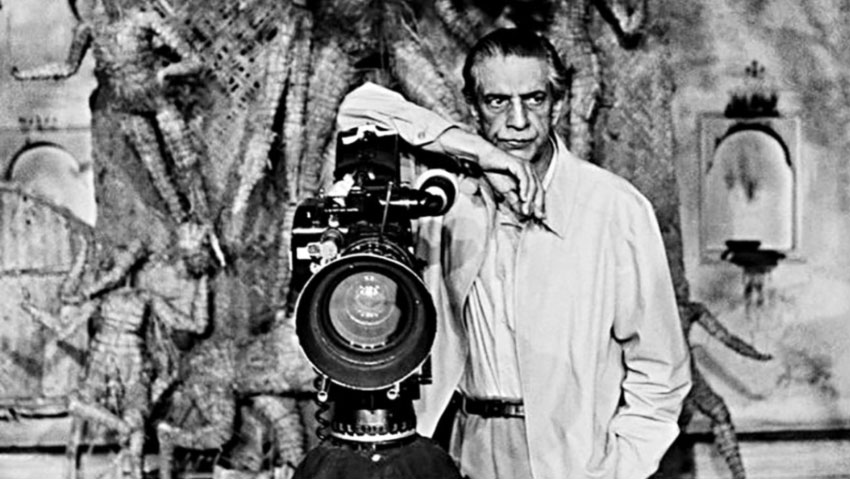
On his birth anniversary, remembering Satyajit Ray is less about looking back and more about realizing how modern he still feels. Long before cinema learned to chase spectacle, Ray taught it the power of restraint-of letting a glance carry the weight of dialogue and a silence reveal more than a speech ever could.
From the tender humanity of Satyajit Ray’s characters to the unhurried rhythm of his storytelling, his films remain a masterclass in attention; attention to people, to place, and to the fragile emotional truths that connect them.
Whether he was capturing the quiet struggles of everyday life or building worlds of imagination for Feluda and Professor Shonku, Ray never raised his voice; he didn’t need to. His cinema speaks in clarity, not volume.
Today, as archives from London to New York screen newly restored 4K prints of his masterpieces, we are reminded that Ray’s genius was never static. He was a Renaissance man in the truest sense; a polymath who could storyboard a scene with the precision of a master illustrator, write a score that felt like a heartbeat, and then step behind the camera to capture a world that was as local as a village pond and as universal as the human soul. To read the tributes pouring in today is to see a man who was not just a filmmaker, but a philosopher of the lens.
His legacy is not a dusty artifact kept in a museum; it is a living, breathing influence. We see it in the meticulous production design of modern auteurs who have inherited his eye for detail. We see it in the global resurgence of his literary creations, where Feluda and Professor Shonku continue to spark the imaginations of children who have never known a world without the internet.
Even in an era of rapid-fire digital content, Ray’s "slow cinema" remains a sanctuary; a masterclass in the power of observation, reminding us that there is a deep, resonant music in the ordinary lives of people.
Perhaps the most enduring tribute to Ray at 105 is the fact that he still feels like our contemporary. Whether he was dissecting the subtle shifts of an urban marriage in Mahanagar or satirizing the mechanics of power in Hirak Rajar Deshe, his voice remains startlingly clear.
He didn't just make films; he gave us a way of seeing. Today, we don't just remember a legend; we celebrate the light he left behind, a light that continues to guide anyone who believes that art, at its best, is an act of truth.