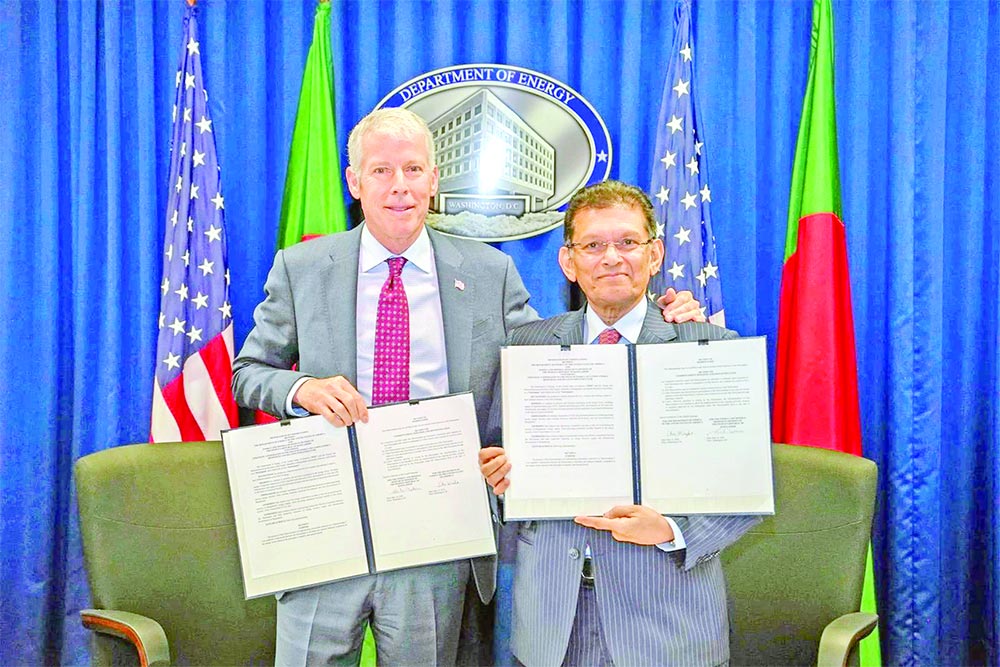
Bangladesh and the United States have signed a Memorandum of Understanding (MoU) on strategic cooperation in the energy sector, under which Bangladesh will import around $15 billion worth of energy products from the US over the next 15 years to strengthen its energy security.
The agreement covers imports of liquefied natural gas (LNG), liquefied petroleum gas (LPG), and petroleum products under the broader framework of the Agreement on Reciprocal Trade (ART) previously signed between the two countries.
The MoU was signed on Thursday at the US Department of Energy in Washington, DC, by Foreign Minister Khalilur Rahman and US Energy Secretary Chris Wright, according to a statement issued on Friday by the Bangladesh Embassy in Washington.
US Energy Secretary Wright described the MoU as a "historic development" in Bangladesh-US relations, while Foreign Minister Khalilur Rahman said it marked another milestone in the growing partnership between the two countries.
Under the agreement, Bangladesh will import US energy products including LNG, LPG and petroleum products at competitive prices. The MoU is also expected to facilitate capacity building, technical cooperation and knowledge exchange in areas such as oil, gas, geothermal energy and bioenergy.
Officials said the initiative aims to support Bangladesh's long-term energy security by diversifying supply sources and improving supply chain stability, particularly at a time of global energy uncertainty.
"This MoU would contribute to the efforts of Bangladesh to enhance its long-term energy security by diversifying its energy sourcing options based on affordability and supply chain sustainability and would open up new avenues of broader energy cooperation between Bangladesh and the US," the statement said.
The US Energy Secretary thanked Prime Minister Tarique Rahman and US President Donald Trump for their support behind the initiative.
Bangladesh recently signed the ART agreement with the United States following nine months of negotiations led by the Ministry of Commerce, in coordination with the National Board of Revenue, the Bangladesh Embassy in Washington and other relevant agencies during the interim government's tenure.
Officials noted that the agreement comes at a time when many countries, including Bangladesh, are facing growing challenges in ensuring energy security amid geopolitical tensions and disruptions in global energy markets.
Officials from the Bangladesh Embassy and senior representatives of the US Department of Energy were present at the signing ceremony.





