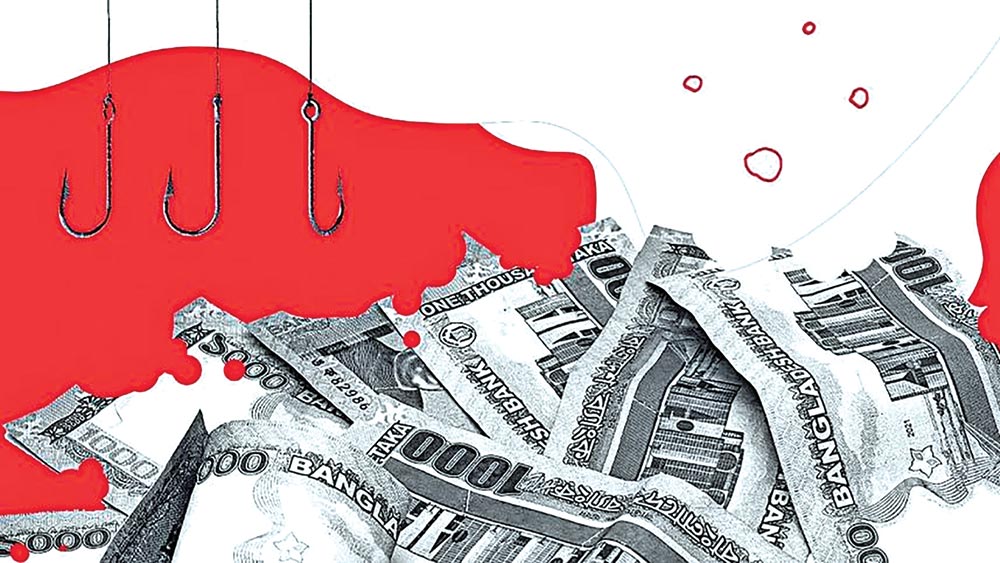
The government is preparing to reopen the controversial pathway for whitening undisclosed money through the housing sector in the upcoming 2026-27 budget, reigniting fierce debate over corruption, tax justice and economic morality.
According to senior officials at the Ministry of Finance and the National Board of Revenue (NBR), a proposal has already been sent to the finance ministry allowing investors to legalise black money by investing in real estate with guarantees that no authority would question the source of the funds. Sources said the move has reportedly received approval from the prime minister as part of efforts to revive investment and stimulate slowing economic activity.
Under the proposed scheme, holders of undisclosed wealth would be allowed to repatriate funds through formal banking channels by paying regular tax rates - or possibly even higher rates - alongside proof of investment. Discussions are also underway to grant full legal immunity, preventing agencies including the Anti-Corruption Commission (ACC) from investigating the origins of such money.
"If immunity is granted, no government agency, including the ACC, will be able to question the source of that money," a senior NBR official told The Daily Observer.
The move marks a dramatic reversal from last year's stance, when the interim government scrapped similar facilities amid criticism from economists and anti-corruption campaigners. The previous Awami League government had allowed the whitening of black money in FY2024-25 through payment of 15 per cent tax, despite compliant taxpayers facing rates as high as 25 per cent.
Although the facility was briefly withdrawn in September 2025, it was later partially restored for investments in flats, apartments and land before eventually being cancelled again by the interim administration.
Economists warn that repeatedly changing policies surrounding black money legalisation could damage investor confidence and undermine fiscal credibility. They argue that tax incentives should be driven by long-term economic research rather than short-term revenue considerations.
Transparency International Bangladesh (TIB) has launched a strong attack on the proposal, calling it discriminatory, corruption-friendly and fundamentally contradictory to constitutional principles.
"This kind of facility rewards tax evaders while honest taxpayers continue to bear the burden," anti-corruption activists said, warning that repeated amnesties encourage illicit wealth accumulation instead of promoting compliance.
At the same time, the government is also considering restoring tax exemptions for investments in several productive sectors, including pharmaceuticals, agricultural machinery, electronics and artificial intelligence-based manufacturing, after such incentives were withdrawn in the previous budget.
Bangladesh has a long history of allowing black money whitening schemes dating back to martial law in 1975. During the military-backed caretaker government in FY2007-08 and FY2008-09, around Tk 9,683 crore was legalised. The highest amount came in FY2020-21, when more than 11,800 individuals legalised nearly Tk 20,500 crore by paying 10 per cent tax, generating Tk 2,640 crore in revenue for the state.
However, real estate sector leaders remain divided over the latest initiative. REHAB Vice-President (Finance) Dr Harun Or Rashid argued that allowing black money investment alone would not revive the struggling housing market.
"Instead of giving opportunities to invest black money, the government should reduce land and flat registration costs. Lower transaction expenses would attract genuine buyers and boost the sector more sustainably," he told The Daily Observer.
Earlier this year, REHAB proposed restoring provisions of the old Income Tax Ordinance to ensure that buyers would not face questions regarding the source of funds when purchasing flats, arguing that such measures are necessary to revive investment in the battered housing sector.





