Thursday | 11 June 2026 | Reg No- 06

| BREAKING: |
The BNP government is set to present a national budget in Parliament after for 20 years following its return to power with a majority in the 13th parliamentary election.
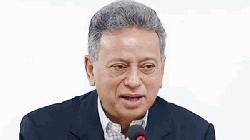
Finance Minister Amir Khosru Mahmud Chowdhury is scheduled to place the budget for the 2026-27 fiscal year in Parliament at 3:00pm today on behalf of the government, led by Prime Minister Tarique Rahman.
The proposed budget, estimated at around Tk 9.38 lakh crore, will be Bangladesh’s 55th national budget since independence.
Bangladesh’s budget journey began in 1972 when Finance Minister Tajuddin Ahmad presented the country's first national budget worth Tk 786 crore.
Since then, successive governments have used the annual budget as the principal instrument for implementing economic and development policies.
The last budget presented by a BNP government was for FY 2006-07, when then Finance Minister M Saifur Rahman placed the budget in Parliament during the administration of former Prime Minister Khaleda Zia.
The FY27 budget comes in a changed political environment following the July 2024 uprising and the subsequent political transition that paved the way for the 13th parliamentary election and the formation of an elected government.
Last year, the budget was presented outside Parliament by Finance Adviser Salehuddin Ahmed of the interim government, led by Prof Muhammad Yunus, and broadcast through state-run Bangladesh Television (BTV).
The proposed new budget is expected to be passed by Parliament on June 30 and will take effect from July 1, the first day of the new fiscal year.
Since independence, 14 finance ministers, finance advisers and other officials holding responsibility for the finance portfolio have presented national budgets under different democratic, caretaker and military-backed administrations.
Two former finance ministers �" M Saifur Rahman and Abul Maal Abdul Muhith �" jointly hold the record for presenting the highest number of budgets, with 12 each.
This year’s budget is expected to focus on controlling inflation, generating employment, encouraging investment, strengthening economic stability and supporting lower-income and disadvantaged groups, according to the finance minister and government officials.