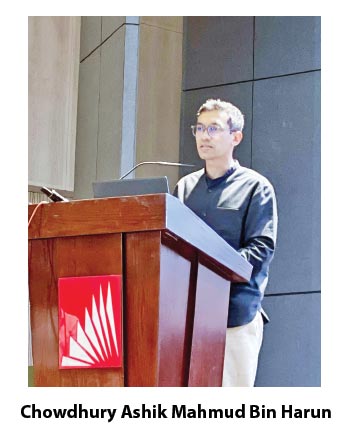
Bangladesh’s drive to attract foreign investment is being undermined by a worsening energy crisis, with chronic gas shortages now emerging as the single biggest obstacle to industrial expansion and economic growth, according to Bangladesh Investment Development Authority (BIDA) Executive Chairman Chowdhury Ashik Mahmud Bin Harun.
Speaking at a workshop titled “Bangladesh’s Investment Flows and Investment Facilitation” at BIDA headquarters in Agargaon on Thursday, Ashik delivered a stark warning that without reliable energy supplies, the country’s ambitious investment agenda could struggle to gain traction.
“The global economy is already under strain from geopolitical tensions and energy market disruptions. For Bangladesh, energy scarcity has become the principal barrier to economic growth and foreign investment,” he said.
“If energy remains in short supply, no matter how many investment summits we organise, businesses simply will not be able to operate.”
Highlighting the scale of the challenge, Ashik revealed that energy-related concerns dominate discussions with investors.
“I spend nearly half of my working hours dealing with energy issues. Gas shortages are by far the most common complaint from both local and foreign investors,” he said.
The remarks underscore growing concerns within the business community that inadequate fuel supplies are eroding Bangladesh’s competitiveness at a time when it is seeking to position itself as a major regional investment destination.
Despite the challenges, BIDA is pressing ahead with an aggressive investment promotion strategy. Ashik announced that the number of priority economic zones has been doubled from five to ten, encompassing government-owned zones as well as joint ventures with international partners, including China and Japan.
However, he cautioned that a meaningful resolution to the energy crisis would take time.
A major intervention, such as expanding LNG import capacity at Moheshkhali, would require at least 18 months from the commencement of work, making substantial improvements unlikely before 2027 or even 2028, he said.
While welcoming ongoing government efforts to diversify energy sources, including the allocation of land for solar and other renewable energy projects, Ashik acknowledged that these initiatives would not provide immediate relief to industries struggling with supply shortages.
Looking ahead, he expressed optimism over Bangladesh’s growing economic engagement with China. With the Prime Minister scheduled to visit China later this month, Ashik said discussions with Chinese investors are expected to gather momentum.
Ground-breaking ceremonies for new projects are likely in the near future, while plans for a second Chinese economic zone are also under active consideration, he added.
On investment facilitation, Ashik admitted that investors continue to face bureaucratic hurdles despite the existence of BIDA’s one-stop service portal, which still requires significant manual paperwork.
To address the issue, BIDA is moving towards full API-based integration among government agencies and plans to eliminate manual processing through a comprehensive digital framework.
“We are considering a top-down directive to end manual processing. The transition should be completed within one to two years,” he said.
Ashik also addressed concerns over the banking sector’s declining credit ratings and fragile financial health, attributing the current difficulties to distortions accumulated between 2019 and 2023.
“The sector is now confronting the reality behind previously inflated balance sheets,” he said, adding that restoring confidence would take time.
“This is not a one-day game. Rebuilding credibility is like playing a Test match�"it requires patience, discipline and sustained effort.”
His comments come as Bangladesh seeks to restore investor confidence, strengthen economic fundamentals and overcome mounting energy constraints that threaten to slow industrial growth and foreign investment inflows at a critical juncture for the economy.





