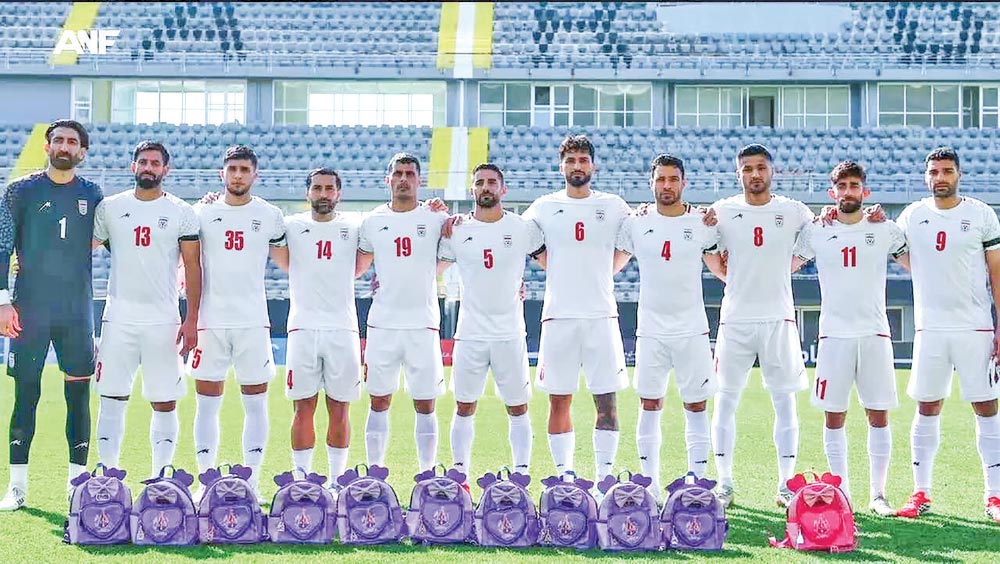
The FIFA World Cup is often a stage for sporting excellence, unforgettable goals and national pride. Yet one of the tournament's most moving moments came before a ball was kicked, as Iran's players used football's biggest stage to honour children whose lives were cut short by war.
As the Iranian team lined up ahead of their opening World Cup match, the players wore black armbands and held children's schoolbags during the national anthem. The symbolic gesture transformed a routine pre-match ceremony into a solemn act of remembrance, drawing attention to the human cost of conflict beyond the football field.
According to Iranian authorities, the tribute was dedicated to the victims of an airstrike on the ShajarehTayebeh Girls' School in the southern city of Minab, in Hormozgan Province, on February 28, 2026. Iranian officials claim that between 120 and 180 children were killed in the attack and have accused Israel and the United States of responsibility. The allegations remain part of a broader and highly contested conflict narrative.
For many Iranians, the schoolbags carried by the players represented far more than a symbolic prop. They stood for classrooms left empty, dreams left unfulfilled and futures that, according to Iran, were taken away in an instant. In a tournament filled with noise, celebration and fierce competition, the image of footballers standing silently with children's bags offered a powerful contrast.
The tribute resonated with supporters who viewed it as a message that transcended politics and sport. While debates over the conflict continue, the gesture focused attention on the suffering of civilians, particularly children, who often bear the heaviest burden during times of war.
Throughout history, major sporting events have occasionally provided athletes with a platform to express solidarity, grief or hope. Iran's players chose a quiet and dignified form of expression. There were no speeches, banners or slogans. Instead, a simple act of remembrance conveyed a message that many viewers found deeply emotional.





