
The dawn of June 30, 2026, arrives draped in quiet melancholy and sacred remembrance. On this deeply reflective morning, we bow in tribute to your birth, O Martyr Osman Hadi�"whose humanity was greater than ambition, whose compassion outlived mortality, and whose memory continues to illuminate the conscience of a nation. Yet, the entire nation is submerged in a strange, tearful grief, as we remember anew your tender, vibrant heart, which would instantly weep at the minor sorrows of others. While the surrounding society remains entirely blinded by material gain and narrow self-interest, the whole country offers its deepest gratitude and salutes that sacred stream of selfless empathetic tears upon your birth anniversary. Your vacant study room and the worn-out books bearing your touch break down into an absolute lamentation. Are we living in such a heartless, self-centred era that we mistake the rare human quality of weeping at others’ suffering for mere weakness? This moment is not a platform for formal celebration; rather, it is a uniquely realistic and profound mirror showing how the tears of a single human being can awaken a sleeping nation.
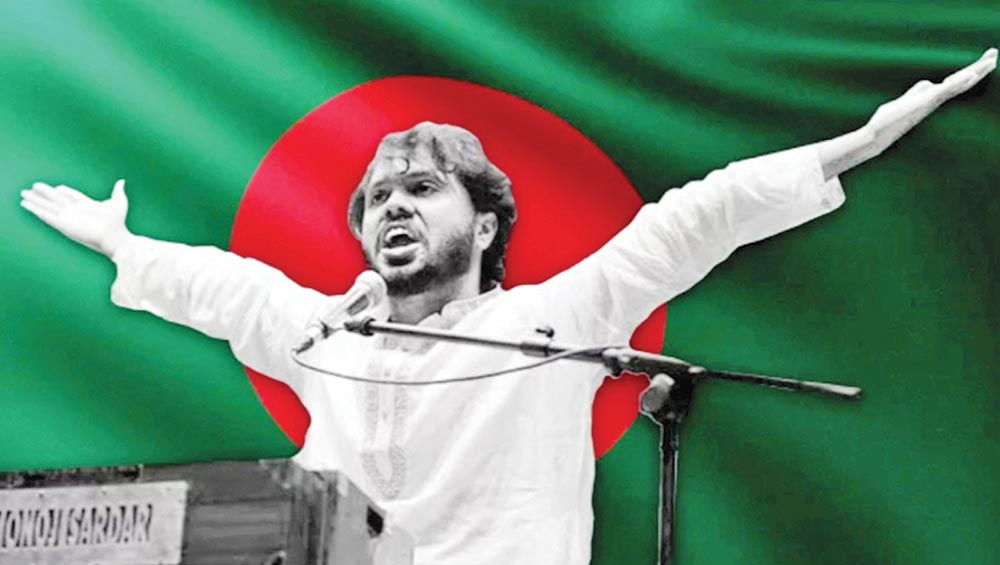
The Ledger of Deficit in Social Empathy
If we analyse the latest data and empirical statistics from the Department of Disaster Management, the Ministry of Social Welfare, and the July Mass Uprising Memorial Foundation, we lay bare the true skeletal structure of our collective humanitarian crisis. He stood by the flood-affected and underprivileged masses; his sole asset was an authentic, deep love for humanity. According to various sociological surveys and preliminary reports by humanitarian organisations, a critical deficit in selfless volunteerism and the crisis of proper social guardianship have left 40 per cent of the floating populations and children in remote areas victims of acute malnutrition and systemic social isolation.
According to the 2026 Social Security and Humanitarian Accountability Index compiled by the Bangladesh Institute of Development Studies (BIDS), following the untimely martyrdom of selfless, compassionate organisers, the operational momentum of private humanitarian and relief activities in rural areas has declined by approximately 35 per cent. Statistics show that 10 permanent blueprints for the rehabilitation of street children and rootless populations, preserved in his personal diary, remain frozen in files, gathering dust due to a complete lack of funding�"blueprints that, if implemented, could have integrated a large portion of the urban floating population into the mainstream.
Furthermore, latest assessments from the burn and trauma units of various public hospitals demonstrate that the institutional initiatives for the medical treatment and psychological rehabilitation of the youth critically injured during the July Revolution are suffering from extreme stagnation due to the absence of empathetic, compassionate souls, plunging the entire society into a profound crisis of conscience.
Unique Structural Attributes and Pragmatic Pathways of Compassion
When analysed from sociological, humanitarian, and deeply patriotic perspectives, it becomes clear that every drop of tear that fell from the eyes of Martyr Osman Hadi was not merely water born of grief; it was a spiritual weapon designed to awaken the conscience of an exploited society. He was not simply a fighting commander of the streets; he was the ultimate sanctuary for the oppressed and neglected masses of this land.
During the catastrophic flash floods of northern Bangladesh, when people all around were drowning in chest-deep water, he risked his life to stand amidst the raging currents to distribute relief, and the sight of that immense human suffering caused tears to stream down his face without restraint. While walking through the alleyways of the capital, whenever he witnessed an innocent child hungry or abused, he would tenderly hand over his own night's meal to them, stepping into the shadows to silently wipe his own tears�"a testament to the absolute depth of his self-sacrifice. On biting winter nights, when the pavement was wrapped in dense blankets of fog, if he saw an elderly man shivering in the cold, he would wrap his own only warm shawl around him without a second thought, weeping at the raw reality of poverty. He could never forget the open wounds of that blood-drenched July of the revolution; hearing the heartbreaking laments of the families of his fallen comrades, he would lose all composure, sitting alone on his prayer mat, weeping deep into the night.
In the long, sterile corridors of the National Institute of Traumatology and Orthopaedic Rehabilitation (NITOR) and the Combined Military Hospital (CMH), when he sat by the bedsides of young men who had lost their eyes or limbs, he found himself entirely speechless; his internal agony would transform into silent, sacred tears, falling onto the bandaged wounds of his injured brothers. At major public gatherings, whenever he rose to speak of the supreme sacrifices of the martyrs who laid down their lives for the nation, his voice would choke with profound emotion before the microphone, and his tearful silence would move thousands in the audience to tears. On the joyous day of Eid, when street children wrapped themselves around him in pure ecstasy upon receiving new clothes, those tears of joy were nothing short of heavenly. Deep in the night, hidden from public view, he would frequently visit local orphanages to embrace parentless children, straining to erase their loneliness and internal void. Looking at the brilliance and beautiful conduct of the students in the school he built for street children through his hard labour, his eyes would often overflow with pure joy and gratitude.
Whenever reports arrived of an innocent Bangladeshi citizen’s corpse hanging from the border’s barbed wire, his eyes would turn ablaze with supreme national insult and intense indignation�"the ultimate manifestation of his unyielding patriotism. During every national crisis, his profuse weeping during the final hours of the night in solitary prayers proved how deeply his accountability to this soil was anchored. Hearing the news of an ancient heritage site crumbling due to institutional neglect, or a living river being choked to death by illegal land grabbers, he would sink into profound sorrow, his soul weeping for the open wounds of the environment.
An Appalled Landscape
When we recall that cursed moment of the dark phase, even the hardest stone splits open in grief. The very eyes that spent a lifetime weeping for the suffering of humanity, the very mind that was continuously pained by the agony of others�"that innocent person’s chest was violently shattered by a hail of bullets. As his blood-squeezed body lay (still) upon the asphalt street, a solitary congealed tear at the corner of his eye seemed to carry a final, desperate plea to the citizens of this country. When a pack of hyenas, more brutal than beasts, silenced his intellect and his voice, the very wind of nature seemed to freeze in a deep, absolute silence.
The most profound trauma was borne by his elderly father, who had to carry the coffin of his exceptionally brilliant and compassionate child upon his own shoulders. As he was laid to rest forever in the dark, cool earth of the grave, the heartbreaking cries of the weeping masses from all walks of life merged with the rain pouring from the heavens. Are we now betraying his sacred tears? Those sitting in seats of power today, who deliver grand lectures on governance and administration, do they ever feel a sense of moral responsibility to respond to the torn clothes of a fallen patriot or hollow and grief-stricken eyes of a mother who has lost her child?
(To be continued)
Dr Tarnima Warda Andalib, Assistant Professor, BRAC University; Global Consultant Director, Oxford Impact Group, UK and Dauwood Ibrahim Hassan, Research Assistant, BRAC University; Master’s Student (Economics), JU; Project Analyst, UNDP Bangladesh.





