
For decades, Dhaka has struggled with one of the world's most complex urban transport challenges. Every working day, millions of commuters spend hours trapped in traffic congestion, breathing polluted air while waiting for overcrowded buses that often arrive late and provide poor service. As Bangladesh's capital continues to expand, the demand for a cleaner, more efficient and reliable public transport system has become increasingly urgent.
Against this backdrop, the government's decision to introduce 500 electric buses from China represents one of the most significant public transport initiatives in recent years. If implemented successfully, the project could become more than a simple fleet replacement. It could serve as the foundation for a broader transformation of Bangladesh's urban transport system, reducing pollution, lowering operating costs and improving the daily lives of millions of commuters.
However, the initiative should not be viewed merely as a procurement project. Buying electric buses is the easiest part. Building the infrastructure, management capacity and policy framework necessary to operate them efficiently will determine whether the initiative succeeds or becomes another missed opportunity.
According to the World Bank, more than 20 million trips are made across Dhaka every day, with between 3.5 million and 4 million passengers relying on buses. Despite this enormous dependence on public transport, the city's bus system remains fragmented, poorly regulated and largely dependent on ageing diesel-powered vehicles.
Many buses currently operating on Dhaka's roads are old, poorly maintained and highly polluting. They emit large amounts of carbon dioxide, nitrogen oxides and fine particulate matter that contribute significantly to deteriorating air quality. Air pollution has become one of Bangladesh's most serious public health concerns, affecting children, older people and those suffering from respiratory diseases.
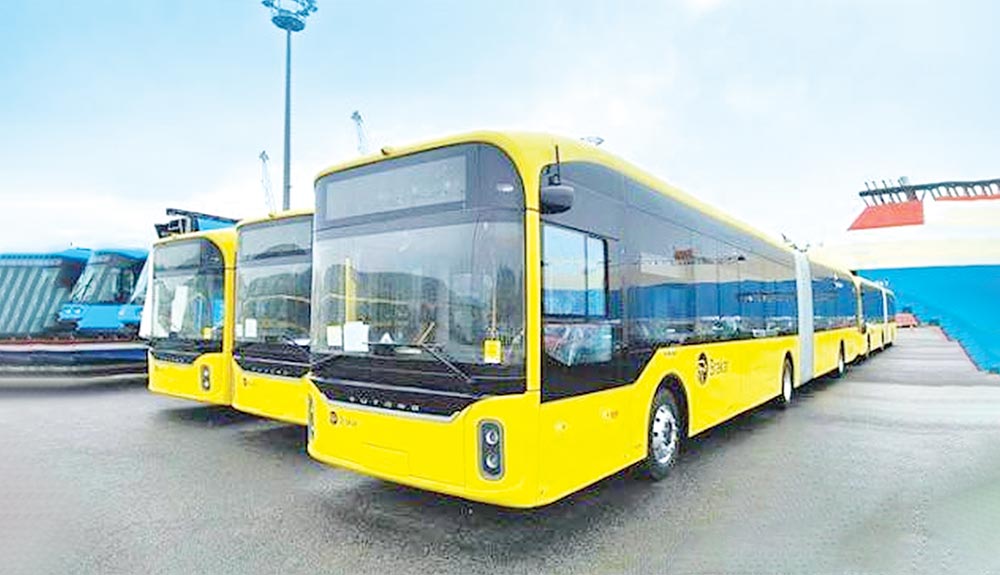
The introduction of electric buses therefore carries environmental significance beyond the transport sector. Experts at the Bangladesh University of Engineering and Technology (BUET) estimate that replacing 500 diesel buses with electric alternatives could reduce carbon emissions by approximately 25,000 to 35,000 tonnes every year, depending on operational conditions and route coverage. While this alone will not solve Dhaka's air pollution problem, it would represent a meaningful contribution toward cleaner urban air.
Electric buses also offer important economic advantages. Although their initial purchase price is considerably higher than conventional diesel buses, operating costs are generally much lower. Electricity is typically cheaper than diesel fuel, while electric motors require fewer moving parts and less frequent maintenance than internal combustion engines.
Over time, these savings could reduce operating expenses for transport authorities and private operators alike. Lower fuel imports would also help ease pressure on Bangladesh's foreign exchange reserves, which have remained under strain in recent years because of rising global energy prices.
Passengers stand to benefit as well. Electric buses are quieter, smoother and produce virtually no exhaust emissions during operation. Air-conditioned buses operating on predictable schedules could encourage many commuters to shift away from private vehicles, motorcycles and ride-sharing services.
Such a shift would create wider public benefits. Increased use of public transport means fewer private vehicles on the road, less traffic congestion and lower overall emissions. International experience from cities such as Shenzhen in China demonstrates that large-scale electrification of bus fleets can significantly improve both urban mobility and environmental quality when supported by effective planning.
Nevertheless, the success of Bangladesh's initiative will depend on several critical factors that extend well beyond purchasing buses.
Unlike diesel buses, electric buses require extensive charging facilities strategically located across the city. Charging stations must be constructed near depots and major terminals while ensuring sufficient electricity supply during peak operating hours. Without reliable charging infrastructure, buses may spend more time waiting for power than carrying passengers.
Bangladesh's electricity sector has improved substantially over the past decade, but concerns remain regarding uninterrupted power supply during periods of high demand. Expanding the national grid and ensuring dedicated electricity for transport infrastructure will therefore be essential.
Electric buses require specialised maintenance, diagnostic equipment and trained engineers. Drivers, mechanics and depot managers must all receive proper training to operate the new technology safely and efficiently.
Countries that have successfully introduced electric buses invested heavily in workforce development before deploying large fleets. Bangladesh will need similar preparation to avoid operational disruptions.
Third, institutional coordination remains a longstanding weakness within Dhaka's transport sector.
Multiple agencies, including the Bangladesh Road Transport Authority (BRTA), Dhaka Transport Coordination Authority (DTCA), city corporations and private operators, share responsibility for different aspects of public transport. Without strong coordination among these institutions, even modern buses may struggle within an outdated management system.
Route rationalisation should therefore accompany fleet modernisation. Simply replacing diesel buses with electric ones without addressing route duplication, competition among operators and weak traffic management will deliver only limited improvements.
Electric buses require significant upfront investment. Government subsidies may be necessary during the initial years until operating efficiencies begin generating savings. Policymakers should also explore innovative financing mechanisms involving development partners, climate finance and public-private partnerships to ensure long-term sustainability. Equally important is ensuring that the new buses remain affordable for ordinary passengers. A modern transport system should not become a luxury service accessible only to higher-income commuters.
Commuters must have confidence that electric buses will be reliable, punctual, safe and comfortable. If service quality improves consistently, more residents will voluntarily shift from private vehicles to public transport.
Ultimately, the introduction of 500 electric buses should be seen as the beginning rather than the destination of transport reform. The initiative offers Bangladesh an opportunity to align with global efforts to reduce carbon emissions while creating a safer, cleaner and more efficient urban transport network.
Yet technology alone cannot solve systemic problems. Success will depend on integrated planning, disciplined implementation, professional management and sustained political commitment. Infrastructure must be completed on time, maintenance systems strengthened, electricity supply secured and institutional coordination improved.
If these challenges are addressed with determination, the project could become a landmark achievement in Bangladesh's transport history. It would demonstrate that environmentally sustainable public transport is not only desirable but achievable.
For a city that has spent decades searching for solutions to congestion and pollution, the arrival of 500 electric buses could represent the first meaningful step toward a cleaner, smarter and more liveable Dhaka. The buses themselves will matter, but the policies and institutions supporting them will matter even more.
The writer is MPhil researcher at Jagannath University's Department of History and a journalist





