



| HEADLINE |

|
Gaza faces uncertain future as Palestinians, Israelis mark 1,000 days of war
Published : Friday, 3 July, 2026 at 12:00 AM


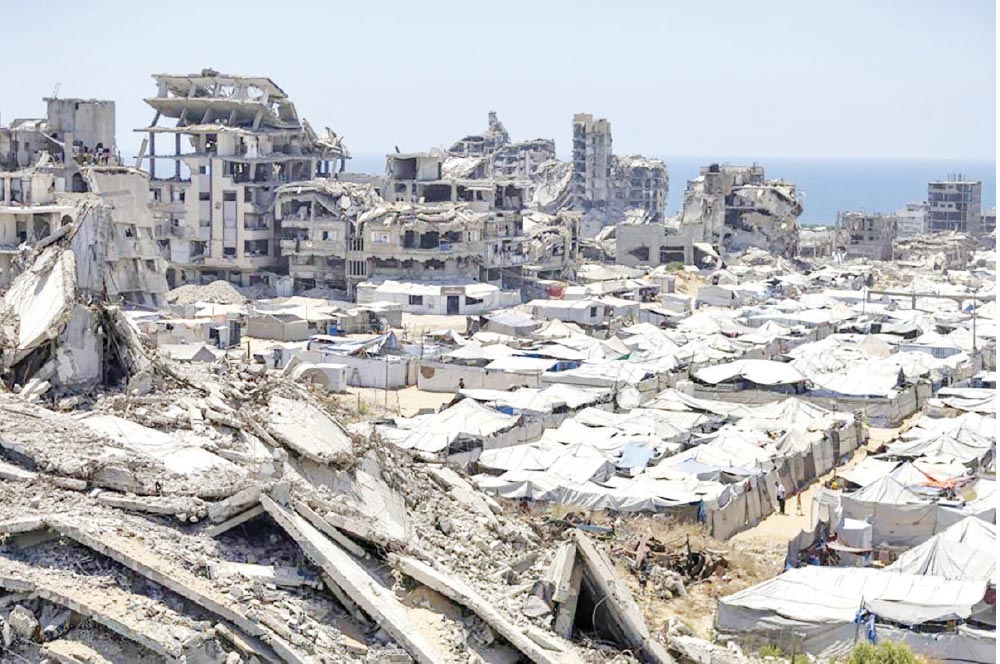 GAZA CITY, July 2: It’s the 1,000th day since a Hamas-led attack on Israel sparked the war in Gaza. Other conflicts have emerged in the region, and fragile ceasefires show scars of persistent attacks. Both Israelis and Palestinians are weary of the strain.
The fate of over 2 million Palestinians in Gaza, largely displaced and living amid ruins, remains uncertain. Israeli forces controlled over half of the territory under the ceasefire that took effect on Oct. 10, but Israel’s government has expanded that and says it aims to hold 70%.
The Oct. 7, 2023, Hamas-led attack on southern Israel killed about 1,200 people and took 251 hostage. All hostages or their remains have been released or handed over. Many recounted long-term starvation, physical and psychological abuse and, in some cases, sexual abuse.
Israel’s retaliation has killed a total of 73,066 Palestinians as of Tuesday, Gaza’s Health Ministry says. Despite the ceasefire, few people can get in or out of Gaza. Further ceasefire steps, including Hamas’ disarmament and the immense task of reconstruction, have stalled.
“Much more needs to be done so that even a semblance of normality can come back, and we are far, far away from this,” the International Committee of the Red Cross regional director, Nicolas von Arx, said this week.
Israeli strikes have lessened considerably since the ceasefire took effect, but they continue almost daily.
Gaza’s Health Ministry counted 1,053 Palestinians dead since the ceasefire as of Tuesday, including over 350 women and children. In recent days, they included a teenage girl on her way to school and a mother with her 1-year-old daughter.
“Where is this ceasefire they keep talking about?! Shame on them,” one Palestinian, Wisal Abu Khater, said this week after another deadly strike, lashing out at Arabs who she said have failed Gaza’s people and are busy watching World Cup games instead.
The United Nations on Wednesday warned that the Israeli expansion in Gaza increases deadly risks for civilians in “areas lacking clear demarcation on the ground.”
The Health Ministry said over 3,400 people have been wounded since the ceasefire. The ministry is part of the Hamas-led government and maintains detailed casualty records seen as generally reliable by UN agencies and independent experts. It does not give a breakdown of civilians and militants but says women and children make up roughly half the dead.
Israel’s military says it targets Hamas and other militants, often asserting they were planning attacks, and accuses Hamas of using civilians as human shields.
The top diplomat overseeing the ceasefire, NickolayMladenov, has made it clear: The next steps in implementing the US-brokered deal are stalled over the difficult issue of Hamas disarming.
This has been a high-profile test of the Board of Peace created and led by US President Donald Trump. Launched with fanfare and billions of dollars in international pledges earlier this year with the sole aim of Gaza’s recovery from war, the board now says little publicly.�" AP
Loading...
Loading...
Also read


Editor : Iqbal Sobhan Chowdhury
Published by the Editor on behalf of the Observer Ltd. from Globe Printers, 24/A, New Eskaton Road, Ramna, Dhaka.
Editorial, News and Commercial Offices : Aziz Bhaban (2nd floor), 93, Motijheel C/A, Dhaka-1000.
Phone: PABX- 41053001-06; Advertisement: 41053012; 01793317829, 01550707291, E-mail: [email protected], [email protected] Online: email: [email protected] 41053014; 01550707297 Advertisement: 01550707296
Published by the Editor on behalf of the Observer Ltd. from Globe Printers, 24/A, New Eskaton Road, Ramna, Dhaka.
Editorial, News and Commercial Offices : Aziz Bhaban (2nd floor), 93, Motijheel C/A, Dhaka-1000.
Phone: PABX- 41053001-06; Advertisement: 41053012; 01793317829, 01550707291, E-mail: [email protected], [email protected] Online: email: [email protected] 41053014; 01550707297 Advertisement: 01550707296


