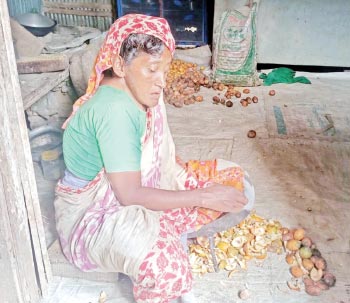
BARAIGRAM, NATORE, July 3: Peeling betel nut has become a source of livelihood for hundreds of poor women in Baraigram Upazila of Natore, helping many families overcome financial hardship and gain economic stability.
Fatema Begum, 65, of Nowda-Jowari Village, said she had fallen into severe financial distress after her husband died of cancer three years ago. With a physically challenged daughter to support and no regular income, she was forced to beg. Her situation changed after she found work peeling betel nut shells.
"I no longer have to beg. The income from this work helps me run my family and support my daughter," she said.
Local sources estimate that around 500 to 600 destitute women in villages including Kella, Nowda-Jowari, Tirail, Chapila, Raipur and Alipur are now involved in the work. Entrepreneurs supply sacks of raw betel nuts to workers' homes, and the women peel the shells before the products are collected for sale.
Workers receive Tk 10-12 per kilogram for peeling the shells. A woman can process 10-15 kilograms a day, earning around Tk 120-180 daily. The income is helping many families meet household expenses, pay for children's education and improve their living conditions.
Rafela Begum, 60, of Alipur Village said constant financial stress had once caused unrest in her family. Now she and her daughter work together peeling betel nuts and are even able to save some money.
Residents said employment opportunities for agricultural labourers declined in recent years due to the conversion of multi-crop farmland into fish ponds. The betel nut processing initiative has emerged as an alternative source of income for many rural households.
The peeled betel nuts are sold to paan shop owners across the country. As demand for ready-to-use betel nuts has increased, retailers have become less interested in buying unprocessed nuts.
Shamim Molla, a young businessman from Kella village who introduced the initiative in 2019, said he first saw women earning from betel nut processing in Barishal and later started the work in his own area with a few local women.
"The response was encouraging, and now hundreds of women are involved. Several other local traders have also joined the business," he said.
Jowari Union Parishad Chairman Ali Akbar described the initiative as a commendable example of local entrepreneurship that has created significant employment opportunities without any government or NGO assistance.





