



| HEADLINE |

|

Preserving Palestine’s Genocide: The digital race to save a nation’s suffering
Published : Monday, 6 July, 2026 at 8:44 PM
Observer Online Report


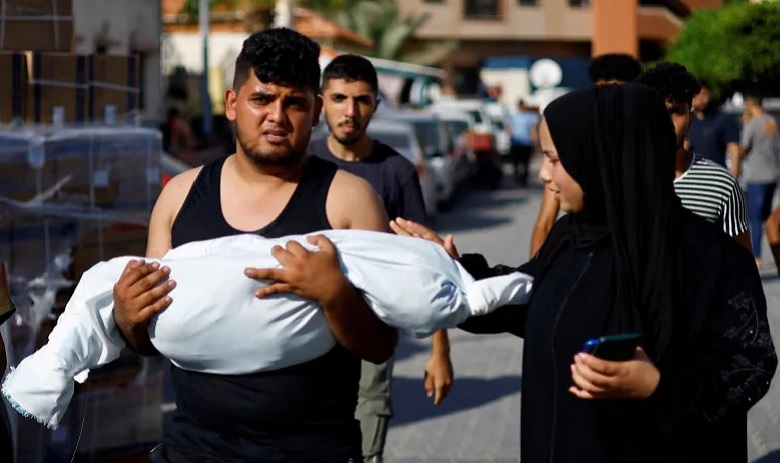
File Photo
Against the backdrop of accelerating physical destruction and genocide across Gaza and the occupied West Bank, Palestinian historians, artists, and technologists are racing to build an indestructible digital repository of the memories of mass destruction and suffering.
Their mission is to digitize and protect a cultural heritage that is systematically being reduced to rubble.
According to the about page of genocidearchive, a group of researchers are dedicated to archiving war crimes footage from Gaza and the West Bank. They submit all evidence to the International Criminal Court (ICC), the Hind Rajab Foundation, and the South African legal team at the ICJ.
However, as tech giants are working overtime to censor and delete content from Gaza. The team is archiving the genocide proofs before it disappears. Users can browse the documented footage in the archive, and download the complete raw source collections from the Downloads page.
The evidences come up with geolocation, time tag, and metadata that precisely prove the time, place, and acts of genocide by Israel.
The platform compiled over 64,000 videos and 17,000 photographs documenting the war in the Gaza Strip which is one of the largest publicly accessible visual databases of the war to date.
The footages and photographs are collected from Gaza into a searchable system, allowing users to access individual files without downloading the full archive.
The archiving is sourced from more than 300 journalists and contributors, along with geolocation data intended to verify where events took place.
The contents are displayed through a grid and list based interface, with entries that can include dates, locations, descriptions, media types, original sources and classifications.
The materials include scenes from across Gaza and the West Bank, including the aftermath of attacks, damaged buildings, hospitals, casualties and other events recorded during the conflict. Because much of the footage is extremely disturbing, the website displays a prominent warning before visitors enter.
The platform says its archive contains uncensored images of death, severe injuries and violence. It repeatedly warns that the material is intended for documentation, research, journalism and possible legal accountability, rather than casual viewing.
The platform also includes geolocation work designed to connect visual material with specific places and events. Its geolocation section says mapping work is sourced from a researcher known as Abu Location and is used to examine events and claims connected to the conflict. Geolocation can be particularly important in opensource investigations because identifying where an image or video was recorded may help researchers establish a clearer timeline.
IF

Loading...
Loading...
Also read







Editor : Iqbal Sobhan Chowdhury
Published by the Editor on behalf of the Observer Ltd. from Globe Printers, 24/A, New Eskaton Road, Ramna, Dhaka.
Editorial, News and Commercial Offices : Aziz Bhaban (2nd floor), 93, Motijheel C/A, Dhaka-1000.
Phone: PABX- 41053001-06; Advertisement: 41053012; 01793317829, 01550707291, E-mail: [email protected], [email protected] Online: email: [email protected] 41053014; 01550707297 Advertisement: 01550707296
Published by the Editor on behalf of the Observer Ltd. from Globe Printers, 24/A, New Eskaton Road, Ramna, Dhaka.
Editorial, News and Commercial Offices : Aziz Bhaban (2nd floor), 93, Motijheel C/A, Dhaka-1000.
Phone: PABX- 41053001-06; Advertisement: 41053012; 01793317829, 01550707291, E-mail: [email protected], [email protected] Online: email: [email protected] 41053014; 01550707297 Advertisement: 01550707296


