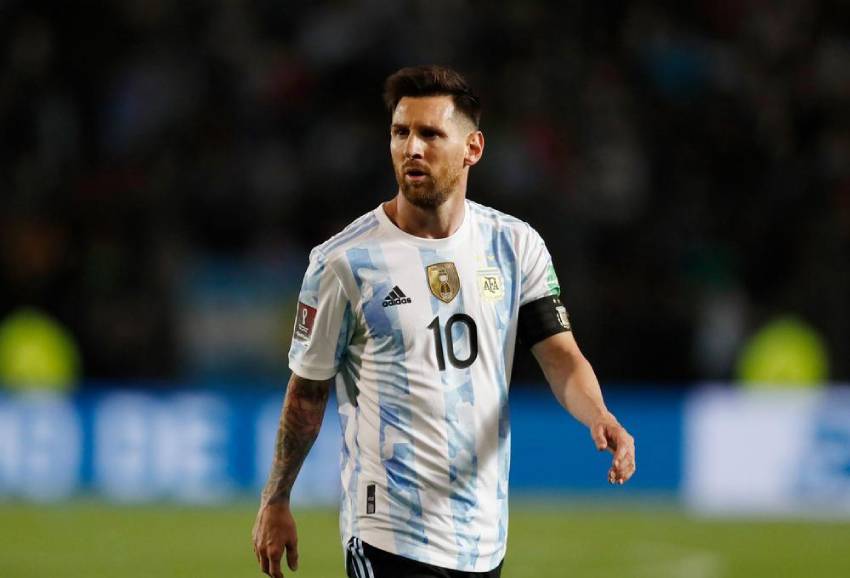
For a player who has spent two decades rendering football’s greatest complexities effortlessly simple, the 12-yard spot-kick remains Lionel Messi’s most humanizing vulnerability.
From the agonizing miss against Chile in the 2016 Copa América final to high-stakes tournament slips, Messi’s relationship with penalties is a fascinating study of human psychology, tactical chess, and the law of averages.
The Mathematical Reality
Converted: ~77% (Elite Baseline)
Missed/Saved: ~23% (The Focal Point of Criticism)
A career conversion rate hovering around 77% places Messi exactly at the historical average for professional footballers. He does not miss “repeatedly” in comparison to the average player, rather, he misses repeatedly in comparison to himself. For a magician who converts impossible free-kicks at an unprecedented rate, a standard 77% success rate feels like a systemic failure.
The Tactical Catalyst: “Goalkeeper-Dependent” Style
Penalty taking generally splits into two philosophies: Goalkeeper-Independent (blasting the ball into an unstoppable zone regardless of the keeper) and Goalkeeper-Dependent (waiting for the keeper to move first). Messi heavily favors the latter.
The Approach: A staggered, rhythmic run-up designed to lock eyes with the goalkeeper.
The Trigger: Waiting for the keeper’s hips to shift a fraction of a second before contact.
The Flaw: If a goalkeeper refuses to blink, Messi is forced into a rushed, split-second adjustment. This mechanical hitch robs his strike of both maximum power and pinpoint accuracy, giving diving keepers a trailing hand’s chance.
The Era of Big Data
The modern goalkeeper does not guess; they calculate.
In the current era of advanced analytics, opposing squads possess exhaustive heat maps of Messi’s body language. Analysts decode the exact angle of his standing foot, his hip rotation, and his breath control. When Messi steps up, the goalkeeper already knows his psychological preferences under fatigue, making the “goalkeeper-dependent” game a battle of wits that the man between the posts is increasingly equipped to win.
The Weight of a Nation
Perhaps the most potent factor is the invisible gravity of expectation. When playing for Argentina or in critical club fixtures, Messi carries the emotional bandwidth of millions.
Psychologists note that penalty shootouts shift from a test of skill to an exercise in stress management. For Messi, a penalty is rarely just a goal, it is a legacy-defining moment. This immense cognitive load can disrupt muscle memory, turning a routine training-ground exercise into an agonizingly tense gamble.
Ultimately, Messi’s penalty record is a reminder that even football’s most divine talent must still answer to the laws of pressure and human error.
Read More