



| HEADLINE |

|
Vashkar Chowdhury: A Chronicler of land, memory and humanity


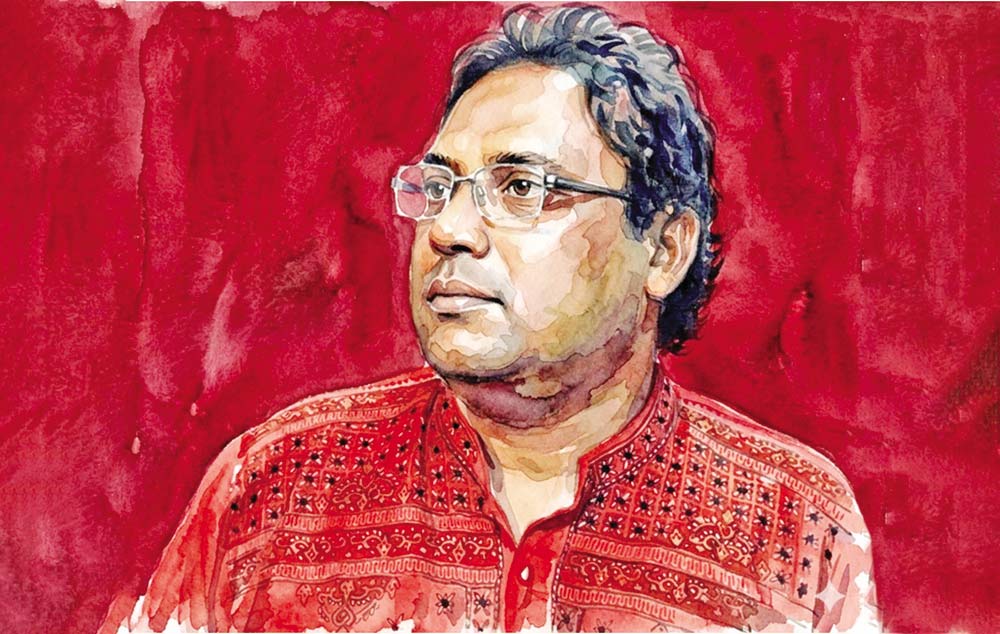 The passing of a great writer is never merely the end of a life. It is the quiet departure of a distinct literary voice, a unique moral imagination, and a way of seeing the world that cannot be replicated. With the death of Vashkar Chowdhury on 28 June 2026, Bengali literature has lost one of its most authentic storytellers- a writer whose works remained deeply rooted in the soil of Bengal while speaking to the universal human condition.
Born on 17 November 1952 in the Barind region of northern Bangladesh, Vashkar Chowdhury spent more than four decades creating a remarkable body of work that embraced poetry, fiction, essays, memoirs, literary criticism, and historical writings. Yet his greatest achievement lies not in the sheer volume of his publications but in the consistency of his literary vision. Throughout his career, he remained unwaveringly committed to ordinary people - the farmers, labourers, indigenous communities, freedom fighters, and forgotten inhabitants of rural Bangladesh whose lives rarely occupy the centre of literary discourse.
Few writers have captured the spirit of the Barind landscape with the intimacy and artistic conviction that Vashkar Chowdhury did. The red earth of the region was never a mere geographical setting in his writings. It became a living presence, a repository of memory, identity, and resilience. His novels and poems transformed local landscapes into enduring symbols of human endurance, making the regional profoundly universal. This ability to transcend locality without abandoning it remains one of the defining strengths of his literature.
His literary journey began with the publication of his first short-story collection, Roktopater Byakoron (The Grammar of Bloodshed), in 1984. It immediately introduced a writer of unusual sensitivity and narrative discipline. Rather than seeking literary fashion or ideological popularity, Chowdhury continued to build a body of work distinguished by emotional honesty and artistic restraint. His novels, including Ghor Laga Ghor, Moynabilash, Swapnajal, Bhumi, Krishnapuran, and Lal Mati Kalo Manush, portray human lives shaped by history, land, displacement, and hope.
Among his fictional works, Dhansa Mati O Tar Jibonbrikkho stands as one of his finest artistic achievements. Built around the history and struggles of the Santal community, the novel is much more than an ethnographic narrative. It is a profound exploration of identity, belonging, and cultural survival. Chowdhury neither romanticised indigenous life nor reduced it to political symbolism. Instead, he approached it with remarkable empathy and literary dignity, allowing marginalised voices to speak from within their own lived reality.
Although widely respected as a novelist and storyteller, Vashkar Chowdhury also earned lasting recognition as a poet.
His celebrated poem Amar Bondhu Niranjan (My Friend Niranjan) occupies a cherished place in contemporary Bengali poetry and continues to resonate with generations of readers. Yet his poetic achievement extends far beyond a single celebrated work. His poetry combines personal emotion with collective memory, lyrical tenderness with historical consciousness, and quiet introspection with moral courage. He understood that poetry does not always need to speak loudly; sometimes its deepest truths emerge through silence and restraint.
Language was perhaps Chowdhury’s greatest artistic instrument. His prose is deceptively simple, free from ornamental excess, yet rich with emotional depth and subtle rhythm. He possessed the rare ability to create beauty through precision rather than embellishment. Reading his fiction, one is struck not by rhetorical brilliance but by the quiet authority of lived experience. His language never seeks to impress; it seeks to reveal. His life as a freedom fighter during Bangladesh’s Liberation War of 1971 also left a profound imprint on his writing.
Perhaps the most admirable aspect of Vashkar Chowdhury’s literary career was his unwavering fidelity to his own artistic convictions. He wrote until the very end of his life, never allowing changing literary trends or commercial expectations to dictate his creative choices. His commitment was not to popularity but to truth, not to spectacle but to substance. In an age increasingly dominated by immediacy and visibility, his work reminds us that genuine literature grows slowly, patiently, and honestly from the deepest layers of human experience.
The true measure of a writer is revealed not at the moment of death but in the years that follow. Writers whose works are bound only to their own time gradually fade into obscurity. Those who illuminate enduring aspects of humanity continue to find new readers across generations. Vashkar Chowdhury belongs unmistakably to the latter tradition. His books will continue to speak to readers because they are ultimately about people- their love, loss, struggles, memories, and dignity.
His death undoubtedly leaves a significant void in contemporary Bengali literature. Yet the literary landscape he created remains alive. As future readers seek to understand the cultural memory of rural Bengal, the resilience of marginalised communities, and the moral imagination of post-independence Bangladesh, they will inevitably return to the works of Vashkar Chowdhury.
Loading...
Loading...



Editor : Iqbal Sobhan Chowdhury
Published by the Editor on behalf of the Observer Ltd. from Globe Printers, 24/A, New Eskaton Road, Ramna, Dhaka.
Editorial, News and Commercial Offices : Aziz Bhaban (2nd floor), 93, Motijheel C/A, Dhaka-1000.
Phone: PABX- 41053001-06; Advertisement: 41053012; 01793317829, 01550707291, E-mail: [email protected], [email protected] Online: email: [email protected] 41053014; 01550707297 Advertisement: 01550707296
Published by the Editor on behalf of the Observer Ltd. from Globe Printers, 24/A, New Eskaton Road, Ramna, Dhaka.
Editorial, News and Commercial Offices : Aziz Bhaban (2nd floor), 93, Motijheel C/A, Dhaka-1000.
Phone: PABX- 41053001-06; Advertisement: 41053012; 01793317829, 01550707291, E-mail: [email protected], [email protected] Online: email: [email protected] 41053014; 01550707297 Advertisement: 01550707296


