



| HEADLINE |

|
The battle of brains: Two masterminds, one trophy



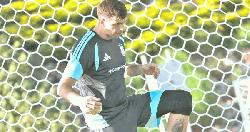
Collected Photo
The stage is set for a grand tactical battle as Spain and Argentina, two giants representing the contrasting philosophies of European and Latin American football, prepare to face each other in a highly anticipated final. Beyond the individual brilliance of the players, the match will be a strategic chess game between two master tacticians , Argentina coach Lionel Scaloni and Spain boss Luis de la Fuente.
While Spain will look to dominate possession with their modern, high-intensity passing game, Argentina will rely on defensive discipline, tactical flexibility and their ability to strike quickly on the counter. The final promises to be a battle not only of talent but also of ideas.
Scaloni’s Diamond vs De la Fuente’s 4-2-3-1
The tactical contest will begin with the formation choices of both managers. Argentina are expected to continue with Scaloni’s preferred 4-1-2-1-2 or fluid 4-4-2 system, using the midfield as their main area of control.
Leandro Paredes will operate as the holding midfielder, while Rodrigo De Paul, Enzo Fernandez and Alexis Mac Allister will look to dominate the middle of the pitch. In attack, Julian Alvarez’s relentless work rate and Lionel Messi’s freedom to operate between the lines will be Argentina’s biggest weapons against Spain’s defence.
Spain, meanwhile, are likely to stick with their familiar 4-2-3-1 setup. Rodri and Fabian Ruiz will form the backbone of the midfield, controlling the rhythm of the game. Dani Olmo will play in the number 10 role, while the pace and creativity of Lamine Yamal and Alex Baena on the wings will test Argentina’s defensive structure.
Spain’s Possession Game vs Argentina’s Counter-Attacking Threat
The biggest tactical battle of the final will revolve around Spain’s possession-based football against Argentina’s transition game.
Spain’s strength lies in keeping the ball, exhausting opponents and controlling the tempo. Rodri, who has completed a tournament-record 705 passes, will be crucial in dictating play from midfield. Their ability to immediately press after losing possession has made them one of the most difficult teams to break down, as they have conceded very few shots and goals throughout the tournament.
The movement of Yamal and Olmo into half-spaces could create serious problems for Argentina’s full-backs. Their ability to find gaps between defenders and midfielders will be a key attacking route for Spain.
Argentina, however, are unlikely to fight for possession throughout the match. Scaloni’s plan will be to allow Spain to push forward, create spaces behind their defence and exploit those gaps through quick counter-attacks.
Whenever Messi finds pockets of space, his vision and passing ability could become decisive. Whether through Julian Alvarez or Lautaro Martinez, Argentina will look to punish Spain with direct attacking moves. Though they may create fewer chances, their finishing quality remains one of their biggest strengths.
Midfield Battle and Messi’s Free Role
The duel between Rodri and Argentina’s midfield trio could decide the flow of the match.
Messi, despite starting from the right side, is expected to move into central areas where he can operate between Spain’s midfield and defensive lines. If he drops deeper to receive the ball, Spain’s centre-backs may be forced to step forward, leaving space behind them for Alvarez or Lautaro to exploit.
A perfectly timed through ball from Messi could dismantle Spain’s high defensive line. However, Argentina must first overcome Spain’s aggressive counter-pressing, with players like Enzo Fernandez and Paredes expected to play a crucial role in resisting pressure.
X-Factors: Argentina’s Late Magic vs Spain’s Defensive Wall
In a final, statistics and mentality often become decisive. Both teams have different strengths that could shape the outcome.
Argentina have developed a reputation for their late-game resilience. Statistics show that 12 of their 19 goals in the tournament have come after the 75th minute, highlighting their ability to stay composed under pressure and find breakthroughs when matches enter their decisive stages.
Spain, on the other hand, boast one of the strongest defensive records in the tournament, conceding only one goal. Goalkeeper Unai Simon and defenders such as Aymeric Laporte and Pau Cubarsi have created a defensive wall that will be extremely difficult for any attack to break.
Argentina’s defence, having conceded seven goals in the tournament, may appear more vulnerable, and Spain’s fast-moving attack will look to exploit those weaknesses.
Final Verdict: A Battle of Nerves and Tactics
On paper, Spain will aim to control the match through possession, pressing and youthful attacking energy. Argentina will look to slow the tempo, invite pressure and use their experience in transition moments.
Spain’s high defensive line will face the test of Messi’s creativity, while Argentina’s defence must survive Spain’s relentless attacking movement. In a final where fine margins decide everything, the team that remains calm under pressure and executes its tactical plan better will lift the trophy.
For football fans around the world, this is not just a final, it is a tactical thriller showcasing two different visions of modern football.
-HIS
Loading...
Loading...
Also read








Editor : Iqbal Sobhan Chowdhury
Published by the Editor on behalf of the Observer Ltd. from Globe Printers, 24/A, New Eskaton Road, Ramna, Dhaka.
Editorial, News and Commercial Offices : Aziz Bhaban (2nd floor), 93, Motijheel C/A, Dhaka-1000.
Phone: PABX- 41053001-06; Advertisement: 41053012; 01793317829, 01550707291, E-mail: [email protected], [email protected] Online: email: [email protected] 41053014; 01550707297 Advertisement: 01550707296
Published by the Editor on behalf of the Observer Ltd. from Globe Printers, 24/A, New Eskaton Road, Ramna, Dhaka.
Editorial, News and Commercial Offices : Aziz Bhaban (2nd floor), 93, Motijheel C/A, Dhaka-1000.
Phone: PABX- 41053001-06; Advertisement: 41053012; 01793317829, 01550707291, E-mail: [email protected], [email protected] Online: email: [email protected] 41053014; 01550707297 Advertisement: 01550707296


