



| HEADLINE |

|
Media's role is to question those in power, not to flatter them: Fakhrul
Published : Monday, 20 July, 2026 at 12:00 AM
Staff Correspondent


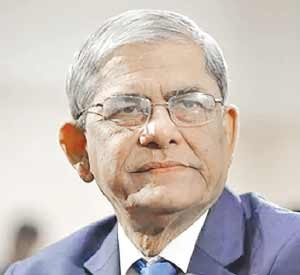 Local Government, Rural Development and Cooperatives Minister and BNP Secretary General Mirza Fakhrul Islam Alamgir on Sunday said the confusion and controversy over the implementation of the July Charter should be resolved through discussion.
At the same time, he said the job of the media is to question those in power, not to flatter them.
Fakhrul made the remarks while speaking as the chief guest at a programme at the Institution of Engineers, Bangladesh (IEB) in the capital's Ramna on Sunday
(July 19).
The National Editors Council (NEC) organised the programme titled Role of the Media in Fascist Rule to pay tribute to journalists martyred in the 2024 mass uprising.
At the programme, the families of five journalists martyred in the July mass uprising were honoured and given financial assistance of Tk 1 lakh each.
Regarding the July Charter, Fakhrul said attempts were being made to spread confusion over its implementation. He said the charter clearly states that on issues where political parties could not reach an agreement, those elected to run the state would work according to their respective manifestos.
But why are we avoiding this issue he asked.
Fakhrul said the July movement had created an opportunity to build a new state and that opportunity should be utilised. He expressed hope that a state based on justice and fairness could be established.
He also said the government was trying to implement the promises made by the BNP.
Mentioning that there had been many movements, the BNP Secretary General said a system should now be introduced through discussions in parliament so that future generations do not have to resort to violence.
He urged the opposition parties to move away from the mentality of opposing everything. He also called on them to join the Constitution Amendment Committee and cooperate in discussing and resolving issues that require changes to the constitution.
Fakhrul said the looting and destruction that took place across the country during the past 15 years of fascist rule could not be repaired in a single day.
But the work has to start. I believe this work has started today. There may be many imperfections and inconsistencies. But the work has started. It cannot be said that nothing has happened, he said.
Speaking about the role of the media, Fakhrul said its responsibility is to question those in power. However, during the previous fascist regime, many people in the media were busy flattering those in power instead of fulfilling that responsibility.
Flattery, sycophancy I don't want to see this anymore. Unfortunately, that's what we have to see. The same thing happens in politics. The same thing happens in your bureaucracy. Something is wrong. Why can't we come out of this as a nation he said.
Fakhrul said a major revolution might be needed to bring the nation out of this culture and bring about radical change.
NEC President and Amar Desh Editor Mahmudur Rahman presided over the programme. He said the NEC was formed to keep the nation vigilant so that fascism could not rise again in the country. Editors from Dhaka and remote areas of the country would receive equal importance in the organisation, he added.
Bangladesh Federal Union of Journalists (BFUJ) Secretary General Quader Gani Chowdhury called on the government to establish a July Martyrs' Square. He also demanded justice for the killings of journalists martyred in the mass uprising.
The Daily Waadaa Editor Shafiqul Alam said July was not over and would continue for ages. He announced that the NEC would continue to support the educational expenses of the children of the five journalists martyred in July.
Shamsi Ara Zaman, mother of martyred journalist Tahir Zaman Priyo, said that if the media had not supported fascists in the past, Sheikh Hasina would not have dared to become a murderer. She demanded speedy trials over the killings of the July martyrs and urged the media not to serve any new power.
Farhana Islam Popi, wife of martyred journalist Hasan Mehdi, said no accused had been arrested even two years after her husband's murder. She demanded a speedy trial of those involved.
Jugantar Editor Abdul Hai Sikder conducted the programme, while Pratidiner Bangladesh Editor Maruf Kamal Khan delivered the welcome speech.
Journalists' Welfare Trust Managing Director Mohammad Abdul Bashir, Naya Diganta Editor Salahuddin Muhammad Babar, New Nation Editor Mokarram Hossain and Sylhet-based Dainik Jalalabad Editor Muktabis-un-Noor also spoke at the programme.
Loading...
Loading...
Also read



Editor : Iqbal Sobhan Chowdhury
Published by the Editor on behalf of the Observer Ltd. from Globe Printers, 24/A, New Eskaton Road, Ramna, Dhaka.
Editorial, News and Commercial Offices : Aziz Bhaban (2nd floor), 93, Motijheel C/A, Dhaka-1000.
Phone: PABX- 41053001-06; Advertisement: 41053012; 01793317829, 01550707291, E-mail: [email protected], [email protected] Online: email: [email protected] 41053014; 01550707297 Advertisement: 01550707296
Published by the Editor on behalf of the Observer Ltd. from Globe Printers, 24/A, New Eskaton Road, Ramna, Dhaka.
Editorial, News and Commercial Offices : Aziz Bhaban (2nd floor), 93, Motijheel C/A, Dhaka-1000.
Phone: PABX- 41053001-06; Advertisement: 41053012; 01793317829, 01550707291, E-mail: [email protected], [email protected] Online: email: [email protected] 41053014; 01550707297 Advertisement: 01550707296


