



| HEADLINE |

|
Sustainable development requires smarter population policies today
Published : Tuesday, 21 July, 2026 at 12:00 AM
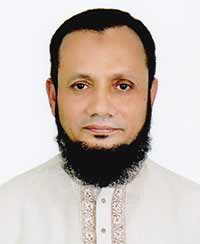
MIR MOSHARREF HOSSAIN PAKBIR


 For decades, Bangladesh was celebrated as one of the developing world's greatest success stories in population management. The country's total fertility rate (TFR) fell from 6.3 children per woman in 1975 to 2.3 by 2012. That demographic transition became a pillar of Bangladesh's economic and social transformation, reducing poverty, improving maternal and child health, expanding female education and creating the demographic dividend that supported decades of growth. Today, however, this success story is showing signs of strain. According to the 2025 Multiple Indicator Cluster Survey (MICS), Bangladesh's fertility rate has risen to 2.4 children per woman after remaining at 2.3 for more than a decade. Although a one-decimal increase does not necessarily signal a long-term upward trend, in a country of more than 175 million people, even a modest rise in fertility means hundreds of thousands of additional births over time, placing greater pressure on limited resources and public services.
The debate should not focus on whether the fertility rate is exactly 2.3 or 2.4. The more important question is whether Bangladesh is gradually losing control of one of its greatest development achievements. Population itself is never a burden. It becomes an economic asset when people are healthy, educated, skilled and productively employed. China, South Korea, Vietnam and Singapore benefited from abundant human resources by investing in education, healthcare, industrialization and employment while keeping population growth manageable. Conversely, rapid population growth without comparable investment in human capital often traps countries in poverty, unemployment and environmental degradation.
Bangladesh, being one of the most densely populated countries of the world with limited resources, must identify and acknowledge the warning signs fast enough. One of the clearest warning signs is the weakening of the family-planning program that once became a model for many developing countries. During the 1980s and 1990s, family-planning workers regularly visited rural households, providing contraceptives, counseling and reproductive health information. Public campaigns through television, radio, newspapers and community outreach promoted small families and gradually changed social attitudes.
Dhaka and other major cities already struggle with housing shortages, traffic congestion, pollution, inadequate sanitation and overstretched public services. Continued population growth would further strain infrastructure, accelerate conversion of agricultural land or wetlands and make sustainable urban planning increasingly difficult.
Much of that momentum has faded. Household visits have declined significantly, while around one-quarter of field-level positions remain vacant. The COVID-19 pandemic disrupted contraceptive supply chains and then procurement delays following the expiration of a major health sector program deepened shortages. Although this alone cannot explain the recent increase in fertility, it has weakened couples' ability to avoid unintended pregnancies. The program has also failed to keep pace with changing social realities. Young couples now obtain information mainly through smartphones and social media, yet family-planning messages remain largely absent from digital platforms. Bangladesh once succeeded by taking reproductive health information directly to people's doorsteps; today similar efforts are needed online.
Equally concerning is the persistence of early marriage and adolescent pregnancy. Recent surveys suggest the proportion of married girls aged 15 to 19 has increased over the past six years, accompanied by a rise in adolescent births, making this one of the main explanations for higher fertility. Marriage during adolescence often leads to childbirth soon afterwards. Existing family-planning policies largely exclude unmarried adolescents from reproductive health services, leaving many without adequate knowledge before marriage. Consequently, pregnancies often occur before young couples have sufficient information or access to modern contraceptives.
Female education remains one of the strongest determinants of fertility worldwide. Educated women generally marry later, participate more actively in the labor force, have greater decision-making power and choose smaller families. Bangladesh has made remarkable progress in girls' education, yet huge school and college dropout, child marriage and adolescent pregnancy continue to undermine these gains, particularly in disadvantaged communities.
Policy complacency has also contributed to the present situation as family planning gradually lost political priority. Some argued that a larger population would provide a bigger labor force and increase overseas employment. While a large workforce can support economic growth, it becomes an asset when matched by investments in education, healthcare, skills and productive employment only.
Bangladesh already has one of the world's highest population densities. Every additional million people require food, housing, schools, hospitals, transport, electricity, clean water and sanitation, while climate change continues to reduce cultivable land. Bangladesh has achieved impressive gains in agricultural production, but farmland continues to disappear because of urban expansion, industrialization and infrastructure development. More people require more food, yet arable land per person continues to decline.
Healthcare systems would also face growing pressure. Children require immunization, nutrition programs, medical care and educational support, while more pregnancies increase demand for antenatal care, skilled birth attendants and maternal healthcare. Maternal and child mortality as well as malnutrition may rise if healthcare capacity does not expand.
Education is another major concern. Although Bangladesh has significantly expanded school enrolment, many institutions remain overcrowded, especially in urban areas. Larger student populations require more schools, teachers, classrooms and learning resources. Without adequate investment, educational quality declines, weakening the future workforce.
The labor market would face even greater challenges. Every year hundreds of thousands of young Bangladeshis enter the job market, but employment creation has struggled to keep pace. Rapid population growth expands the labor force faster than productive jobs, increasing unemployment, underemployment and informal employment. Persistent youth unemployment reduces productivity while worsening poverty, inequality, crimes and social frustration.
Urbanization would accelerate further. Dhaka and other major cities already struggle with housing shortages, traffic congestion, pollution, inadequate sanitation and overstretched public services. Continued population growth would further strain infrastructure, accelerate conversion of agricultural land or wetlands and make sustainable urban planning increasingly difficult. Population growth also has direct implications for climate resilience. Bangladesh is among the countries most vulnerable to climate change. A growing population increases demand for land, freshwater, energy and natural resources just as climate change makes them scarcer, further complicating environmental management.
International experience offers valuable lessons. Thailand reduced fertility through nationwide awareness campaigns. Iran achieved one of history's fastest fertility declines by integrating family planning into primary healthcare, expanding reproductive health services and requiring premarital counseling. Indonesia likewise demonstrated how community-based family-planning programs, backed by local governments and women's empowerment, reduced fertility while improving maternal and child health. Bangladesh itself was once regarded as a model for developing countries. Its achievements resulted from voluntary participation, political commitment, dedicated field workers and widespread public awareness. These principles should continue to guide future policy.
Bangladesh should also avoid mistakes made elsewhere. China's one-child policy reduced fertility but produced rapid population ageing, labor shortages and gender imbalance. Population management should remain voluntary and rights-based. Bangladesh must restore family planning as a national development priority rather than treating it solely as a health program. Ensuring uninterrupted contraceptive supplies, filling vacant field-level positions and revitalizing community outreach are immediate priorities. Family-planning communication must also embrace digital technologies to reach younger generations.
Equal emphasis should be placed on preventing child marriage, expanding girls' education and providing comprehensive reproductive health education for adolescents. Most importantly, considering our social structure, we must bring religious leaders from different religions on board to fight the menaces of child marriage, multiple marriage and excessive number of children as our religious people usually do not consider social, economic or national consequences rather believes wrong interpretation of religious guidance.
Our authority must also prioritize eliminating crimes like drug abuse as such crimes indirectly contribute in unplanned population growth. Moreover, making the youth engaged in productive or even positive work must also remain a priority. Otherwise, the idle population will directly influence rapid population growth.
Population policy should also be integrated into broader national planning. Housing, employment, education, healthcare, food security, climate adaptation and urban development all depend on realistic demographic projections. Every additional child should be viewed as a future investment requiring quality education, healthcare, nutrition and employment opportunities.
Bangladesh now stands at an important demographic crossroads. The recent increase in fertility may prove temporary or mark the beginning of a broader reversal. Either way, complacency would be costly. The objective is not to reduce population for its own sake but to ensure every child has the opportunity to grow up healthy, educated and productive. Sustainable development is measured not by population size but by the quality of life a country provides. For Bangladesh, maintaining balanced population growth is essential for long-term economic progress, environmental sustainability and shared national prosperity. Hence, we hope, smart population policies will receive its due priority.
The writer is Chief Editor at Mohammadi News Agency (MNA) and Editor at Kishore Bangla
Loading...
Loading...
Also read



Editor : Iqbal Sobhan Chowdhury
Published by the Editor on behalf of the Observer Ltd. from Globe Printers, 24/A, New Eskaton Road, Ramna, Dhaka.
Editorial, News and Commercial Offices : Aziz Bhaban (2nd floor), 93, Motijheel C/A, Dhaka-1000.
Phone: PABX- 41053001-06; Advertisement: 41053012; 01793317829, 01550707291, E-mail: [email protected], [email protected] Online: email: [email protected] 41053014; 01550707297 Advertisement: 01550707296
Published by the Editor on behalf of the Observer Ltd. from Globe Printers, 24/A, New Eskaton Road, Ramna, Dhaka.
Editorial, News and Commercial Offices : Aziz Bhaban (2nd floor), 93, Motijheel C/A, Dhaka-1000.
Phone: PABX- 41053001-06; Advertisement: 41053012; 01793317829, 01550707291, E-mail: [email protected], [email protected] Online: email: [email protected] 41053014; 01550707297 Advertisement: 01550707296


