



| HEADLINE |

|
PM may reshuffle cabinet: Dr Zahed


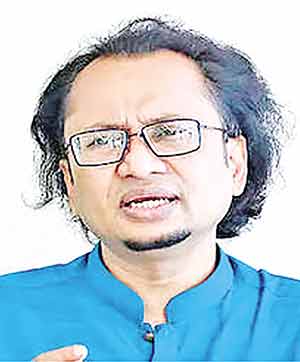 Prime Minister's Information and Broadcasting Adviser Dr Zahed Ur Rahman on Tuesday said the Prime Minister could reshuffle the redistributing portfolios or bringing in if he dissatisfied with the performance of any one of the present cabinet.
It is not yet certain whether such changes would take place after the government's first 180 days in office or at a later stage, he said while responding to questions from journalists at the Information Ministry's regular press briefing at the Secretariat.
He said the government's main objective is to ensure the welfare of the people.
"Rebuilding state institutions weakened over the past 17 years remains the government's biggest challenge during its first five months," he said.
The government would not tolerate enforced disappearances or extrajudicial killings, he said, adding that those responsible at the highest levels for the deaths caused by police firing during the July-August 2024 events would also be brought to justice.
On the law and order situation, Zahed said public confidence in the police has not yet been fully restored and that it would take time for people to overcome the trauma of past incidents. At the same time, he said, the police must be given the opportunity to perform their duties. Responding to a question on criticism of the government and corruption allegations against ministers, he said the media would raise such issues, those concerned would explain their positions, and the government would take action if necessary. He described this as a normal democratic process.
Asked about allegations that a young man was picked up in Mongla, Bagerhat, by people identifying themselves as Coast Guard personnel, Zahed said the government was not denying the allegation and that the matter would be verified. He added that he would speak to the Home Ministry and request it to issue a statement.
He noted that the current Home Minister had himself been a victim of enforced disappearance in the past.
"If a state makes someone disappear or kills someone through extrajudicial means, it is no longer a state in the true sense," he said, adding that the state's responsibility is to uphold the rule of law.
Regarding the Information Commission, Anti-Corruption Commission (ACC) and Human Rights Commission, Zahed said rebuilding these institutions remains among the government's priorities. The selection committee for the Information Commission has already been formed, while restructuring of the ACC is under way. Steps regarding the Human Rights Commission will be taken after completing the necessary legal process.
He also said the Ministry of Information and Broadcasting has formed a special panel of lawyers to strengthen legal action against disinformation, misinformation and cyberbullying, particularly targeting women.
Loading...
Loading...
Also read



Editor : Iqbal Sobhan Chowdhury
Published by the Editor on behalf of the Observer Ltd. from Globe Printers, 24/A, New Eskaton Road, Ramna, Dhaka.
Editorial, News and Commercial Offices : Aziz Bhaban (2nd floor), 93, Motijheel C/A, Dhaka-1000.
Phone: PABX- 41053001-06; Advertisement: 41053012; 01793317829, 01550707291, E-mail: [email protected], [email protected] Online: email: [email protected] 41053014; 01550707297 Advertisement: 01550707296
Published by the Editor on behalf of the Observer Ltd. from Globe Printers, 24/A, New Eskaton Road, Ramna, Dhaka.
Editorial, News and Commercial Offices : Aziz Bhaban (2nd floor), 93, Motijheel C/A, Dhaka-1000.
Phone: PABX- 41053001-06; Advertisement: 41053012; 01793317829, 01550707291, E-mail: [email protected], [email protected] Online: email: [email protected] 41053014; 01550707297 Advertisement: 01550707296


