



| HEADLINE |

|

One terminal failure, Nationwide gas pressure
Published : Wednesday, 22 July, 2026 at 7:11 PM
Special Correspondent


File Photo
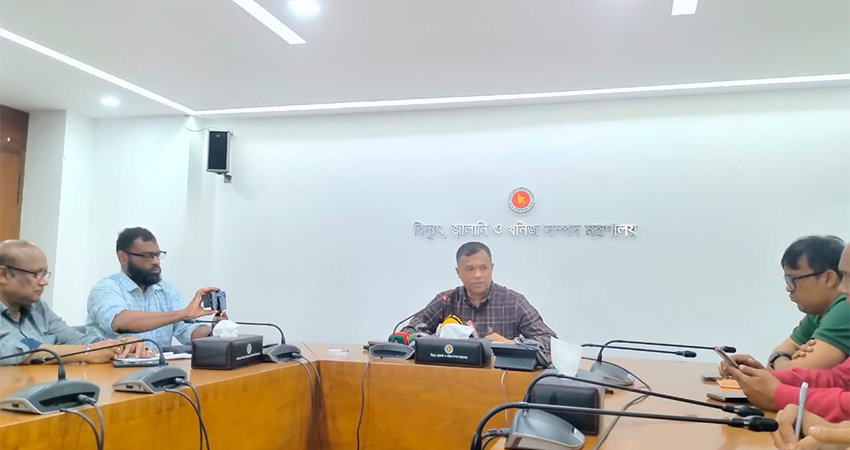
A fire at a floating LNG terminal operated by US-based Excelerate Energy has disrupted Bangladesh’s gas supply, reducing daily availability by around 500 million cubic feet (MMCF), Power, Energy and Mineral Resources Minister Iqbal Hasan Mahmud Tuku said. The supply disruption has put additional pressure on industries, power plants, CNG stations and household consumers across the country.
The minister said technical experts and relevant agencies are working to repair the fault at the floating LNG terminal as quickly as possible. He added that emergency measures are being taken to manage the limited gas supply and maintain operations by prioritising essential sectors.
“Once the technical fault is repaired and the terminal resumes operation, gas supply will return to normal,” the minister said.
He said the situation could have turned into a major disaster as the LNG-carrying vessel was located at a safe distance from the terminal. Due to the disruption, several areas, including Mymensingh, have faced shortages of pipeline gas and CNG supply, leading to public protests and road blockades in some places.
Tuku said ensuring long-term energy security requires increasing domestic gas exploration and production while strengthening LNG import infrastructure. He stressed that the country needs multiple supply sources so that a disruption at a single facility does not trigger a nationwide crisis.
The floating LNG terminal was shut down on July 21 following a technical problem, causing a sharp decline in gas supply. Reports suggest that many households in Dhaka and other areas have been struggling to get regular gas supply, while several CNG filling stations have also faced shortages.
Munir Hossain Chowdhury, joint secretary and spokesperson of the Energy and Mineral Resources Division, said the current crisis was triggered by the LNG terminal problem but was worsened by Bangladesh’s long-standing dependence on imported energy.
He said insufficient attention to domestic oil and gas exploration in the past has increased reliance on imports. To reduce this dependency, the government has taken short-, medium- and long-term plans, including a project to drill 100 new wells.
The government is also working on establishing a fourth floating LNG terminal, exploring LNG import through ISO tanks from Malaysia, reviewing the gas pipeline network from Bhola, and diversifying energy import sources.
Domestic gas production, which once stood at around 2,800 MMCF per day, has declined to nearly 1,645 MMCF due to falling reserves. Bangladesh began importing LNG in 2018 to bridge the supply gap.
The country currently has two floating storage regasification units (FSRUs), with a combined capacity of supplying up to 1,100 MMCF of gas daily. However, LNG operations are often affected during rough sea conditions.
At present, daily gas demand among committed consumers is around 5,500 MMCF, while supply remains around 2,600 MMCF, including imported LNG. Domestic fields contribute about 1,645 MMCF, while the Summit Group-operated LNG terminal supplies around 560 MMCF, bringing total supply down to nearly 2,200 MMCF amid the ongoing disruption.
-HIS

Loading...
Loading...
Also read








Editor : Iqbal Sobhan Chowdhury
Published by the Editor on behalf of the Observer Ltd. from Globe Printers, 24/A, New Eskaton Road, Ramna, Dhaka.
Editorial, News and Commercial Offices : Aziz Bhaban (2nd floor), 93, Motijheel C/A, Dhaka-1000.
Phone: PABX- 41053001-06; Advertisement: 41053012; 01793317829, 01550707291, E-mail: [email protected], [email protected] Online: email: [email protected] 41053014; 01550707297 Advertisement: 01550707296
Published by the Editor on behalf of the Observer Ltd. from Globe Printers, 24/A, New Eskaton Road, Ramna, Dhaka.
Editorial, News and Commercial Offices : Aziz Bhaban (2nd floor), 93, Motijheel C/A, Dhaka-1000.
Phone: PABX- 41053001-06; Advertisement: 41053012; 01793317829, 01550707291, E-mail: [email protected], [email protected] Online: email: [email protected] 41053014; 01550707297 Advertisement: 01550707296


