



| HEADLINE |

|
2,534 inmates, 1,460 capacity: Rajshahi jail in crisis
Published : Thursday, 23 July, 2026 at 7:37 PM
Observer staff correspondent


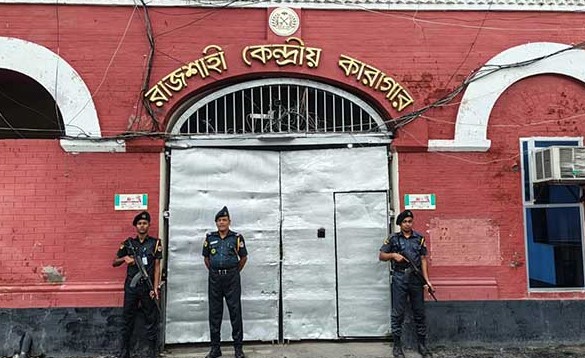
File Photo
Nearly two centuries after its establishment, Rajshahi Central Jail is struggling to cope with mounting pressure as the number of inmates has risen to almost double its approved capacity. Severe overcrowding, staff shortages, aging infrastructure and recurring waterlogging during the monsoon have created major challenges for the country’s historic correctional facility.
Established in 1840 during the British colonial era on the bank of the Padma River, Rajshahi Central Jail was upgraded to a central jail in 1914. The facility, with a sanctioned capacity of 1,460 inmates, is currently housing 2,534 prisoners, according to jail authorities.
Of the total capacity, 1,419 seats are allocated for male inmates and 41 for female inmates. However, the jail currently accommodates 2,422 male prisoners and 112 female prisoners, putting immense pressure on the existing infrastructure and management system.
A visit to the jail on Tuesday (July 21) found that three buildings inside the premises have become unfit for regular use, with walls and roofs deteriorating in several places. During the rainy season, water accumulates in internal drainage systems, causing prolonged waterlogging and disrupting inmates’ movement while creating health risks.
Jail authorities said around 200 posts are currently vacant, making it difficult to ensure proper security, inmate management and rehabilitation activities. They stressed that immediate recruitment and infrastructure expansion are necessary to improve overall prison management.
Despite these challenges, several reform initiatives have been taken under Jail Superintendent Al Mamun, who assumed office in April this year. The authorities have introduced a shop named “Amar Shop”, allowing inmates to purchase essential items at lower prices compared to outside markets.
Facilities such as a gents’ salon and laundry shop have also been introduced for jail officials and employees. The old prison library has been renovated to encourage reading habits among inmates, while arrangements have been made for daily Quran recitation by inmates who are able to participate.
As part of skill development programmes, agricultural training has also been introduced inside the jail. Around 500 sacks are currently being used for ginger cultivation, with authorities hoping the training will help inmates become self-reliant after their release.
Officials said food quality for inmates has improved significantly, with increased attention to balanced nutrition. Sports and cultural activities have also been expanded, allowing inmates to participate in games such as chess, ludo, cricket and football. Recently, prisoners were allowed to watch FIFA World Cup matches on a large projector screen, which received a positive response.
Several initiatives have also been taken for jail staff and their families, including renovation of the deputy jailer’s office, construction of a children’s park, renovation of the main gate signboard, installation of 10 dustbins and plantation of 175 fruit and forest trees inside the premises.
Speaking to reporters, Rajshahi Central Jail Superintendent Al Mamun said the facility is nearly 200 years old and currently facing additional pressure due to the excessive number of inmates.
“Rajshahi Central Jail is accommodating far more prisoners than its capacity. This has created extra pressure on our management system. However, we are trying our best to ensure a humane environment for inmates,” he said.
He added that some buildings require urgent renovation and permanent solutions are needed to address waterlogging during the rainy season. “Filling the vacant posts and improving infrastructure will make prison management more effective,” he said.
The superintendent said the goal of the prison system is not only to keep inmates secure but also to create an environment for correction and rehabilitation through education, religious practices, sports, cultural activities and vocational training.
-RHF/HIS
Loading...
Loading...
Also read








Editor : Iqbal Sobhan Chowdhury
Published by the Editor on behalf of the Observer Ltd. from Globe Printers, 24/A, New Eskaton Road, Ramna, Dhaka.
Editorial, News and Commercial Offices : Aziz Bhaban (2nd floor), 93, Motijheel C/A, Dhaka-1000.
Phone: PABX- 41053001-06; Advertisement: 41053012; 01793317829, 01550707291, E-mail: [email protected], [email protected] Online: email: [email protected] 41053014; 01550707297 Advertisement: 01550707296
Published by the Editor on behalf of the Observer Ltd. from Globe Printers, 24/A, New Eskaton Road, Ramna, Dhaka.
Editorial, News and Commercial Offices : Aziz Bhaban (2nd floor), 93, Motijheel C/A, Dhaka-1000.
Phone: PABX- 41053001-06; Advertisement: 41053012; 01793317829, 01550707291, E-mail: [email protected], [email protected] Online: email: [email protected] 41053014; 01550707297 Advertisement: 01550707296


