



| HEADLINE |

|
President goes, new President will come, let the Constitution reign
Published : Sunday, 26 July, 2026 at 12:00 AM
Observer Special


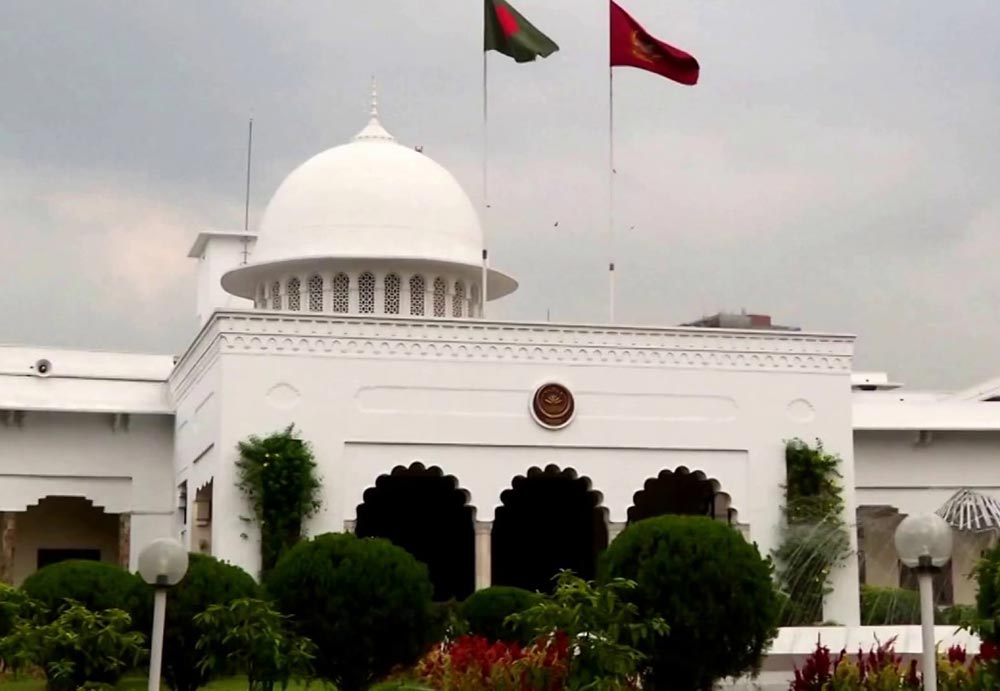 The resignation of President Mohammed Shahabuddin, Bangladesh's 16th President, before the completion of his tenure marks an important turning point in the country's constitutional history. Although health reasons have been officially cited as the basis for his much-talked-about resignation, prolonged political pressure and events following the student-led uprising in August, 2024 were also contributing factors. This resignation is not merely the departure of a President; rather, it is a new test resignation for the country’s state system, its constitutional institutions, and its democratic maturity and stability.
In 55 years since the independence of the country out of 16 Presidents, five resigned, two killed and one died while in office.
In a state, governments come and governments go. Political parties come to power and later lose power. But the state endures through its Constitution, its institutions, and constitutional continuity. The office of the President is one of the symbols of that continuity. He is not merely an individual; he represents the constitutional dignity of the state, the continuity of the Republic and the national unity.
Since Bangladesh's independence, through a bloody War of Liberation in 1971, the country has witnessed numerous political changes over the past half-century. Military rule, popular uprisings, constitutional amendments, elections, polls irregularities and political conflicts have all shaped the state's journey.
Every crisis has taught the same lesson: The state survives when institutions stand above individuals or political parties. Today's presidential resignation once again brings that truth to the forefront.
The strength of democracy does not lie in the absence of political disagreements but in the ability to accommodate those disputes within the constitutional framework. From that perspective, the Speaker's assumption of the responsibilities of Acting President carries an important constitutional message. It demonstrates that the constitutional system can continue to function despite changes in individuals. This is a positive sign for democracy.
In a healthy and stable democracy, merely following the Constitution is not enough; public confidence is equally important. When a change occurs in the state's highest constitutional office, citizens should be informed with the highest level of transparency. A lack of information gives rise to rumours, and rumours ultimately weaken institutions leading to chaos and instability.
The President of Bangladesh is not the centre of executive power. That authority rests with the Prime Minister and the Cabinet under the Parliamentary system. However, the President's symbolic, moral and constitutional significance is immense. He symbolises the continuity of the state and serves as an institution standing above political rivalry. That is why, safeguarding the dignity, independence, and neutrality of the presidency is not only the responsibility of the government but also that of the opposition, civil society, and every democratic institution of the state.
The resignation also raises another important question: Is Bangladesh moving towards a political culture in which constitutional institutions can remain outside partisan competition? The long-term stability of democracy depends on a culture in which political rivalry exists, but the dignity of constitutional institutions remains intact and undisputed.
The mature democracies of the world offer an important lesson. There, individuals change, but institutions do not become weaker. This is because they believe that the strength of the state does not lie on any man, leader or political party. It depends on the Constitution, the judiciary, the Election Commission, Parliament, and constitutional traditions.
The international community is also observing this transition closely. In today's world, political stability is not only an internal matter but is also closely linked to investment, diplomatic relations, and economic confidence. A country that can keep its constitutional institutions strong gains greater acceptance internationally. On the other hand, political uncertainty hampers the pace of economic development.
Bangladesh is now aspiring to reach a new level of economic achievement. The country's role in infrastructure development, industrialisation, technology, regional connectivity, and global trade is growing rapidly. This progress requires a strong, credible, and predictable constitutional framework. Political stability is one of the foremost prerequisites for economic growth.
The President's resignation is not simply a political news story; it is a constitutional moment. At this moment, the greatest responsibility of the political leadership-both ruling party and opposition-is to conduct the entire process of electing a new President in a way that further strengthens public confidence. Placing the long-term interests of the state above partisan gains and losses will be the true mark of statesmanship.
History never remembers only events; it also remembers a nation's response to those events. This resignation will be equally important to future generations, as will the conduct of Bangladesh's political leadership, constitutional institutions, and civil society. Will they turn this challenge into an opportunity to strengthen institutions, or will they transform it into another political confrontation? History will seek that answer.
Bangladesh's democracy now stands at a crossroads where there is no alternative to giving greater importance to the strength of institutions than to individuals. Presidents will come and Presidents will go; governments will change, and political leadership will also change. But the Constitution, as the soul of the state, the dignity of the Republic, and the sovereign will of the people will remain enduring. If the path forward is determined with this fundamental truth in mind, then the resignation of President Mohammed Shahabuddin will be remembered in history not as a crisis, but as a new milestone in Bangladesh's constitutional maturity and democratic stability.
Loading...
Loading...
Also read



Editor : Iqbal Sobhan Chowdhury
Published by the Editor on behalf of the Observer Ltd. from Globe Printers, 24/A, New Eskaton Road, Ramna, Dhaka.
Editorial, News and Commercial Offices : Aziz Bhaban (2nd floor), 93, Motijheel C/A, Dhaka-1000.
Phone: PABX- 41053001-06; Advertisement: 41053012; 01793317829, 01550707291, E-mail: [email protected], [email protected] Online: email: [email protected] 41053014; 01550707297 Advertisement: 01550707296
Published by the Editor on behalf of the Observer Ltd. from Globe Printers, 24/A, New Eskaton Road, Ramna, Dhaka.
Editorial, News and Commercial Offices : Aziz Bhaban (2nd floor), 93, Motijheel C/A, Dhaka-1000.
Phone: PABX- 41053001-06; Advertisement: 41053012; 01793317829, 01550707291, E-mail: [email protected], [email protected] Online: email: [email protected] 41053014; 01550707297 Advertisement: 01550707296


