



| HEADLINE |

|
Sundarbans Gasping Under 8-Front Assault
Alarm bells ring on World Mangrove Day
Published : Sunday, 26 July, 2026 at 12:45 PM
Observer Correspondent


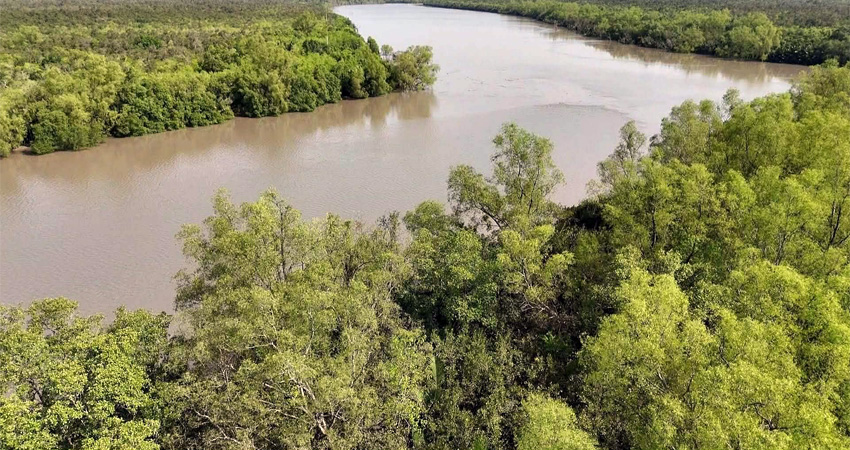
The Sundarbans is not merely a forest; it stands as Bangladesh’s natural shield, a powerhouse of biodiversity, and a unique World Heritage site. However, the world’s largest mangrove forest now faces a dire existential threat driven by climate change, unplanned industrialization, pollution, and multi-dimensional human aggression. Environmentalists warn that unless these relentless pressures are checked, it will not only jeopardize the Sundarbans but also endanger the entire coastal ecosystem and the livelihoods of millions.
What Makes the Sundarbans Unique?
Recognized as a UNESCO World Heritage site and a Ramsar site, the Sundarbans spans approximately 10,000 square kilometers across Bangladesh and India, with nearly 66 percent located within Bangladeshi territory.
According to experts, while most mangrove forests globally feature only two to three types of pneumatophores (respiratory roots), the Sundarbans boasts six distinct varieties. Out of 48 global mangrove species, 19 are found here. The forest shelters 334 plant species and nearly 2,200 animal species. Besides harboring at least 31 globally endangered species, it serves as one of the primary habitats for the iconic Royal Bengal Tiger.
Interlinked by 13 major rivers and around 450 canals, the Sundarbans plays a crucial role not just in sustaining biodiversity, but also in shielding the nation from cyclones, storm surges, and coastal disasters.
The 8 Aggressively Destructive Threats:
Environmentalists and researchers pinpoint eight major drivers currently placing the Sundarbans in severe peril:
1. Unplanned Industrialization: Despite being designated an Ecologically Critical Area (ECA), at least 50 heavy industrial units-including cement factories, LPG plants, and oil refineries-have cropped up within 10 kilometers of the forest. Large food grain silos have also been erected in close proximity.
2. Pollution from Rampal Power Plant: Concerns persist over contaminated runoff from the power plant draining into the Passur and Maidara rivers, alongside fly ash and industrial emissions degrading the forest environment.
3. Industrial Waste and Oil Spills: Untreated liquid waste from factories and oil spills from vessels spread through rivers and canals, polluting the water and sharply reducing the germination rate of mangrove saplings.
4. Unregulated Tourism and Plastic Waste: Indiscriminate dumping of plastic and garbage by tourists disrupts the delicate ecological balance.
5. Vessel Movement and Shipwrecks: Heavy vessel traffic cutting through forest waterways and occasional shipwrecks cause long-term chemical contamination.
6. Poison Fishing and Over-exploitation: The harmful practice of poisoning canal waters for fishing, combined with over-harvesting of forest resources, poses a severe threat to aquatic life and overall biodiversity.
7. Illegal Logging, Fires, and Poaching: Illegal tree felling, wildlife poaching, and deliberate forest fires-backed by influential local syndicates-"continue unabated.
8. Declining Freshwater Flow and Climate Change: Reduced freshwater inflow from northern rivers has led to elevated salinity, pushing freshwater-dependent plant and animal species toward severe risk.
Expert Concerns:
Expressing deep concern, Professor Abdullah Harun Chowdhury of the Environmental Science Discipline at Khulna University noted that toxic industrial runoff is preventing sapling growth across vast swathes of the forest. Rising oil levels in the rivers are similarly threatening aquatic habitats.
Meanwhile, Shuvro Sachin, Chief Coordinator of the Sundarbans and Bangladesh Coastal Protection Movement, emphasized that forest-destroying activities persist due to political and local patronage. He urged immediate measures to create alternative livelihoods for forest-dependent communities and to restrict unregulated public access.
Rays of Hope:
Despite the mounting crisis, the Forest Department highlights several positive developments. Chief Conservator of Forests Amir Hosain Chowdhury stated that 52 percent of the Sundarbans has now been declared a sanctuary. Strict monitoring has significantly reduced forest crimes, leading to an increase in the population of tigers, deer, and other wildlife over the past five years.
He added that community-based protection initiatives involving local residents are being strengthened, alongside plans to deploy modern digital technologies to safeguard the forest.
Conclusion:
On this World Mangrove Day, experts reiterate that protecting the Sundarbans is not just about conserving a forest-it is directly tied to the life, livelihood, and climate security of millions in coastal Bangladesh. Preserving this global heritage for future generations requires a synchronized approach combining strict law enforcement, eco-friendly development, and unyielding political willpower.
-MR/SA
Loading...
Loading...
Also read









Editor : Iqbal Sobhan Chowdhury
Published by the Editor on behalf of the Observer Ltd. from Globe Printers, 24/A, New Eskaton Road, Ramna, Dhaka.
Editorial, News and Commercial Offices : Aziz Bhaban (2nd floor), 93, Motijheel C/A, Dhaka-1000.
Phone: PABX- 41053001-06; Advertisement: 41053012; 01793317829, 01550707291, E-mail: [email protected], [email protected] Online: email: [email protected] 41053014; 01550707297 Advertisement: 01550707296
Published by the Editor on behalf of the Observer Ltd. from Globe Printers, 24/A, New Eskaton Road, Ramna, Dhaka.
Editorial, News and Commercial Offices : Aziz Bhaban (2nd floor), 93, Motijheel C/A, Dhaka-1000.
Phone: PABX- 41053001-06; Advertisement: 41053012; 01793317829, 01550707291, E-mail: [email protected], [email protected] Online: email: [email protected] 41053014; 01550707297 Advertisement: 01550707296


