



| HEADLINE |

|
Bangladesh initiates building new airport service culture: Afroza
Published : Friday, 31 July, 2026 at 2:08 PM
Observer Online Desk


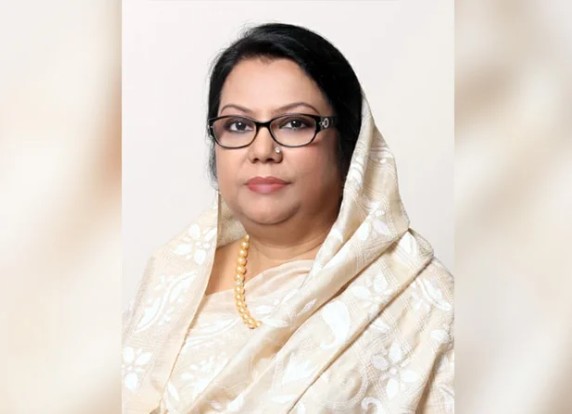
Bangladesh is moving to build a new service culture at its airports while modernising the national flag carrier, expanding aviation infrastructure and positioning the country as a regional aviation hub, Civil Aviation and Tourism Minister Afroza Khanam has said.
"We are not merely solving problems; we are building a new service culture at Bangladesh's airports," she said, outlining the government's wide-ranging plans for the country's aviation and tourism sectors, reports BSS News.
The minister said the government has taken passenger complaints over baggage handling, airport mismanagement and immigration services seriously and has already introduced a series of measures to improve discipline and service standards.
She said that a 'Code of Conduct' has been introduced at the country's three international airports, while executive magistrates are carrying out regular monitoring at the field level.
For baggage security, vigilance teams, body-worn cameras, CCTV surveillance and a Baggage Reconciliation System have been introduced, she said, adding that baggage delivery time has also been reduced significantly.
International-standard training, modern ground-handling equipment, additional manpower and technology-driven operations are being introduced, while coordination among immigration, customs, airlines and other airport agencies has been strengthened to ensure faster, safer and hassle-free services.
Afroza said these reforms form part of a much broader government vision to transform Bangladesh into a regional aviation hub.
"Under the Prime Minister's leadership, we are working towards transforming Bangladesh into a regional aviation hub," she said.
The strategy includes expanding international connectivity, modernising airline fleets, improving passenger services and developing world-class airport infrastructure, she added.
One of the centrepieces of the aviation expansion plan is the modernisation of Biman Bangladesh Airlines.
The minister said a decision has been taken to add 24 new aircraft - 14 Boeing and 10 Airbus aircraft - to Biman's fleet, gradually transforming the national carrier into a modern mixed-fleet airline.
At the same time, the government has initiated a process to lease five aircraft this year, with 40 companies submitting applications to provide aircraft under lease arrangements, she added.
"Our objective is not merely to expand the fleet. We want to build a fuel-efficient, cost-effective and internationally competitive flag carrier," Afroza said.
The new aircraft will be inducted in phases in line with manufacturers' production schedules. Under the government's longer-term roadmap, Biman's fleet is expected to expand to 47 aircraft by FY 2034-35.
Afroza said the government is also pursuing reforms within Biman based on three broad pillars - governance, business strategy and service transformation. Merit-based appointments, accountability and good governance are being prioritised, while existing routes are being commercially reassessed and profitable routes strengthened.
The airline is also examining commercially viable new destinations as part of efforts to expand Bangladesh's presence in international aviation, she said, adding: "The Prime Minister's objective is clear -- Bangladesh's flag should fly in more international skies, with greater confidence."
The minister identified the opening of the Third Terminal of Hazrat Shahjalal International Airport (HSIA) as another major milestone in the country's aviation transformation.
She said the government is working, in line with the Prime Minister's directive, to make the terminal fully operational by December 16, 2026.
"The Third Terminal is not simply another terminal. It represents a transformational advancement for Bangladesh's aviation sector and will play an important role in developing the country into a modern regional aviation hub," Afroza said.
The government is also examining opportunities for Bangladeshi airlines to operate to new international destinations, including Bahrain, Male, Jakarta, Seoul, Sydney, Kunming and New York.
The minister said decisions on such routes would depend on commercial viability, market demand, bilateral air services agreements and necessary regulatory approvals. Alongside aviation, the government is undertaking reforms aimed at making Bangladesh a more competitive international tourism destination.
Afroza said the strategy is built around global branding, tourist-friendly travel arrangements and improvement of tourism infrastructure and services. Under Visa Policy 2026, the government plans to modernise visa procedures and gradually introduce e-visas.
The policy also proposes a Medical Tourism (MT) visa for foreigners travelling to Bangladesh for treatment, a Medical Attendant (MA) visa for accompanying persons and a Religious Tourist (RT) visa for foreign visitors travelling for religious purposes, she added.
The government is also working to expand specialised tourism segments, including eco-tourism, community-based tourism, water tourism, culinary tourism and cultural and heritage-based tourism, Afroza said.
Bangladesh would increasingly focus on digital promotion through documentaries, short videos, reels, social media campaigns and engagement with international content creators and influencers, she said, adding the tourism strategy also involves attracting greater domestic and foreign investment through policy support, simplified regulations, tax facilities, easier financing and public-private partnerships.
The minister said the government's ultimate target is to establish Bangladesh as a safe, modern and international-standard aviation and tourism destination by 2030.
"In aviation, we want world-class airports, improved passenger services and strong regional connectivity," she said, adding: "In tourism, our priorities are sustainable infrastructure, skilled human resources, digital services, diversified tourism products and an investment-friendly environment."
Afroza said people would begin to see visible improvements within the next year through the operationalisation of the HSIA Third Terminal, improved airport services, wider digitalisation, progress under Visa Policy 2026, stronger international tourism branding and greater investment in tourism infrastructure.
Loading...
Loading...
Also read






Editor : Iqbal Sobhan Chowdhury
Published by the Editor on behalf of the Observer Ltd. from Globe Printers, 24/A, New Eskaton Road, Ramna, Dhaka.
Editorial, News and Commercial Offices : Aziz Bhaban (2nd floor), 93, Motijheel C/A, Dhaka-1000.
Phone: PABX- 41053001-06; Advertisement: 41053012; 01793317829, 01550707291, E-mail: [email protected], [email protected] Online: email: [email protected] 41053014; 01550707297 Advertisement: 01550707296
Published by the Editor on behalf of the Observer Ltd. from Globe Printers, 24/A, New Eskaton Road, Ramna, Dhaka.
Editorial, News and Commercial Offices : Aziz Bhaban (2nd floor), 93, Motijheel C/A, Dhaka-1000.
Phone: PABX- 41053001-06; Advertisement: 41053012; 01793317829, 01550707291, E-mail: [email protected], [email protected] Online: email: [email protected] 41053014; 01550707297 Advertisement: 01550707296


