



| HEADLINE |

|

The Parallel State (Part-1)
Bangladesh's Tk 12,633 Crore Bribe Economy
How corruption has evolved into an invisible tax on millions of citizens—and why dismantling it may be the Tarique Rahman government's greatest test
Published : Saturday, 1 August, 2026 at 12:00 AM
Faruk Ahmed


Corruption is often described as a tax on economic growth. In reality, it functions as something far more regressive-a tax imposed primarily on those least able to afford it.
Every day, millions of Bangladeshis pay a tax that never appears in the national budget. It is collected not by the National Board of Revenue but by corrupt officials, brokers and middlemen who have transformed public services into private toll booths.
These figures represent far more than another corruption statistic. They expose a parallel state operating beneath the formal one, where access to passports, driving licences, hospital services, land records and even law enforcement increasingly depends not on legal entitlement but on unofficial payments.
The findings also confront the Tarique Rahman-led government with one of its defining governance challenges. Having pledged to restore integrity to public institutions, dismantle the culture of impunity and strengthen the Anti-Corruption Commission (ACC), the administration now faces evidence suggesting that corruption has become deeply embedded in the machinery of the state.
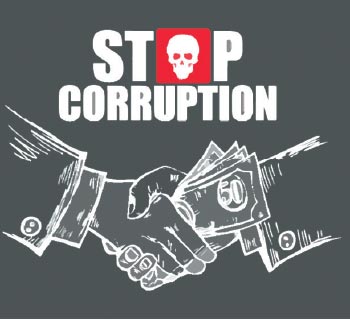 An Unofficial National Budget
TIB's Corruption in Service Sectors: National Household Survey 2025 reads less like a conventional governance report than the balance sheet of an unofficial economy.
The survey found that 81.6 per cent of households experienced corruption while accessing at least one public service in 2025, while 63.6 per cent were compelled to pay bribes. Compared with the previous survey in 2023, the proportion of households affected by corruption increased by 15.1 per cent, while the incidence of bribery surged by 25.2 per cent.
Passport services and the Bangladesh Road Transport Authority (BRTA) once again emerged as the country's most corruption-prone public institutions.
Based on interviews with 15,715 households across all eight divisions, the survey presents perhaps its most disturbing finding: corruption is no longer exceptional. It has become procedural.
Among households that admitted paying bribes, 98.1 per cent said they had no alternative. More than 91 per cent reported that officials or employees of the relevant institutions were directly involved in collecting illicit payments, while over 81 per cent believed essential public services simply could not be obtained without paying extra.
These statistics reveal something more troubling than administrative inefficiency. They suggest that unofficial payments have become embedded in the delivery of public services, creating an alternative payment mechanism operating alongside the formal state.
Citizens are effectively paying twice-first through taxes and then through extortion.
When Corruption
Becomes Routine
One of the survey's greatest strengths lies in demonstrating that corruption is no longer confined to rogue officials or isolated incidents.
Instead, it exposes an entrenched ecosystem in which corrupt officials, brokers and intermediaries collectively determine who receives services, how quickly they receive them and at what cost.
The principal reason households gave for paying bribes was blunt and revealing. More than 81.5 per cent said payment was unavoidable if they wanted the service delivered.
That finding should concern policymakers more than any other.
Corruption ceases to be a governance problem and becomes a systemic economic institution when citizens begin to regard bribery not as an exception but as an unavoidable cost of everyday life.
Despite significant investment in digital government services, TIB argues that technology alone has failed to dismantle this entrenched system.
Partial digitalisation, hybrid manual procedures and continued bureaucratic discretion have merely changed the method of extraction rather than eliminating it. In many cases, digital platforms coexist comfortably with brokers, informal payments and opaque administrative practices.
Technology, the survey suggests, cannot eliminate corruption unless transparency, accountability and institutional oversight advance at the same pace.
The Poorest Pay
The Highest Price
Corruption is often described as a tax on economic growth. In reality, it functions as something far more regressive-a tax imposed primarily on those least able to afford it.
The survey demonstrates that corruption affects every segment of society, but its burden falls disproportionately on rural communities, low-income households, women, Indigenous peoples and persons with disabilities.
For wealthier citizens, bribery may represent an inconvenience. For poorer families, it can become a devastating financial shock.
On average, Bangladeshi households spent 1.7 per cent of their annual income on bribes during the survey period. For families living below the poverty line, however, the burden rose dramatically. In the five most corruption-prone sectors, bribe payments consumed 5.1 per cent of annual household income, compared with 3.2 per cent among households above the poverty threshold.
The figures become even more alarming in specific services.
Poor households seeking passport services spent an average of 78 per cent of their monthly income, including 37 per cent on bribes alone. Families dealing with law enforcement agencies spent an average of 34 per cent of monthly income on illicit payments, while some reported paying more than four-and-a-half times their monthly earnings.
In 13 surveyed households, the total amount paid in bribes exceeded annual household income, reaching five to six times yearly earnings in extreme cases.
Such statistics illustrate that corruption is not merely diverting public money; it is pushing vulnerable households deeper into poverty.
Every taka handed to a corrupt official is a taka unavailable for food, education, healthcare, housing or productive investment.
Corruption therefore steals far more than income. It erodes opportunity, weakens household resilience and suppresses domestic demand, ultimately slowing economic growth.
The survey also reveals an important shift in the nature of corruption.
Although the average bribe paid by each household declined modestly-from Tk 5,680 in 2023 to Tk 5,124 in 2025-TIB warns this masks the rapid spread of smaller but far more frequent payments.
Petty corruption has become increasingly prevalent in sectors such as healthcare, agriculture and education, where millions of citizens interact with public institutions every day.
That trend may prove even more damaging than large-scale corruption because it affects ordinary families repeatedly, gradually normalising bribery as part of daily life rather than an exceptional abuse of power.
The Collapse of Public Trust
If bribery is bleeding the economy, the erosion of public trust is hollowing out the state from within.
Perhaps the survey's most disturbing finding is not the scale of corruption itself but the extent to which it has become normalised. Millions of Bangladeshis no longer believe corruption is worth challenging. More than 53.3 per cent of households did not know how to report corrupt practices, while only 1.4 per cent were aware of the government's Grievance Redress System (GRS).
Even among those who experienced corruption, only 10.3 per cent lodged formal complaints. Of those, 21.6 per cent said their complaints were rejected outright, while 51 per cent reported that no action followed. For many citizens, seeking justice has become as futile as resisting the bribe itself.
These findings expose more than administrative failure. They reveal a dangerous collapse in public confidence, where silence has become a survival strategy and accountability an increasingly distant expectation.
For millions of citizens, reporting corruption appears to have become an exercise in futility.
To be continued On next Saturday
The writer is the Consulting Editor of The Daily Observer. He may be reached at [email protected]
Loading...
Loading...
Also read



Editor : Iqbal Sobhan Chowdhury
Published by the Editor on behalf of the Observer Ltd. from Globe Printers, 24/A, New Eskaton Road, Ramna, Dhaka.
Editorial, News and Commercial Offices : Aziz Bhaban (2nd floor), 93, Motijheel C/A, Dhaka-1000.
Phone: PABX- 41053001-06; Advertisement: 41053012; 01793317829, 01550707291, E-mail: [email protected], [email protected] Online: email: [email protected] 41053014; 01550707297 Advertisement: 01550707296
Published by the Editor on behalf of the Observer Ltd. from Globe Printers, 24/A, New Eskaton Road, Ramna, Dhaka.
Editorial, News and Commercial Offices : Aziz Bhaban (2nd floor), 93, Motijheel C/A, Dhaka-1000.
Phone: PABX- 41053001-06; Advertisement: 41053012; 01793317829, 01550707291, E-mail: [email protected], [email protected] Online: email: [email protected] 41053014; 01550707297 Advertisement: 01550707296


