



| HEADLINE |

|

Low cost, high return fuel sugarcane cultivation in Nilphamari
Published : Tuesday, 4 August, 2026 at 12:00 AM
Our Correspondent


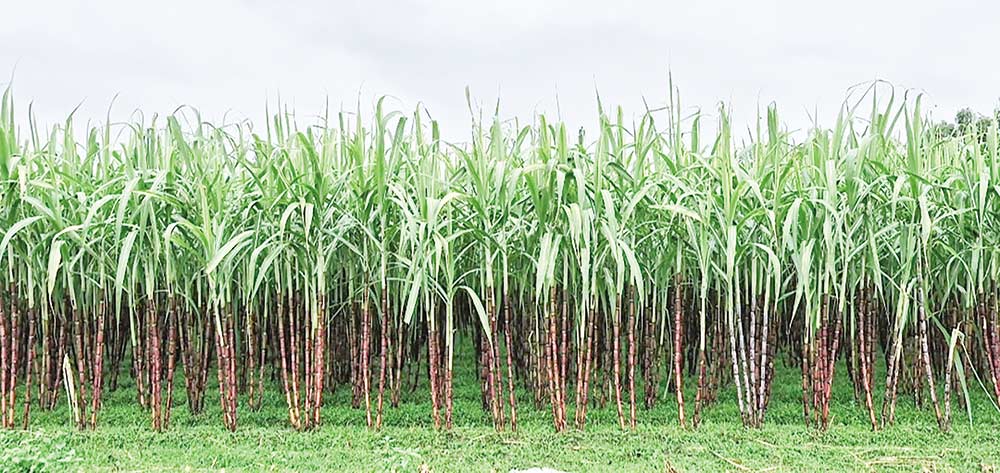 NILPHAMARI, Aug 3: Sugarcane cultivation is gaining popularity in Nilphamari as farmers are increasingly turning to the crop for its relatively low production costs, strong market demand and attractive returns.
Farmers say cultivating sugarcane costs around Tk 20,000-25,000 per bigha, while a good harvest can earn profits of Tk 70,000-80,000 after about 10 months, making it more profitable than many other crops.
Officials of the Department of Agricultural Extension (DAE) said the district's fertile sandy loam soil and favourable weather have encouraged more farmers to grow sugarcane each year.
According to the DAE, sugarcane has been cultivated on around 177 hectares of land in the district this season, up from last year. Popular varieties include Ishwardi-16, Ishwardi-17 and BSRI-41, BSRI-45 and BSRI-47.
However, farmers said changing weather patterns have increased the incidence of diseases, which remain difficult to control despite the use of pesticides.
Shikhanath Roy, a farmer from Lakshichap Union in Nilphamari Sadar Upazila, said he cultivated sugarcane on 15 decimals of land this year and plans to expand next season because of the crop's profitability.
"If diseases are not controlled in time, stem rot can spread quickly. Proper management is essential, but sugarcane remains a profitable crop with comparatively low investment," he said.
Another farmer, Dhirendra Nath Roy of Bosunia Bazar, said sugarcane cultivation is not without risks.
"Prolonged rainfall, water-logging, diseases and fluctuations in market prices can reduce profits. We need more regular technical support from the agriculture department," he said.
Nilphamari Sadar Upazila Agriculture Officer Atik Ahmed said although there is no direct input subsidy for sugarcane growers, the department is providing technical advice on disease management and modern cultivation practices.
Deputy Director of the DAE in Nilphamari Homayra said the department would continue supporting sugarcane farmers.
She said the district's soil is well suited for sugarcane cultivation, while locally produced cane is known for its sweetness and high juice content, ensuring strong market demand.
She also encouraged farmers to grow companion crops such as mustard, groundnut, pumpkin, potato, onion, garlic and squash alongside sugarcane to maximise returns.

Loading...
Loading...
Also read



Editor : Iqbal Sobhan Chowdhury
Published by the Editor on behalf of the Observer Ltd. from Globe Printers, 24/A, New Eskaton Road, Ramna, Dhaka.
Editorial, News and Commercial Offices : Aziz Bhaban (2nd floor), 93, Motijheel C/A, Dhaka-1000.
Phone: PABX- 41053001-06; Advertisement: 41053012; 01793317829, 01550707291, 01550707296
E-mail: [email protected], [email protected]. [email protected], [email protected], [email protected], [email protected], Online-email: [email protected]
Published by the Editor on behalf of the Observer Ltd. from Globe Printers, 24/A, New Eskaton Road, Ramna, Dhaka.
Editorial, News and Commercial Offices : Aziz Bhaban (2nd floor), 93, Motijheel C/A, Dhaka-1000.
Phone: PABX- 41053001-06; Advertisement: 41053012; 01793317829, 01550707291, 01550707296
E-mail: [email protected], [email protected]. [email protected], [email protected], [email protected], [email protected], Online-email: [email protected]


