



| HEADLINE |

|

Malaysia will not deport Rohingya refugees if lives at risk
Published : Wednesday, 5 August, 2026 at 7:59 PM
Observer Online Report


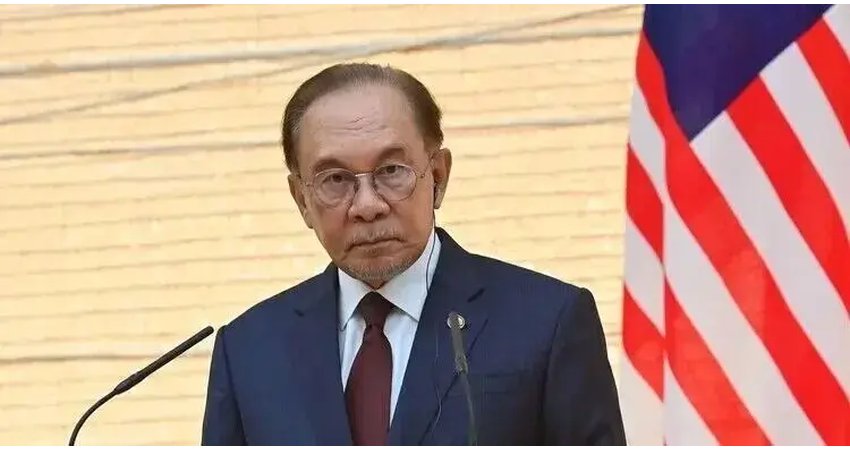
Collected Photo
Malaysia will not deport any refugees to Myanmar unless their personal safety is fully guaranteed, the country's government has announced.
According to a report by AFP, authorities stated that the safety situation of each individual will be carefully assessed before any repatriation takes place, and no one will be sent back if their lives remain at risk.
The clarification follows an announcement last week by Malaysian Prime Minister Anwar Ibrahim, who stated that Myanmar had agreed to take back 5,000 Rohingya refugees. The announcement subsequently triggered grave concern among human rights organizations regarding the potential returns.
Speaking at a press conference on Wednesday (August 5), Malaysian Communications Minister Fahmi Fadzil affirmed that Malaysia is a responsible nation. He stated that if it is determined that returning individuals would expose them to persecution or put their lives in danger, they will not be sent back.
He noted that while Myanmar's military government has agreed to accept the refugees, defined criteria will be thoroughly evaluated before implementation, and the plan will proceed only if all conditions are deemed suitable.
Fahmi added that the Ministry of Foreign Affairs is currently reviewing various aspects of the matter. Meanwhile, Myanmar authorities have not yet issued any public comment on the issue.
According to data from the United Nations High Commissioner for Refugees (UNHCR), Malaysia currently hosts over 215,000 registered refugees and asylum seekers. Among them, more than 126,000 are Rohingya, forming the country's largest refugee population.
The repatriation plan was announced shortly after over 100 Rohingya individuals were detained last week while gathering outside the UNHCR office in Kuala Lumpur. They had assembled there following fears of eviction from an informal settlement in the northern state of Penang. All of them were later released after presenting valid UNHCR registration documents.
State news agency Bernama reported that Malaysia's Home Ministry has begun collecting and verifying refugee data in preparation for the potential repatriation process.
Meanwhile, a leading Rohingya rights group in Malaysia has urged the government to suspend the plan, warning that returning refugees to Myanmar would once again put their lives in extreme jeopardy.
Despite being home to one of Southeast Asia's largest refugee populations, Malaysia is not a signatory to the 1951 Refugee Convention and does not officially grant legal refugee status.
Hundreds of thousands of Rohingya fled Myanmar in 2017 following a brutal military crackdown, with a significant number seeking refuge in Malaysia and other neighboring countries ever since.
-SA

Loading...
Loading...
Also read







Editor : Iqbal Sobhan Chowdhury
Published by the Editor on behalf of the Observer Ltd. from Globe Printers, 24/A, New Eskaton Road, Ramna, Dhaka.
Editorial, News and Commercial Offices : Aziz Bhaban (2nd floor), 93, Motijheel C/A, Dhaka-1000.
Phone: PABX- 41053001-06; Advertisement: 41053012; 01793317829, 01550707291, E-mail: [email protected], [email protected] Online: email: [email protected] 41053014; 01550707297 Advertisement: 01550707296
Published by the Editor on behalf of the Observer Ltd. from Globe Printers, 24/A, New Eskaton Road, Ramna, Dhaka.
Editorial, News and Commercial Offices : Aziz Bhaban (2nd floor), 93, Motijheel C/A, Dhaka-1000.
Phone: PABX- 41053001-06; Advertisement: 41053012; 01793317829, 01550707291, E-mail: [email protected], [email protected] Online: email: [email protected] 41053014; 01550707297 Advertisement: 01550707296


