



| HEADLINE |

|

Miswak: An overlooked Sunnah in modern muslim life
Published : Sunday, 9 August, 2026 at 7:10 PM
Observer Online Report


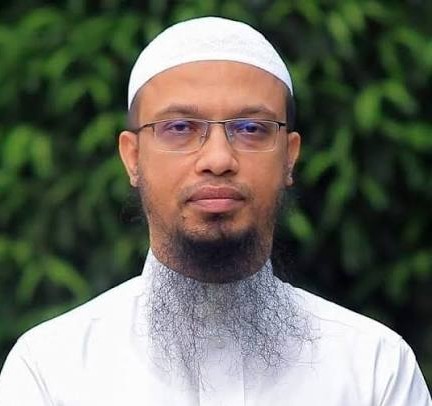
Collected Photo
Once a regular practice in the daily lives of Muslims, the use of miswak is increasingly disappearing from modern Muslim households. Islamic scholars and religious leaders continue to highlight its spiritual significance, citing the Prophet Muhammad’s (PBUH) strong emphasis on the practice as both a means of maintaining oral hygiene and seeking Allah’s pleasure.
Miswak, a natural tooth-cleaning stick traditionally made from the *Salvadora persica* tree, is regarded as an important Sunnah of the Prophet Muhammad (PBUH). Throughout his life, the Prophet encouraged Muslims to adopt practices that promote both physical well-being and spiritual purity.
Today, however, the practice has largely been overshadowed by modern toothbrushes and toothpaste. While the use of toothbrushes is permissible in Islam and can fulfill the general objective of maintaining oral cleanliness, scholars point out that the specific Sunnah and virtues associated with miswak require the use of miswak itself.
The Prophet Muhammad (PBUH) said, “Miswak is a means of purification for the mouth and a means of attaining the pleasure of Allah.” The hadith, reported by al-Nasa’i, highlights the spiritual importance attached to the simple practice.
The significance of miswak can also be understood from an incident during the final moments of the Prophet’s life. According to a narration in Sahih al-Bukhari, while the Prophet was seriously ill and staying in the room of his wife Aisha (RA), he noticed a miswak in the hand of her brother, Abdul Rahman (RA). The Prophet indicated that he wanted to use it. Aisha (RA) softened the miswak for him because he was too weak to chew it himself. He then used the miswak shortly before passing away.
The incident is often cited by Islamic scholars as a powerful indication of how deeply the Prophet valued the practice, even during the final moments of his life.
Another hadith further demonstrates the importance of miswak. Abu Huraira (RA) reported that the Prophet Muhammad (PBUH) said that if he had not feared causing hardship for his followers, he would have instructed them to use miswak at the time of every prayer. The hadith is recorded in Sahih al-Bukhari.
Beyond its religious significance, miswak has also attracted attention for its potential oral-health benefits. Its natural fibers and compounds can help clean the teeth and mouth. However, claims about broader medical or neurological benefits should be assessed on the basis of reliable scientific evidence rather than attributed to the Sunnah without verification.
Religious educators say the declining use of miswak is partly linked to changing lifestyles and a growing preference for modern products. Many parents teach their children to brush their teeth regularly but do not introduce them to miswak as a Sunnah practice.
Experts also identify a lack of practical Sunnah education in families, schools and religious institutions as another factor. In addition, some people associate traditional or natural practices with being outdated, while others focus primarily on obligatory religious duties and pay less attention to voluntary Sunnah practices.
The renewed practice of miswak, therefore, is not simply about choosing one method of cleaning the teeth over another. For many Muslims, it represents an effort to revive a practice closely associated with the life of the Prophet Muhammad (PBUH) and to incorporate his Sunnah into everyday life.
Religious leaders encourage Muslims to make miswak part of their daily routine, both as a means of maintaining oral hygiene and as an expression of love for and adherence to the Sunnah of the Prophet.
-Shaykh Ahmadullah
From the Friday Pulpit
Compiled by: Nurul Islam Tanim
-HIS
Loading...
Loading...
Also read






Editor : Iqbal Sobhan Chowdhury
Published by the Editor on behalf of the Observer Ltd. from Globe Printers, 24/A, New Eskaton Road, Ramna, Dhaka.
Editorial, News and Commercial Offices : Aziz Bhaban (2nd floor), 93, Motijheel C/A, Dhaka-1000.
Phone: PABX- 41053001-06; Advertisement: 41053012; 01793317829, 01550707291, E-mail: [email protected], [email protected] Online: email: [email protected] 41053014; 01550707297 Advertisement: 01550707296
Published by the Editor on behalf of the Observer Ltd. from Globe Printers, 24/A, New Eskaton Road, Ramna, Dhaka.
Editorial, News and Commercial Offices : Aziz Bhaban (2nd floor), 93, Motijheel C/A, Dhaka-1000.
Phone: PABX- 41053001-06; Advertisement: 41053012; 01793317829, 01550707291, E-mail: [email protected], [email protected] Online: email: [email protected] 41053014; 01550707297 Advertisement: 01550707296


