



| HEADLINE |

|
Energy Crisis May Take Two Years to Resolve, Says Finance Minister
Published : Monday, 17 August, 2026 at 12:00 AM
Business Correspondent


 Bangladesh’s deepening energy crisis will not disappear overnight and could take at least two years to overcome, Finance and Planning Minister Amir Khasru Mahmud Chowdhury said on Sunday, as the nationwide power crunch continues to squeeze businesses and disrupt economic activity.
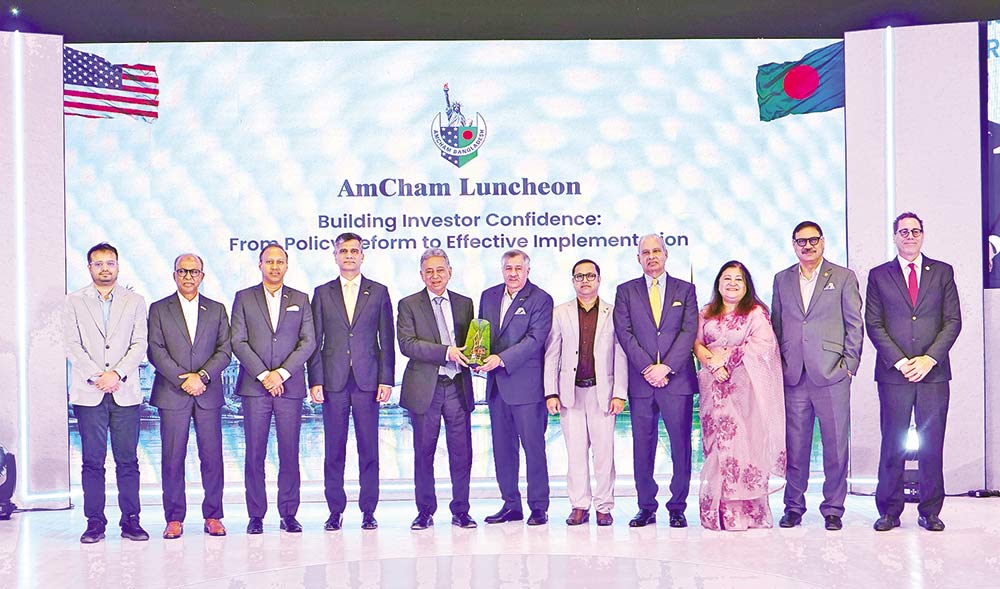
Speaking at a luncheon hosted by the American Chamber of Commerce in Bangladesh (AmCham) at the Inter Continental Dhaka, the minister said the government was working on both emergency measures and long-term infrastructure to ease the worsening shortages of gas and electricity.
“We cannot solve the energy crisis in six months or even a year,” he said, stressing that lasting relief would require major investment in infrastructure and energy security.
Facilities such as floating LNG terminals and onshore gas storage cannot be built and commissioned overnight, Khasru said, adding that the government therefore has to pursue immediate interventions while simultaneously laying the foundations for a more reliable energy supply.
His warning comes as the energy crunch is increasingly threatening industrial production, trade and investment, with businesses already operating under strict power-conservation measures.
The crisis deepened sharply after an operational accident on July 22, 2026, disrupted a floating storage and regasification unit (FSRU) operated by Excelerate Energy. The outage reportedly cut national pipeline gas supplies significantly, leaving several power plants struggling to secure adequate fuel.
At the same time, declining output from major domestic gas fields, including Bibiyana, Titas and Habiganj, is adding to the pressure. Energy experts have warned that Bangladesh’s proven gas reserves could face severe depletion within the next few years unless exploration�"particularly onshore and offshore drilling�"is accelerated.
The power crunch has already spilled into daily commercial activity. Authorities have imposed strict conservation measures, requiring commercial establishments, markets and shopping centres to close by 8:00pm in an effort to protect the strained national grid.
The country’s export-oriented industries are bearing much of the pain. The readymade garment sector, the backbone of Bangladesh’s export economy, is facing production disruptions, shipment delays and machinery-related problems amid erratic gas pressure.
Higher spot-market prices for LNG and fuel oil are also adding to the pressure on the country’s external balance, raising concerns over the growing cost of energy imports and the strain on foreign-exchange reserves.
Against this difficult backdrop, Khasru sought to reassure investors that the government is pursuing wider reforms to make Bangladesh a more attractive destination for business and investment.
He said the government was working to dismantle unnecessary regulatory barriers, simplify the tax system and make it more efficient and transparent. Port and customs procedures would also be streamlined to reduce the cost and complexity of doing business and facilitate international trade.
Policy certainty, he stressed, is equally crucial. Investors need to know what policies and regulations they can expect over the long term before committing capital to major projects.
The minister also outlined plans to introduce greater expertise and automation into the tax administration. The government intends to benchmark compliant businesses, strengthen tax compliance and move towards a fully automated taxation system.
Such reforms, he said, would help curb corruption, improve efficiency and create a fairer business environment.
The minister made the remarks during an interactive discussion titled “Building Investors’ Confidence: From Policy Reform to Effective Implementation”, attended by senior government officials, policymakers, business leaders, investors and AmCham members.
AmCham President Syed Mohammad Kamal said Bangladesh possessed considerable potential to attract investment from the United States, particularly in emerging and technology-driven sectors.
Bangladesh already has many of the fundamentals investors seek, he said, but consistent implementation of reforms will determine whether that potential is converted into actual investment.
The current reform momentum must translate into clear, predictable and measurable outcomes, Kamal said, which would enable Bangladesh to position itself as a stronger South Asian hub for US investment, technology and trade.
Loading...
Loading...
Also read



Editor : Iqbal Sobhan Chowdhury
Published by the Editor on behalf of the Observer Ltd. from Globe Printers, 24/A, New Eskaton Road, Ramna, Dhaka.
Editorial, News and Commercial Offices : Aziz Bhaban (2nd floor), 93, Motijheel C/A, Dhaka-1000.
Phone: PABX- 41053001-06; Advertisement: 41053012; 01793317829, 01550707291, E-mail: [email protected], [email protected] Online: email: [email protected] 41053014; 01550707297 Advertisement: 01550707296
Published by the Editor on behalf of the Observer Ltd. from Globe Printers, 24/A, New Eskaton Road, Ramna, Dhaka.
Editorial, News and Commercial Offices : Aziz Bhaban (2nd floor), 93, Motijheel C/A, Dhaka-1000.
Phone: PABX- 41053001-06; Advertisement: 41053012; 01793317829, 01550707291, E-mail: [email protected], [email protected] Online: email: [email protected] 41053014; 01550707297 Advertisement: 01550707296


