



| HEADLINE |

|

India builds dam in Ladakh amid dispute with Pakistan
Published : Sunday, 6 September, 2026 at 8:55 AM
Observer Online Report


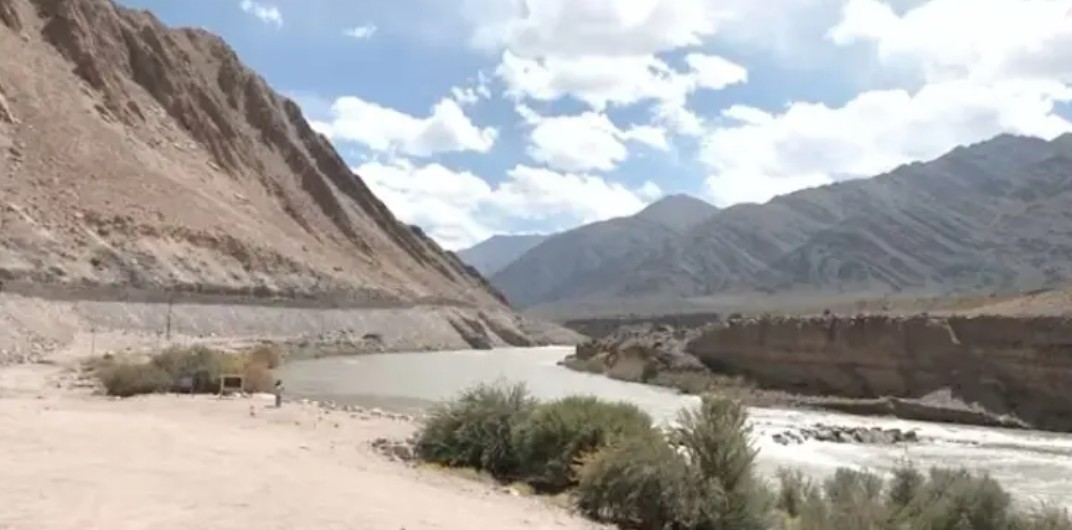
Amid tensions with Pakistan, India has built a stone dam on the Indus River in Ladakh. The dam, constructed in the Upshi area of Leh, can hold around 40 million liters of water. While it is expected to improve irrigation facilities for local farmers, it has also raised fresh concerns over the management of the river’s water, which is crucial for Pakistan.
According to a report by India Today, the dam was built using large natural stones without any cement. The structure has raised the river’s water level by around 10 feet. As a result, irrigating agricultural land in Ladakh, which faces water shortages during the spring season, has become easier. The stored water is also being supplied to nearby farmland through the Igu-Phey irrigation canal.
Local authorities said farmers in Ladakh had been suffering from a shortage of irrigation water for a long time. As the Indus River flows through deep gorges, its water level in many areas would fall so low that pumping water from the river became difficult. The new dam was built to help address this problem.
However, for Pakistan, the issue goes beyond agriculture or local water management in Ladakh. The Indus River is critically important to Pakistan’s agriculture and water security. The 1960 Indus Waters Treaty established a framework for the use of the rivers shared by the two countries.
After 26 people were killed in a terrorist attack in Pahalgam in April 2025, India unilaterally suspended the treaty. India accused Pakistan of involvement in the attack, but Pakistan has categorically denied the allegation. Since then, tensions between the two countries over diplomacy and water have escalated.
There has also been an important recent international development concerning the status of the treaty. On August 31, the Permanent Court of Arbitration in The Hague said India must comply with its obligations under the Indus Waters Treaty. The court also said India’s unilateral decision to suspend the treaty was not acceptable.
India, however, has rejected the jurisdiction of the Permanent Court of Arbitration and its decision.
Against this backdrop, India’s construction of new infrastructure to retain water from the Indus River in Ladakh could become an additional source of concern for Pakistan.
-MT

Loading...
Loading...
Also read







Editor : Iqbal Sobhan Chowdhury
Published by the Editor on behalf of the Observer Ltd. from Globe Printers, 24/A, New Eskaton Road, Ramna, Dhaka.
Editorial, News and Commercial Offices : Aziz Bhaban (2nd floor), 93, Motijheel C/A, Dhaka-1000.
Phone: PABX- 41053001-06; Advertisement: 41053012; 01793317829, 01550707291, E-mail: [email protected], [email protected] Online: email: [email protected] 41053014; 01550707297 Advertisement: 01550707296
Published by the Editor on behalf of the Observer Ltd. from Globe Printers, 24/A, New Eskaton Road, Ramna, Dhaka.
Editorial, News and Commercial Offices : Aziz Bhaban (2nd floor), 93, Motijheel C/A, Dhaka-1000.
Phone: PABX- 41053001-06; Advertisement: 41053012; 01793317829, 01550707291, E-mail: [email protected], [email protected] Online: email: [email protected] 41053014; 01550707297 Advertisement: 01550707296


