



| HEADLINE |

|
Saudi oil stocks at risk of running out amid pipeline shutdown
Published : Sunday, 13 September, 2026 at 7:22 PM
Observer online report


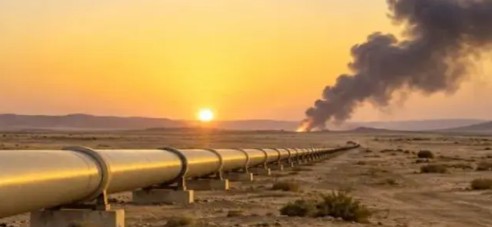
Saudi Arabia could run out of exportable oil stocks if a major pipeline damaged in a Houthi drone attack is not restored within days, potentially cutting global oil supplies by around 4 per cent, Reuters reported on Sunday.
The disruption could deepen the global energy crisis, pushing up fuel prices and adding to inflationary pressure.
Saudi Arabia shut down its East-West oil pipeline on Friday following the drone attack. Riyadh has not disclosed the extent of the damage or how long the pipeline will remain out of service.
Sources familiar with the situation gave Reuters differing estimates of the repair time. One source said repairs could take five to six weeks, while another said the work could be completed more quickly and partial pumping could resume during repairs.
Saudi Arabia has relied on the pipeline to transport oil to the Red Sea port of Yanbu after the Strait of Hormuz became inaccessible amid the ongoing conflict. The pipeline can divert around 4 million barrels of oil a day to Yanbu, equivalent to about 4 per cent of global oil supply.
Three industry sources familiar with Saudi exports said stocks at Yanbu could support exports for only five to seven days. Saudi Arabia also has limited stocks at Egypt’s Ain Sokhna and Sidi Kerir ports that could support supplies for several more days.
Industry estimates put the storage capacity at Yanbu at around 35 million barrels, while Ain Sokhna and Sidi Kerir can hold about 18 million and 20 million barrels respectively. However, sources said the facilities are not fully stocked and could eventually run dry if the East-West pipeline remains shut.
The International Energy Agency said Saudi oil supply fell to its lowest level in three decades in August as shipments through the Strait of Hormuz and the Red Sea declined. The agency has warned that global oil supply could fall by 5.7 million barrels a day, or around 6 per cent, this year.
The Houthis, who have also threatened attacks on Saudi oil tankers, reportedly seized an island near the entrance to the Red Sea on Friday.
Before the conflict began, around 22 million barrels of oil a day were supplied from the Middle East. Industry sources said flows through the Strait of Hormuz have now fallen to between 6 million and 9 million barrels a day.
Saudi Arabia told OPEC last week that its daily oil production had fallen sharply from 10.9 million barrels in February, before the conflict, to 6.2 million barrels in August.
sks
Loading...
Loading...
Also read







Editor : Iqbal Sobhan Chowdhury
Published by the Editor on behalf of the Observer Ltd. from Globe Printers, 24/A, New Eskaton Road, Ramna, Dhaka.
Editorial, News and Commercial Offices : Aziz Bhaban (2nd floor), 93, Motijheel C/A, Dhaka-1000.
Phone: PABX- 41053001-06; Advertisement: 41053012; 01793317829, 01550707291, E-mail: [email protected], [email protected] Online: email: [email protected] 41053014; 01550707297 Advertisement: 01550707296
Published by the Editor on behalf of the Observer Ltd. from Globe Printers, 24/A, New Eskaton Road, Ramna, Dhaka.
Editorial, News and Commercial Offices : Aziz Bhaban (2nd floor), 93, Motijheel C/A, Dhaka-1000.
Phone: PABX- 41053001-06; Advertisement: 41053012; 01793317829, 01550707291, E-mail: [email protected], [email protected] Online: email: [email protected] 41053014; 01550707297 Advertisement: 01550707296


