



| HEADLINE |

|
China discovers high-grade gold and silver deposit in Pacific
Published : Sunday, 13 September, 2026 at 7:46 PM
Observer online report


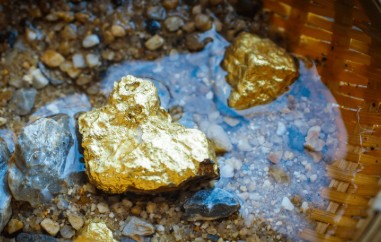
Chinese researchers have discovered a large deep-sea hydrothermal field containing high concentrations of gold and silver in the western Pacific, within China’s exclusive economic zone.
The discovery was made during an 18-day expedition aboard the research vessel Xiangyanghong 10, which left Shenzhen on August 10. Researchers conducted seven dives using submersibles at depths of about 700 to 1,500 metres.
Preliminary analysis of ore samples collected from the site found gold concentrations of up to 15.4 parts per million, equivalent to 15.4 grams per tonne of ore. Silver concentrations reached as high as 1,271 parts per million, or 1,271 grams per tonne. The reported figures are based on preliminary analyses of some samples.
The deposit is associated with a high-temperature hydrothermal field and contains polymetallic sulphides. The ore bodies mainly comprise minerals including chalcopyrite, pyrite and sphalerite, which are associated with copper, iron and zinc.
The research team had previously conducted more than 10 surveys in the area and identified dozens of high-temperature hydrothermal vents. Fluids from the vents can reach temperatures above 315°C.
The newly identified hydrothermal sulphide deposit comprises three large cone-shaped mineral structures. Researchers said the average concentrations of gold and silver were also significantly higher than those found in terrestrial deposits.
The area also supports biological communities adapted to the extreme deep-sea environment, giving the discovery scientific significance beyond its mineral potential.
However, the researchers said the resources cannot be mined immediately because of the extreme pressure and complex conditions at such depths.
sks
Loading...
Loading...
Also read









Editor : Iqbal Sobhan Chowdhury
Published by the Editor on behalf of the Observer Ltd. from Globe Printers, 24/A, New Eskaton Road, Ramna, Dhaka.
Editorial, News and Commercial Offices : Aziz Bhaban (2nd floor), 93, Motijheel C/A, Dhaka-1000.
Phone: PABX- 41053001-06; Advertisement: 41053012; 01793317829, 01550707291, E-mail: [email protected], [email protected] Online: email: [email protected] 41053014; 01550707297 Advertisement: 01550707296
Published by the Editor on behalf of the Observer Ltd. from Globe Printers, 24/A, New Eskaton Road, Ramna, Dhaka.
Editorial, News and Commercial Offices : Aziz Bhaban (2nd floor), 93, Motijheel C/A, Dhaka-1000.
Phone: PABX- 41053001-06; Advertisement: 41053012; 01793317829, 01550707291, E-mail: [email protected], [email protected] Online: email: [email protected] 41053014; 01550707297 Advertisement: 01550707296


