



| HEADLINE |

|

25 public varsities run sans permanent campuses
Published : Wednesday, 23 September, 2026 at 12:00 AM
Tanvir Raihan


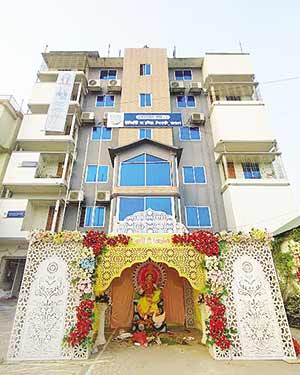 Bangladesh has established laws for new public universities, appointed vice-chancellors, recruited teachers and staff, and enrolled students. In some cases, students have already completed their undergraduate degrees. Yet at least 25 public universities are still operating without their own permanent campuses.
Some are functioning from rented buildings, while others are using facilities of existing educational institutions or scattered temporary premises. In several cases, administrative offices, classrooms, laboratories and student accommodation are located in separate buildings.
The situation raises questions about planning and public spending, particularly when billions of taka are being allocated for university development.
According to the University Grants Commission’s (UGC) Project Management System, 54 public universities are listed with 31 ongoing development projects. The system shows a total project budget of Tk20,453 crore and an ADP budget of Tk6,076 crore.
Separately, the approved budget for 58 public universities and the UGC for the 2026-27 fiscal year stands at Tk12,300 crore. Of this, Tk4,573.39 crore has been allocated for development expenditure of universities under 43 development projects.
But it highlights a fundamental question: why are students of newly established public universities still studying in rented or temporary buildings despite large-scale public investment in higher education infrastructure?
A recent investigation found that 25 public universities do not yet have their own permanent campuses. Five of them have not started academic activities, while the others have students, teachers and staff.
In some cases, land has been identified for permanent campuses, while land acquisition or development project proposals are still under process. This means the administrative establishment of universities has often moved faster than the development of the physical infrastructure required to support them.
Educationists and researchers have questioned the practice of launching academic activities before adequate facilities are available.
Sowmit Joydip, a teacher and researcher at BRAC University, said public universities established with taxpayers’ money should not begin operations without proper preparation. He argued that sufficient time should be spent ensuring an independent campus, infrastructure and necessary facilities before academic activities begin.
Technology universities in rented buildings: The University of Frontier Technology, Bangladesh (UFTB) illustrates the problem. Its academic activities are being conducted in three rented buildings in Kaliakair, Gazipur. The university was established under an Act in 2016 and began academic activities in 2018. Eight years later, it still does not have a permanent campus.
The university now has around 928 students and 41 teachers, while two batches have already graduated. A 50-acre site has been designated for its permanent campus.
A development project proposal involving more than Tk800 crore for land acquisition, academic and administrative buildings and a boundary wall is under process.
The question is whether a technology-focused university can develop strong research and laboratory facilities while operating from scattered rented buildings.
A university spread across rented premises. Sunamganj Science and Technology University presents another example.
Established in 2020, the university began academic activities in 2024 from temporary premises. Its administration, academic activities and laboratories are spread across different rented facilities. Two rented buildings are also being used as accommodation for male and female students.
Vice-Chancellor Professor Md Zakir Hossain acknowledged that the new university faces various limitations. At the same time, he said such an institution is highly important for a district like Sunamganj.
Students, however, have complained about inadequate facilities and the difficulties caused by conducting classes in different locations. The university’s permanent campus site has been identified near the Ahsanmara Bridge beside Dekhar Haor, but visible progress has remained slow.
The absence of permanent campuses also has a direct financial cost. Khulna Agricultural University spends around Tk821,000 a month on rent, excluding VAT and taxes. That amounts to nearly Tk9.85 crore over 10 years if the rent remains unchanged. The university has initiated a process to acquire around 250 acres for its permanent campus. The project was placed before the Executive Committee of the National Economic Council (ECNEC), but observations were raised and the process is continuing.
This raises a broader policy question: how much public money is being spent on temporary arrangements that could otherwise have supported permanent infrastructure?
Infrastructure alone is not enough: UGC Chairman Professor Dr Mamun Ahmed has said genuine university development does not simply mean constructing new buildings. Universities need clean, safe, healthy and environment-friendly campuses conducive to learning and research.
Dhaka Central University Vice-Chancellor Professor Dr Md Nurul Islam has similarly said budgetary allocation alone cannot ensure quality higher education. Universities need qualified teachers, research capacity and an environment that enables the creation of new knowledge.
These observations are particularly relevant to newly established universities, where basic infrastructure remains incomplete.
At a recent UGC dialogue on the future of higher education, vice-chancellors also stressed research capacity, teacher development, academic quality and technology-oriented education.
Jahangirnagar University Vice-Chancellor Professor Dr Mohammad Kamrul Ahsan said university curricula should be aligned with labour-market demands and technology-based education, while institutions should learn from successful universities abroad and adapt those lessons to local conditions.
But such ambitions require laboratories, libraries, research facilities and a stable academic environment.
Policy exists, implementation remains the challenge: The UGC approved a policy in May 2023 on the conditions to be met before new public universities begin academic activities. The policy was intended to prevent universities from starting operations in an unplanned manner from rented houses or temporary facilities.
Yet the continuing presence of universities in rented and temporary premises suggests a gap between policy and implementation. The UGC’s own project management system provides information on approved, ongoing and completed projects. What remains essential is greater transparency over how much has actually been spent, the physical progress of each project, land-acquisition status and the expected date of completion.

Loading...
Loading...
Also read



Editor : Iqbal Sobhan Chowdhury
Published by the Editor on behalf of the Observer Ltd. from Globe Printers, 24/A, New Eskaton Road, Ramna, Dhaka.
Editorial, News and Commercial Offices : Aziz Bhaban (2nd floor), 93, Motijheel C/A, Dhaka-1000.
Phone: PABX- 41053001-06; Advertisement: 41053012; 01793317829, 01550707291, E-mail: [email protected], [email protected] Online: email: [email protected] 41053014; 01550707297 Advertisement: 01550707296
Published by the Editor on behalf of the Observer Ltd. from Globe Printers, 24/A, New Eskaton Road, Ramna, Dhaka.
Editorial, News and Commercial Offices : Aziz Bhaban (2nd floor), 93, Motijheel C/A, Dhaka-1000.
Phone: PABX- 41053001-06; Advertisement: 41053012; 01793317829, 01550707291, E-mail: [email protected], [email protected] Online: email: [email protected] 41053014; 01550707297 Advertisement: 01550707296


