



| HEADLINE |

|

Different streams complicate OUR education system
Published : Wednesday, 23 September, 2026 at 12:00 AM
Jannatul Absara


 Bangladesh’s education system is diverse and consists of several different levels and streams. The country mainly has general education, madrasa education, technical and vocational education, as well as various forms of specialized education. Having several different streams within the same country can sometimes make the education system seem complex. However, this diversity has developed because of the country’s history, culture, religious values, economic realities, and the different needs of its people.
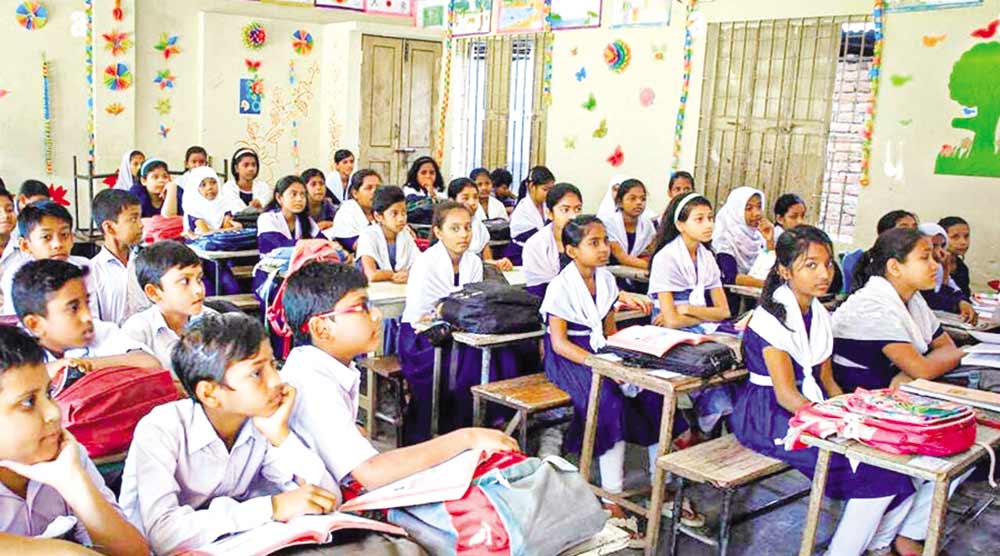
The general education system in Bangladesh includes primary, secondary, higher secondary, and higher education. On the other hand, madrasa education provides religious education along with general academic subjects. The main purpose of technical and vocational education is to provide students with practical skills and prepare them for employment and professional life.
In addition, there are different types of professional and specialized education. As a result, students can choose an educational path according to their interests, abilities, and future goals.
One of the major reasons why Bangladesh has different types of education is the diversity of its society. People in the country have different religious and cultural beliefs, economic conditions, and professional needs. Some people prefer general education because they want to pursue higher education, while others may give more importance to religious education or technical skills. Therefore, different educational streams have developed to meet the needs of different groups of people.

Historically, separate institutions for general and religious education were also established. Later, technical and vocational education expanded in response to the needs of the modern economy and labor market.
However, this diverse education system also has some challenges. There are differences among the various streams in terms of curriculum, learning environment, quality of teachers, and available facilities. As a result, questions arise about whether all students are receiving equal educational opportunities.
At the same time, the lack of coordination among different educational streams is another important issue. The main goal of an education system should be to develop students’ knowledge, skills, morality, creativity, and ability to think critically. Therefore, it is important to create greater balance and coordination among the different streams of education.
Since the current government came to power, Bangladesh’s education system has once again become a subject of significant discussion. Issues such as the quality of education, curriculum, examination methods, teacher training, the use of technology, and students’ future employment opportunities are being widely discussed. There are different views about how the new government should reform or change the education system. Some emphasize improving educational quality and developing practical skills, while others focus on maintaining continuity and ensuring the proper implementation of existing educational policies.
From a theoretical perspective, a country’s education system can be viewed as a reflection of its social and economic structure. Bangladesh is no exception. The different streams of education in the country are closely connected with its historical experiences and the diverse needs of its society. Therefore, simply changing the structure of the education system will not solve all its problems. Instead, long-term planning should focus on educational access, quality, equality, skills development, and the relationship between education and real-life needs.
In conclusion, the existence of different educational streams in Bangladesh reflects the diversity of our society. At the same time, it highlights the need for greater coordination and equality within the education system. The renewed discussion about education in the present context provides an opportunity to think about the future direction of education in Bangladesh. To build an effective and modern education system, it is necessary to consider students’ needs, the realities of the country, and the requirements of the future world of work together.
The writer is a contributor
Loading...
Loading...
Also read



Editor : Iqbal Sobhan Chowdhury
Published by the Editor on behalf of the Observer Ltd. from Globe Printers, 24/A, New Eskaton Road, Ramna, Dhaka.
Editorial, News and Commercial Offices : Aziz Bhaban (2nd floor), 93, Motijheel C/A, Dhaka-1000.
Phone: PABX- 41053001-06; Advertisement: 41053012; 01793317829, 01550707291, E-mail: [email protected], [email protected] Online: email: [email protected] 41053014; 01550707297 Advertisement: 01550707296
Published by the Editor on behalf of the Observer Ltd. from Globe Printers, 24/A, New Eskaton Road, Ramna, Dhaka.
Editorial, News and Commercial Offices : Aziz Bhaban (2nd floor), 93, Motijheel C/A, Dhaka-1000.
Phone: PABX- 41053001-06; Advertisement: 41053012; 01793317829, 01550707291, E-mail: [email protected], [email protected] Online: email: [email protected] 41053014; 01550707297 Advertisement: 01550707296


