



| HEADLINE |

|
MIT's 10 breakthrough technologies shaping the future
Published : Wednesday, 23 September, 2026 at 4:49 PM
Observer Online Desk


Collected Photo
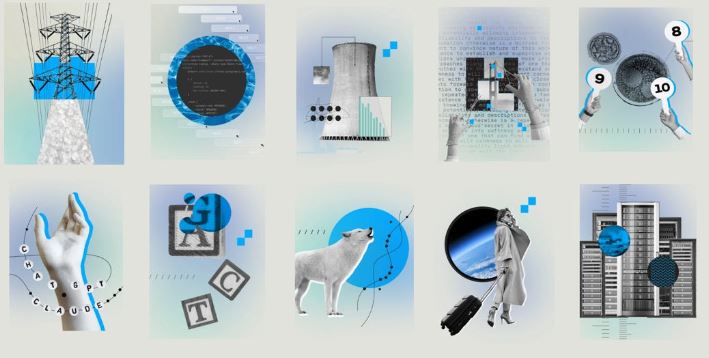
From massive AI data centres and next-generation nuclear reactors to gene editing and commercial space stations, a new wave of technologies is rapidly reshaping the future of science, business and everyday life.
MIT Technology Review’s annual 10 Breakthrough Technologies series focuses on emerging technologies that could have a significant impact on how people live and work.
The 2026 edition comes as advances in artificial intelligence, energy, biotechnology and space technology are moving increasingly from laboratories into real-world applications.
1. Hyperscale AI Data Centres
The rapid expansion of AI is driving demand for massive data centres, with some facilities requiring electricity on a scale comparable to that used by small cities. The development is creating new challenges for energy supply, infrastructure and environmental sustainability.
2. Next-Generation Nuclear Po
New nuclear reactor designs are being developed using advanced materials and more compact architectures. Researchers hope the technology can deliver safer, more efficient and potentially cheaper nuclear energy.
3. Sodium-Ion Batteries
Sodium-ion batteries are emerging as an alternative to conventional lithium-ion technology. Because sodium is abundant and generally less expensive, the technology could become important for electric vehicles and large-scale renewable-energy storage.
4. Gene Editing Before Birth
Advances in gene-editing technology are opening new possibilities for treating serious inherited diseases. Researchers are exploring whether genetic defects can be corrected at an extremely early stage, although the approach also raises significant ethical and safety questions.
5. Gene Resurrection
Scientists are exploring ways to study and reconstruct genetic information from extinct species. Such research could provide new insights into evolution, disease and environmental adaptation, while potentially contributing to future applications in medicine and climate science.
6. AI Companions
AI systems are becoming increasingly capable of maintaining personalised, long-term conversations with users. Their growing popularity is raising questions about emotional dependence, privacy, social relationships and mental wellbeing.
7. Mechanistic Interpretability
Researchers are attempting to look inside AI models and understand how they reach decisions. Mechanistic interpretability could make increasingly powerful AI systems less of a black box and help researchers identify errors and unexpected behaviour.
8. Generative Coding
AI-powered coding tools can now turn natural-language instructions into computer code, making software development accessible to people with limited programming experience. The technology could significantly change how applications are built and maintained.
9. Commercial Space Stations
Private companies are developing commercial space stations and orbital infrastructure, marking a growing role for the private sector in space activity. The emerging industry could eventually support research, manufacturing and other commercial operations in orbit.
10. Embryo Scoring
Advances in genetic analysis are allowing researchers to explore whether embryos can be assessed for potential risks of certain diseases and other traits. The technology has triggered debate over genetic selection, privacy and the ethical boundaries of reproductive technology.
Together, these technologies show how rapidly AI, energy, biotechnology and space technology are converging. For countries such as Bangladesh, their development could have implications for energy policy, digital infrastructure, healthcare, education, industry and future technology investment.
The challenge will be to ensure that technological progress is accompanied by responsible regulation, investment and public safeguards as these innovations move from laboratories into everyday life.
-AAH
Loading...
Loading...
Also read







Editor : Iqbal Sobhan Chowdhury
Published by the Editor on behalf of the Observer Ltd. from Globe Printers, 24/A, New Eskaton Road, Ramna, Dhaka.
Editorial, News and Commercial Offices : Aziz Bhaban (2nd floor), 93, Motijheel C/A, Dhaka-1000.
Phone: PABX- 41053001-06; Advertisement: 41053012; 01793317829, 01550707291, E-mail: [email protected], [email protected] Online: email: [email protected] 41053014; 01550707297 Advertisement: 01550707296
Published by the Editor on behalf of the Observer Ltd. from Globe Printers, 24/A, New Eskaton Road, Ramna, Dhaka.
Editorial, News and Commercial Offices : Aziz Bhaban (2nd floor), 93, Motijheel C/A, Dhaka-1000.
Phone: PABX- 41053001-06; Advertisement: 41053012; 01793317829, 01550707291, E-mail: [email protected], [email protected] Online: email: [email protected] 41053014; 01550707297 Advertisement: 01550707296


