



| HEADLINE |

|

Private varsities’ edn quality in question as half of them lack own campuses
More than 350,000 students are studying in the country’s 117 private universities, with around 17,500 teachers employed
Published : Wednesday, 30 September, 2026 at 12:00 AM
Tanvir Raihan


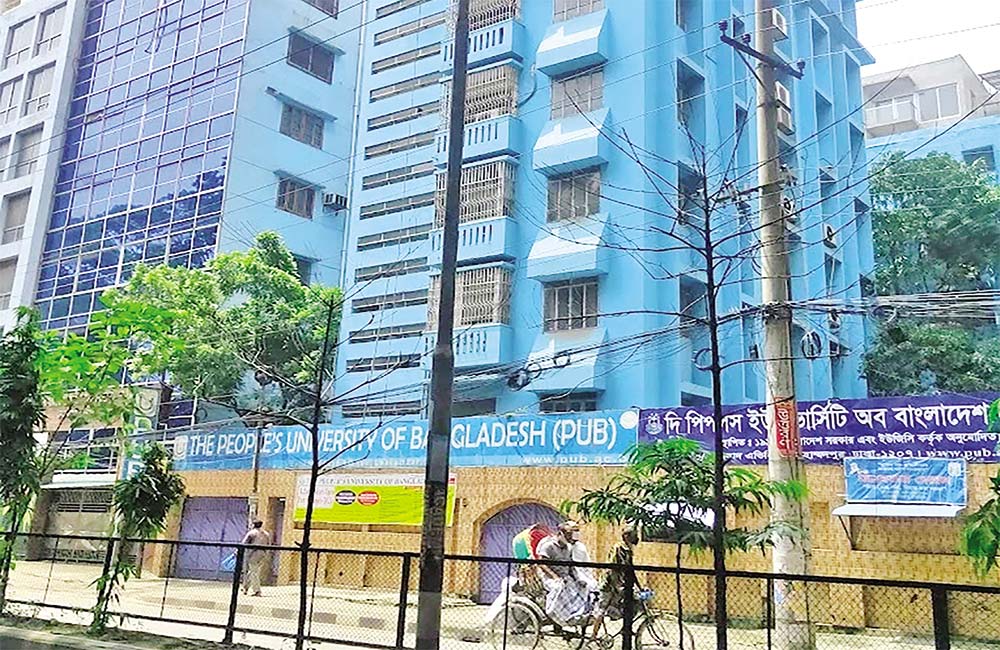 The number of private universities in Bangladesh has grown rapidly over the years, along with student enrolment, faculty strength and physical infrastructure.
 Many institutions that once operated from rented buildings have moved to permanent campuses. Yet, questions remain over academic leadership, administrative capacity and quality assurance across the sector.
Of the country’s 117 private universities, 54 are currently conducting academic activities from their own permanent campuses, while at least 28 are yet to move to permanent campuses, according to updated information from the University Grants Commission (UGC).
At the same time, 30 private universities have no vice-chancellor (VC), 89 have no pro-vice-chancellor (Pro-VC), and 40 have no treasurer. In 14 universities, all three key positions, the VC, Pro-VC and treasurer, are vacant.
The UGC updated information on permanent campuses, certificates and the appointments of senior officials of private universities on September 24.
Lack of academic leadership
Educationists say the quality of a university cannot be measured simply by the size of its campus, the number of buildings or the amount of land it owns. Qualified teachers, research facilities, libraries, laboratories, academic planning, administrative efficiency, financial management, transparency and accountability are equally important.
The VC, Pro-VC and treasurer play central roles in running a university’s academic and administrative affairs. Prolonged vacancies in these positions can create complications in academic planning, teacher recruitment, research activities, financial management and institutional decision-making.
The fact that all three positions are vacant at 14 universities highlights the leadership gap in parts of the private higher education sector.
The universities include Southern University Bangladesh, Asian University of Bangladesh, Isha Khan International University, Cox’s Bazar International University, German University Bangladesh, Canadian University Bangladesh and The People’s University of Bangladesh.
Mohammad Monirul Islam, registrar of The People’s University of Bangladesh, said the university had prepared panels for the appointment of a vice-chancellor and treasurer and would submit them to the government soon.
UGC Chairman Professor Dr Mamun Ahmed said the three positions were important for the academic and administrative functioning of universities. He said there were some complexities in the appointment process, but the commission was trying to review the panels and send its recommendations to the ministry as quickly as possible.
Moving to a permanent campus has long been one of the key requirements for private universities in Bangladesh. In the early years of the sector, most institutions operated from rented buildings, particularly in Dhaka and Chattogram.
Such arrangements often raised questions about the availability of adequate classrooms, laboratories, libraries, research facilities and space for extracurricular activities.
According to UGC data, most of the older private universities established between 1992 and 2006 have moved to their own campuses. Of the 51 universities established during that period, only a handful have yet to complete the process.
However, at least 28 universities established later have failed to move to permanent campuses even after the prescribed period.
Under the Private University Act, an institution receiving temporary approval must fulfil a number of conditions within a stipulated period to become eligible for a permanent certificate. These include having a permanent campus on the required amount of land and allocating funds for research.
A university in Dhaka or Chattogram city must have at least one acre of land for its permanent campus, while universities in other areas are required to have at least two acres.
So far, 22 private universities have received permanent certificates after fulfilling the required conditions, including those relating to permanent campuses.
The private university sector was initially developed to expand access to higher education and provide students with alternatives to studying abroad.
According to UGC information, 11 private universities were approved between 1992 and 1995, followed by 12 between 1996 and 2001. Another 32 were approved between 2002 and 2006, while 60 received approval between 2012 and 2024.
In 2025, Grameen University received approval in Dhaka, while Eco University of Science and Technology was approved in Thakurgaon in August this year.
The rapid expansion means private universities now account for a significant share of the country’s higher education. More than 350,000 students are studying at these institutions, with around 17,500 teachers employed across the sector.
As the sector expands, however, ensuring academic quality and institutional accountability has become increasingly important.
The UGC has recently taken an initiative to formulate a common policy for public and private universities to prevent plagiarism in education and research. The commission has said many universities do not have clear policies on the issue.
UGC Chairman Professor Dr Mamun Ahmed has also stressed that university teachers need more than academic degrees and research skills, saying professional responsibility, ethics, integrity, values and a sense of justice are also important.
Higher education remains Dhaka-centric
The geographical distribution of private universities is another concern.
There are currently 117 private universities in 28 districts. Of them, 59 are located in Dhaka district, including those within Dhaka city. Chattogram has 10, while Sylhet and Narayanganj have five each. Khulna and Rajshahi have four each.
Several other districts have only one or two private universities.
The figures indicate that although private higher education has expanded beyond the capital, access remains heavily concentrated in Dhaka and a few major cities.
Education experts and sector stakeholders say expanding the number of universities should go hand in hand with stronger quality assurance. Institutions that fail to meet legal requirements need to be brought under closer regulatory scrutiny, while appointments to key academic and administrative positions should be completed without unnecessary delays.
For a university, they say, a permanent campus is only part of the institutional foundation. The quality of education, research, academic leadership, governance and knowledge creation taking place there ultimately determines the value of the institution.

Loading...
Loading...
Also read



Editor : Iqbal Sobhan Chowdhury
Published by the Editor on behalf of the Observer Ltd. from Globe Printers, 24/A, New Eskaton Road, Ramna, Dhaka.
Editorial, News and Commercial Offices : Aziz Bhaban (2nd floor), 93, Motijheel C/A, Dhaka-1000.
Phone: PABX- 41053001-06; Advertisement: 41053012; 01793317829, 01550707291, E-mail: [email protected], [email protected] Online: email: [email protected] 41053014; 01550707297 Advertisement: 01550707296
Published by the Editor on behalf of the Observer Ltd. from Globe Printers, 24/A, New Eskaton Road, Ramna, Dhaka.
Editorial, News and Commercial Offices : Aziz Bhaban (2nd floor), 93, Motijheel C/A, Dhaka-1000.
Phone: PABX- 41053001-06; Advertisement: 41053012; 01793317829, 01550707291, E-mail: [email protected], [email protected] Online: email: [email protected] 41053014; 01550707297 Advertisement: 01550707296


