



| HEADLINE |

|

Rip-offs rampant in kitchen markets
Published : Saturday, 10 October, 2026 at 12:00 AM
Business Correspondent


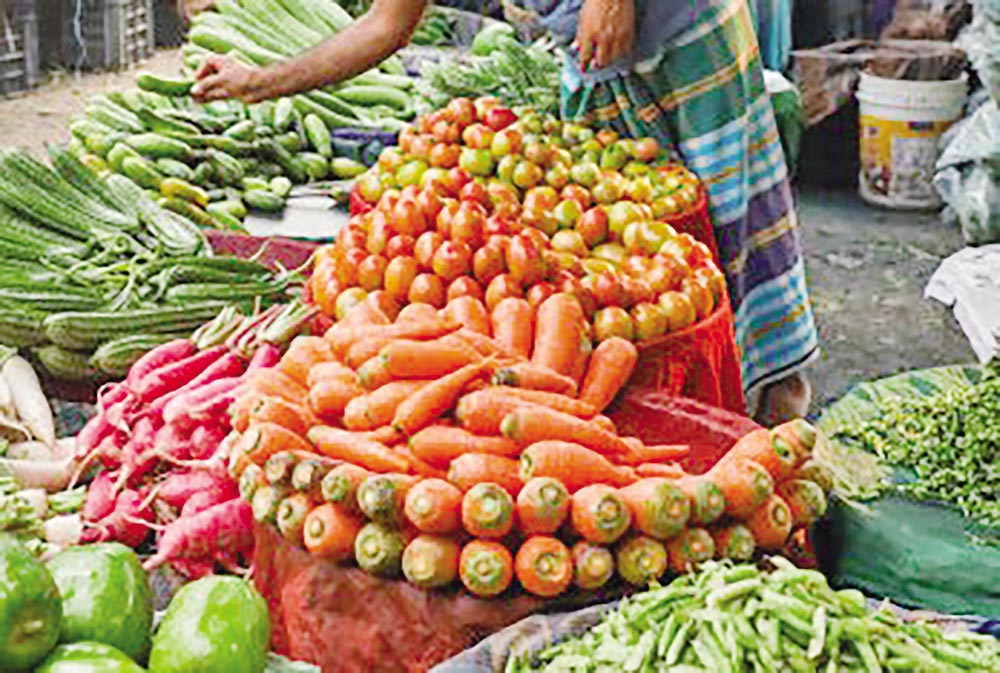 Consumers continue to face mounting pressure from high prices of essential commodities, with edible oil and sugar selling above government-fixed retail prices amid supply shortages, while eggs, onions and vegetables remain expensive in the capital’s markets.
Although the winter vegetable season is approaching, prices of most vegetables remain unusually high, with traders blaming rising transportation costs following fuel price increases and rainfall-related disruptions. Meanwhile, limited retail supplies of bottled edible oil and packaged sugar have added to consumers’ woes.
A visit to retail markets in Rampura, Hajipara, Malibagh and Segunbagicha on Friday found that many essential items were selling above their prescribed prices, leaving consumers struggling to manage their household budgets.
A kilogram of packaged sugar, carrying a maximum retail price (MRP) of Tk 110, was selling for Tk 115 to Tk 120 at retail outlets. Some shopkeepers were opening sugar packets and selling the product loose at higher prices, saying they could not cover their costs by selling at the printed price because of higher wholesale prices.
The edible oil market is facing similar problems. Although the government-fixed price of bottled edible oil is Tk 204 per litre, some retailers were charging Tk 210. Loose edible oil was selling at Tk 220 per litre, while palm oil cost Tk 200.
Retailers alleged that companies had reduced edible oil supplies amid efforts to raise prices. They also said lower profit margins had discouraged many small retailers from selling the product, further aggravating the shortage.
Previously, retailers earned Tk 3 to Tk 5 per litre from bottled edible oil, but the margin has reportedly fallen to around Tk 1.
Rajib Hossain of Mahin General Store said a five-litre bottle of edible oil costs Tk 1,020, leaving him with a profit of only Tk 5.
“Investing so much money for such a small return makes little sense when selling other products can generate several times more profit. Companies also do not supply oil regularly, so we have stopped selling it,” he said.
Vegetable prices have also remained high despite the approaching winter season, when supplies of locally grown vegetables typically increase.
During a market visit on Friday, green beans were selling for Tk 160 to Tk 180 per kg, while aubergines cost Tk 100. Bitter gourd, cucumber and ridge gourd were priced at around Tk 80 per kg, while carrots sold for Tk 140.
Green chillies were selling for Tk 160 per kg, yardlong beans at Tk 80, pointed gourd at Tk 60 and sponge gourd at Tk 60. Papaya was available for Tk 30 per kg, while bottle gourds cost Tk 70 to Tk 80 each. Green bananas were selling at Tk 40 per four.
Kamruzzaman Sohel, a private-sector employee shopping at Malibagh market, said vegetable prices had become increasingly difficult for ordinary consumers to afford.
“Almost every vegetable costs Tk 80 to Tk 100 per kg. With winter approaching, prices should be coming down, but the opposite is happening. I used to buy a kilogram of vegetables, but now I buy only half a kilogram of each item,” he said.
He added that sellers attributed the higher prices to increased transportation costs.
Khadimul Islam, a vegetable seller at Rampura market, said higher transport expenses and relatively limited supplies ahead of the arrival of fresh winter vegetables had pushed prices up.
He expressed hope that prices would ease within one or two months when larger quantities of winter vegetables reach the market.
Egg prices remain another source of concern, particularly for low-income families that rely on eggs as an affordable source of animal protein.
Farm eggs were selling for Tk 155 to Tk 160 per dozen in different markets. In neighbourhood shops, four eggs cost around Tk 55, equivalent to Tk 165 per dozen.
The retail price of an individual egg has exceeded Tk 13, although farmers are not receiving the full benefit of the higher prices.
According to industry insiders, producing an egg costs around Tk 10.25. On Thursday, wholesalers purchased eggs from farms nationwide at an average of Tk 11.11 each, leaving farmers with less than Tk 1 in profit per egg before other unaccounted costs.
Bangladesh produces more than 60 million eggs daily, with around 80 per cent coming from small-scale farmers. Industry representatives say intermediaries can take around Tk 2 or more per egg as it moves from farms to retail markets.
Onion prices have also increased by around Tk 5 per kg over the past week, with good-quality onions selling at Tk 55 to Tk 60.
Meanwhile, broiler chicken was selling at Tk 180 to Tk 190 per kg. Atta (whole-wheat flour) cost Tk 60 to Tk 65 per kg, while refined flour was priced at Tk 70 to Tk 80 or more, depending on the brand.
The combination of high vegetable prices, expensive eggs, rising onion costs and shortages of essential cooking ingredients continues to put pressure on household budgets, with consumers yet to see meaningful relief in the capital’s markets.

Loading...
Loading...
Also read



Editor : Iqbal Sobhan Chowdhury
Published by the Editor on behalf of the Observer Ltd. from Globe Printers, 24/A, New Eskaton Road, Ramna, Dhaka.
Editorial, News and Commercial Offices : Aziz Bhaban (2nd floor), 93, Motijheel C/A, Dhaka-1000.
Phone: PABX- 41053001-06; Advertisement: 41053012; 01793317829, 01550707291, E-mail: [email protected], [email protected] Online: email: [email protected] 41053014; 01550707297 Advertisement: 01550707296
Published by the Editor on behalf of the Observer Ltd. from Globe Printers, 24/A, New Eskaton Road, Ramna, Dhaka.
Editorial, News and Commercial Offices : Aziz Bhaban (2nd floor), 93, Motijheel C/A, Dhaka-1000.
Phone: PABX- 41053001-06; Advertisement: 41053012; 01793317829, 01550707291, E-mail: [email protected], [email protected] Online: email: [email protected] 41053014; 01550707297 Advertisement: 01550707296


