



| HEADLINE |

|

World Food Day: Global conflicts, import costs threaten food security
Published : Friday, 16 October, 2026 at 9:36 AM
Observer Special Report


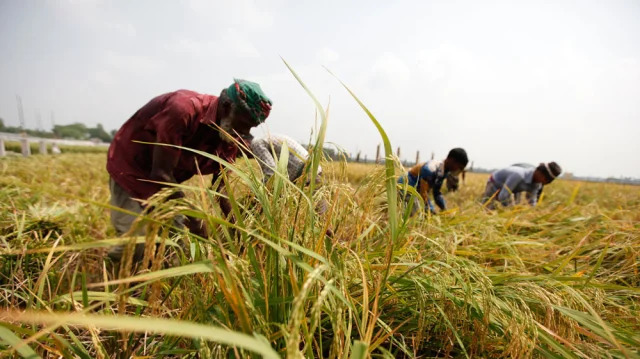
Collected Photo
Bangladesh is observing World Food Day on Friday (October 16) under the global theme "Innovate today. Nourish tomorrow.", at a time when domestic grain production continues to rise, yet reliance on imports remains high to meet escalating demand.
According to data from the Directorate General of Food, Bangladesh imported 1,497,510 tonnes of food grains between July 1 and October 14 of the current fiscal year, comprising 30,730 tonnes of rice and 1,466,780 tonnes of wheat across public and private sectors. In the previous fiscal year, total grain imports stood at 8,602,080 tonnes, including 1.26 million tonnes of rice and 7.33 million tonnes of wheat.
As of October 14, public food reserves stood at 2,271,226 tonnes—including 1,955,754 tonnes of rice, 312,073 tonnes of wheat, and 5,230 tonnes of paddy—reaching 2,345,574 tonnes when floating stocks are included. However, agricultural economists emphasize that domestic food security faces severe headwinds from climate shocks, shrinking arable land, and volatile global supply chains.
Global Conflicts Escalate Risk of Worldwide Food Shortages
The global food security landscape faces critical threats from compounding geopolitical crises, primarily the ongoing Russia-Ukraine war and severe regional conflicts across the Middle East.
According to reports published by the Food and Agriculture Organization (FAO) and the World Food Programme (WFP), these twin geopolitical shocks threaten food security across multiple continents, including Asia, Africa, and Europe:
Upstream Input Shocks & Fertilizer Shortages: The persistent conflict in Ukraine has chronically disrupted Black Sea grain exports and global fertilizer supplies. Compounding this, recent escalations and trade blockades in the Middle East—particularly around critical maritime chokepoints like the Strait of Hormuz—have severely disrupted shipments of crude oil, natural gas, and nitrogen-based fertilizers.
Skyrocketing Production Costs: Global natural gas price spikes have led to a more than 50 per cent surge in fertilizer costs, causing farmers worldwide to reduce fertilizer application rates. The FAO warns that lower application rates will directly lead to reduced global crop yields and tighter grain supplies over the coming agricultural cycles.
Surging Transport and Processing Costs: Elevated global fuel prices are escalating costs across farm operations, irrigation, storage, and cross-border logistics. This creates severe food inflation in import-dependent developing nations, reducing household purchasing power and leaving up to 363 million people worldwide acutely food insecure.
Speaking on the national context, Agriculture Minister Mohammad Amin Ur Rashid noted that the government is expanding agricultural innovation and modern technologies to strengthen food security, stabilize market prices, and protect domestic farmers from external supply shocks.
-SA

Loading...
Loading...
Also read









Editor : Iqbal Sobhan Chowdhury
Published by the Editor on behalf of the Observer Ltd. from Globe Printers, 24/A, New Eskaton Road, Ramna, Dhaka.
Editorial, News and Commercial Offices : Aziz Bhaban (2nd floor), 93, Motijheel C/A, Dhaka-1000.
Phone: PABX- 41053001-06; Advertisement: 41053012; 01793317829, 01550707291, E-mail: [email protected], [email protected] Online: email: [email protected] 41053014; 01550707297 Advertisement: 01550707296
Published by the Editor on behalf of the Observer Ltd. from Globe Printers, 24/A, New Eskaton Road, Ramna, Dhaka.
Editorial, News and Commercial Offices : Aziz Bhaban (2nd floor), 93, Motijheel C/A, Dhaka-1000.
Phone: PABX- 41053001-06; Advertisement: 41053012; 01793317829, 01550707291, E-mail: [email protected], [email protected] Online: email: [email protected] 41053014; 01550707297 Advertisement: 01550707296


