



| HEADLINE |

|

Human Rights of Those Who Defend Human Rights
Published : Saturday, 17 October, 2026 at 12:00 AM
Sayma Sultana


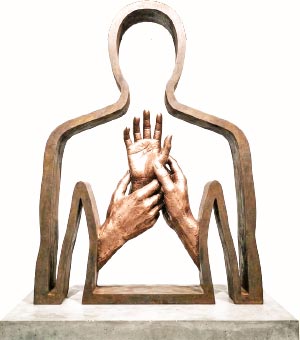 Human rights conversations usually begin with vulnerability, focusing on a child facing violence, a woman seeking safety, a family confronting poverty or a displaced community searching for shelter. Less attention is paid to those who spend their working lives protecting others from further harm. Social workers, child protection professionals, community workers, humanitarian workers, development workers, environmental defenders and animal rescuers work closely with suffering.
They enter places others leave, listen to painful stories and return the next morning to do it all again. Who protects their rights?
For Bangladesh, that question demands more than gratitude. It demands evidence. Although no single national dataset captures everyone working across human rights, social protection and related fields, available data from child protection offers a revealing picture.
UNICEF Bangladesh’s 2025 mapping identified 21,288 child protection social workers, just 21 per cent of the estimated 100,000 required. Meanwhile, a 2023 study cited by the European Union Agency for Asylum found that 86 per cent of surveyed grassroots human rights defenders faced obstacles, including threats and intimidation, highlighting the risks of defending others’ rights.
Employment insecurity compounds the problem. Only 48 per cent of mapped social workers held permanent contracts. The proportion stood at 66 per cent in government employment, 40 per cent in national organisations and 29 per cent in international organisations.
Protection work, however, rarely follows a project’s lifespan. A child does not outgrow trauma when a grant closes. A survivor does not recover according to a funding cycle, and a displaced community cannot postpone its crisis until another project begins.
Working hours reveal another divide. Only 56 per cent of the mapped workforce worked full time, falling to 53 per cent in national organisations and six per cent among informal workers, compared with 87 per cent in government and 88 per cent in international organisations. Bangladesh’s Labour Act generally limits working hours to eight a day and 48 a week, with exceptions subject to an annual average ceiling of 56 hours weekly. Amendments in 2026 addressed service continuity, resignation compensation, equal pay and workplace violence and harassment, but legal provisions alone cannot guarantee effective protection.
Low pay presents an equally pressing concern. Half of respondents identified it among their three leading challenges, while only 35 per cent expressed satisfaction with their salary or voluntary status. Around one-third of non-government social-service workers served as unpaid volunteers.
Bangladesh’s Labour Force Survey 2022 found that 84.9 per cent of the workforce, or around 60 million people, were in informal employment, rising to 92.7 per cent among workers aged 15 to 27. Workers employed by development projects and civil society organisations are not immune to similar risks, including low wages, job insecurity and limited social protection. Income disparities deepen the concern. UNICEF’s assessment found social workers’ average monthly earnings substantially below the Tk 32,422 average monthly household income recorded in the 2022 Household Income and Expenditure Survey.
Here, the language of rights acquires an uncomfortable contradiction. Society asks these workers to accompany survivors, protect children, defend communities, document abuses, respond to disasters and safeguard the environment. Their commitment is praised, but commitment cannot pay rent. Courage cannot secure a pension, and compassion cannot replace a safe workplace.
Amartya Sen’s capability approach offers a useful lens. Development, in his conception, extends beyond income and economic growth to the substantive freedoms people possess to pursue lives they value. Applied to protection workers, it exposes a paradox: a society may expand one person’s freedoms while leaving the worker enabling that progress with insecure employment, inadequate income and limited social protection.
Bangladesh’s figures make the contradiction tangible: a requirement for 100,000 child-protection social workers against an estimated 21,288 available; permanent contracts for only 48 per cent; full-time work for just 56 per cent; and low salaries among the leading concerns of half the respondents. The cost of underpaid protection work appears in unpaid hours, insecure contracts and professional exhaustion. Human rights must extend beyond beneficiaries to those who defend them, recognising their labour’s economic value, protecting their safety and securing their futures beyond mere applause.
Perhaps the deepest test of a rights-based society lies not only in how it protects those in need, but also in whether it protects the people upon whom that protection depends. Those who spend their lives widening others’ freedoms should not have to surrender their own.
The writer is a development communication professional

Loading...
Loading...



Editor : Iqbal Sobhan Chowdhury
Published by the Editor on behalf of the Observer Ltd. from Globe Printers, 24/A, New Eskaton Road, Ramna, Dhaka.
Editorial, News and Commercial Offices : Aziz Bhaban (2nd floor), 93, Motijheel C/A, Dhaka-1000.
Phone: PABX- 41053001-06; Advertisement: 41053012; 01793317829, 01550707291, E-mail: [email protected], [email protected] Online: email: [email protected] 41053014; 01550707297 Advertisement: 01550707296


