



| HEADLINE |

|

PLIGHT OF Rohingya Children
Born in Exile, Robbed of Childhood
Published : Saturday, 24 October, 2026 at 12:00 AM


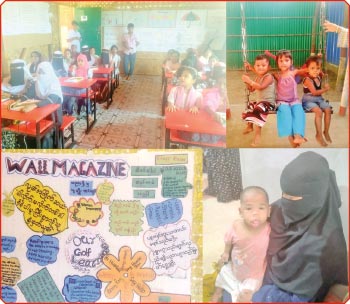
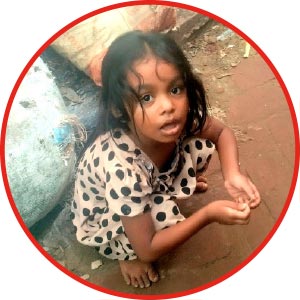 At the age of carrying books, playing and dreaming of becoming doctors, teachers or engineers, thousands of Rohingya children in Cox’s Bazar camps grow up wondering what tomorrow will bring.
During a recent visit to several Rohingya camps in Ukhiya with a journalists’ delegation, I witnessed their hardships at close quarters. Born in exile after their families fled persecution in Myanmar’s Rakhine State, these children grow up without a homeland, citizenship or a secure future.
Conversations with the children revealed the deep psychological scars left by violence. Their drawings depicted killings, brutality and homes engulfed in flames.Despite being too young to understand politics, they bear displacement, uncertainty and deprivation when they should be enjoying childhood.
According to UNICEF’s June 2026 report, 624,000 children among nearly 1.2 million Rohingya refugees needing aid in Bangladesh. Across 33 camps in Cox’s Bazar and Teknaf and on Bhasan Char, they face growing challenges in education, healthcare, mental well-being and protection.
Childhood Without Classrooms
Education is fundamental to a child’s future, yet education remains out of reach for many Rohingya children. Despite temporary learning centres and Myanmar curriculum-based programmes, UNICEF’s June 2026 report found that more than 150,000 children aged 5 to 18 had no access to education, while 302,800 were enrolled in UNICEF-supported programmes.
The report also identified 2,051 learning centres needing rehabilitation, including 286 requiring complete reconstruction.
Prolonged exclusion from education exposes children to increased risks of involving child labour, early marriage, trafficking and exploitation.
Save the Children International (SCI) is working to address these challenges through safe and inclusive learning centres, education based on the Myanmar curriculum, the Accelerated Learning Programme (ALP), teacher training and activities that support children’s social and emotional development. The organisation also prioritises girls’ participation, the inclusion of children with disabilities and tailored support for those at risk.
According to the organisation’s project data, its education activities cover 803 institutions and learning centres across 17 camps and six unions, reaching over 33,000 learners. Its early childhood programme provides home-based learning support to 2,456 children aged 3-"5.
A September 2026 SCI report says 57 Rohingya teaching volunteers reached 4,800 learners at 60 centres in partnership with five local organisations. Project data records US$7.38 million in donor funding for education initiatives.
Keeping classrooms open requires sustained funding, trained teachers and safe, quality learning environments to safeguard children’s futures.
Amid the crisis, organisations such as Save the Children International support Rohingya children through education, healthcare, nutrition and protection programmes.However, few specialised hospitals, learning centres and protection projects alone cannot resolve this prolonged crisis. Sustained funding, quality services, coordinated efforts and long-term planning are essential to secure these children’s future.
Hunger, Illness and Survival
Inadequate healthcare and poor nutrition further threaten Rohingya children amid overcrowding, limited safe water and sanitation, and food shortages.
UNICEF’s June 2026 report says 169,700 children under five were screened for malnutrition in the first half of the year, while 6,800 children with acute malnutrition received treatment. Meanwhile, 157,100 children and women accessed primary healthcare.
Save the Children International (SCI) provides primary healthcare, nutrition, maternal and newborn care, and emergency obstetric services to Rohingya refugees and the host community. On January 21, 2026, it inaugurated a 59-bed maternal and child hospital at Camp 21 in Teknaf, offering round-the-clock emergency obstetric care, antenatal and postnatal services, newborn treatment, medicines and nutritional support.
The hospital recorded its first Caesarean birth in June 2026, bringing specialised care closer to the camps. From June to August, SCI’s hospital and associated services handled 17,342 maternal, newborn and child health cases, performed 26 emergency Caesarean sections, treated 24 newborns in its neonatal unit, provided emergency care to 208 mothers and newborns, and treated 1,827 referred patients. Nearly 11,000 people also received diagnostic and laboratory services. The initiative is supported by CONRAD, the POSNER Foundation and ECHO.
Amid the crisis, organisations such as Save the Children International support Rohingya children through education, healthcare, nutrition and protection programmes.However, few specialised hospitals, learning centres and protection projects alone cannot resolve this prolonged crisis. Sustained funding, quality services, coordinated efforts and long-term planning are essential to secure these children’s future.
Food insecurity may worsen the crisis, with an SCI report projecting that 35 per cent of Rohingya refugees in Bangladesh could face crisis or emergency-level food insecurity from September to December 2026.
Threat of Violence, Exploitation and Insecurity
One of the most disturbing aspects of the plight of Rohingya children is the lack of safety and security. They face abduction, sexual violence, neglect, exploitation and recruitment by armed groups, threatening their safety and development.
UNICEF’s June 2026 report documented 1,439 grave violations against children in the first half of the year, affecting 1,645 children.
SCI provides child-friendly spaces, case management, counselling, psychosocial support and referrals for at-risk children. Its programmes also trace and reunite separated families, prevent child marriage and promote child rights.
SCI operates 124 child protection facilities, including 63 multipurpose centres, 26 clubs, 18 protection offices and 17 safe spaces for girls, women and children.Beneficiaries include 68,131 girls, 68,959 boys, 17,538 women, 18,661 men and 2,738 persons with disabilities.
However, UNICEF’s June 2026 report identified a US$7 million funding gap for child protection in 2026, threatening essential services. Sustained funding and effective protection mechanisms are vital to safeguarding children’s safety, dignity and psychological well-being.
Save Childhood Before It Is Lost
Ensuring a safe childhood for Rohingya children is not merely a matter of humanitarian assistance; it is a question of human rights, justice and the international community’s responsibility towards future generations. These children need quality education, healthcare, nutrition, a safe environment and protection from violence and exploitation.
Rights on Paper, Not in Practice
The UN Convention on the Rights of the Child guarantees every child education, healthcare, protection from violence and discrimination, and opportunities to thrive, regardless of refugee status.
Bangladesh, UN agencies and NGOs have been working for years to support Rohingya children, but prolonged displacement and funding uncertainty continue to challenge these efforts.
According to the UN’s 2025-"26 Joint Response Plan, US$710.5 million is required in 2026 to provide assistance to 1.6 million Rohingya refugees and members of host communities.
Nazmul Islam Bhuiyan, additional refugee relief and repatriation commissioner at the office of the Refugee Relief and Repatriation Commissioner (RRRC) in Cox’s Bazar said,“The Bangladesh government has no specific allocation in the national budget for assisting Rohingya refugees. However, rice, wheat and other food grains were occasionally provided as donations from government food stocks.”
“Every child had the right to a better life. Alongside education, ensuring the safety and security of Rohingya children was equally important. The government was ready to provide the necessary support if such initiatives were expanded for their welfare,”he added.
Every child in the Rohingya camps has the right to go to school with books in hand, receive medical treatment when ill and grow up without fear. Saving a child means more than preserving a single life; it also means safeguarding a future, a world of possibilities and the dreams of an entire generation.
The writer is a journalist

Loading...
Loading...
Also read



Editor : Iqbal Sobhan Chowdhury
Published by the Editor on behalf of the Observer Ltd. from Globe Printers, 24/A, New Eskaton Road, Ramna, Dhaka.
Editorial, News and Commercial Offices : Aziz Bhaban (2nd floor), 93, Motijheel C/A, Dhaka-1000.
Phone: PABX- 41053001-06; Advertisement: 41053012; 01793317829, 01550707291, E-mail: [email protected], [email protected] Online: email: [email protected] 41053014; 01550707297 Advertisement: 01550707296


