



| HEADLINE |

|

Iran threatens to cut Hormuz internet cables
Published : Wednesday, 21 October, 2026 at 3:57 PM
Observer Online Desk


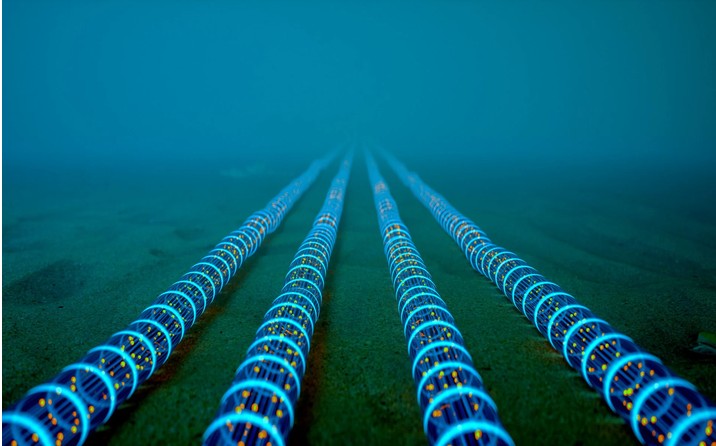
Iran has threatened to cut undersea internet cables that run beneath the Strait of Hormuz to choke the global banking system.
Gen Hossein Mohebbi, spokesman for the Islamic Revolutionary Guard Corps (IRGC), described the communication lines on the seabed as “legitimate new targets”.
Severing the cables could affect global systems, disrupting financial markets, bank transactions, healthcare and the consumer internet.
“Seven large cables pass beneath the Strait of Hormuz, and all internet and commercial data pass through them,” Gen Mohebbi said.
He added: “We just want them to know that new targets and new weapons will be unveiled.”
Gen Mohebbi said the war between Iran and the United States, now in its eighth month, had entered a lull before a possible “third phase” in which Iran would reveal a “new geography of war”, new targets and new weapons.
Donald Trump has threatened to renew strikes on Iran after the US midterm elections in November.
The IRGC singled out one line running 15,500 miles from Southeast Asia to Europe – a description matching the Asia-Africa-Europe-1 cable, which lands in Oman, the United Arab Emirates and Qatar.
An Iranian official told The Telegraph from Tehran that cutting the cable had been discussed several times during the war.
However, Tehran had not ordered an attack to avoid “declaring war on the whole world and building new enemies”.
The official said it would nonetheless remain “an option if Trump escalates”.
Specialists say the threat is technically credible, if widely misunderstood.
Undersea cables are laid along the most direct route and, wherever possible, through shallow water so they are easier to reach and repair, said Prof Alessio Patalano, professor of war and strategy at King’s College London, co-director of its Centre for Grand Strategy and a maritime specialist.
That design inevitably funnels them through narrow chokepoints, “even under 100 metres”, he told The Telegraph, the same pinch points through which the world’s ships are forced to pass.
“Not only is it possible, but it’s been a rather clear possibility for a long time,” Prof Patalano said of Iran’s threats.
At such points, he added, well-equipped divers “can go down to the seabed, presumably if you know where exactly the cables are, and cut them or destroy them.”
According to one theory, divers placed explosive devices on the Nord Stream pipeline before slipping away in the 2022 attack.
“None of this is unheard of,” Prof Patalano said.
More recently, remotely controlled and autonomous submersibles have made the task easier still, a capability, he added, that states have possessed in some form “from the 1950s onwards”.
A better-armed actor “makes it very, very much harder for anyone by hitting the deeper parts, whereby just positioning capabilities to repair the cables will increase the amount of time they’re offline”.
In other words, the depth and location of an attack, not just the act of cutting, determine how long the damage lasts, and in the shallow Strait of Hormuz the barrier to entry is low.
The cables are among the least visible but most critical pieces of global infrastructure.
Around the world, more than a million miles of undersea lines carry more than 99 per cent of international data, according to the International Telecommunication Union.
Cutting all seven Hormuz lines, Prof Patalano said, would mean “intermittent, limited internet”, slower financial transactions and disrupted movement of data inside Iran.
Other economies that depend on fast and continuous access to data could be hampered.
Huge data centres, artificial intelligence infrastructure and cloud computing services are hosted in the region, meaning impact on major global providers such as Amazon Web Services.
Multinational corporations that carry out transactions between Europe, the Middle East and Asia could also be hampered, while general communications could slow as a result of the backlog and the re-routing.
“The NHS nowadays, or most healthcare systems, run on reliable, continuous access to databases and data,” he said. “Depending on where the databases are, you might find that your own national healthcare infrastructure is at risk. Your financial transactions and your financial economy are at risk.”
Hardliners in Tehran have urged such a move for months.
The ultraconservative daily Kayhan newspaper argued Iran had both the right and the means to disrupt the lines in retaliation for the war.
“Is it not our right to prevent the passage of these cables through the depths of the Persian Gulf and the eternal Strait of Hormuz in order to bring these vile germs to their knees?” the paper wrote.
On the prospect of outside help, Prof Patalano said Chinese and Russian components were already present in Iranian drones and other systems, and that “lines of communication” among the three actors were well established.
It was “plausible”, he said, that Iran could tap foreign know-how, “not the most advanced, because I don’t think there’s any interest, if you’re Russian or Chinese, in sharing the most advanced technologies with many other actors”.
He cautioned against reading the threat as all-or-nothing. “It absolutely is” a serious danger, he said, “but we need to frame it in a slightly different way. This isn’t a switch.”

Loading...
Loading...
Also read






Editor : Iqbal Sobhan Chowdhury
Published by the Editor on behalf of the Observer Ltd. from Globe Printers, 24/A, New Eskaton Road, Ramna, Dhaka.
Editorial, News and Commercial Offices : Aziz Bhaban (2nd floor), 93, Motijheel C/A, Dhaka-1000.
Phone: PABX- 41053001-06; Advertisement: 41053012; 01793317829, 01550707291, E-mail: [email protected], [email protected] Online: email: [email protected] 41053014; 01550707297 Advertisement: 01550707296


