



| HEADLINE |

|

Halzen’s Nobel and the Search for the Universe’s Next Messenger
Published : Friday, 23 October, 2026 at 12:00 AM
ARNAB ASHRAF


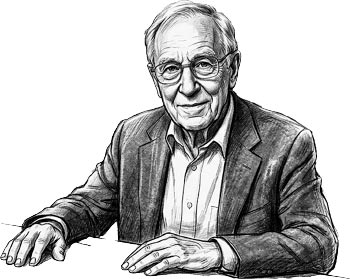
 When Francis Halzen received the 2026 Nobel Prize in Physics, the recognition marked more than a distinguished scientific career. It celebrated a new way of observing the universe�"through neutrinos, elusive particles that can travel enormous distances while interacting only weakly with matter.
For centuries, astronomy depended mainly on light. Telescopes revealed stars, galaxies and cosmic explosions through photons. But the universe has other messengers, and neutrinos are among the most fascinating.
Halzen and the international IceCube collaboration helped transform neutrino detection into a powerful astronomical tool. Deep beneath the Antarctic ice at the South Pole, thousands of sensors detect faint flashes produced when neutrinos interact with matter. IceCube has opened a new window onto the cosmos, allowing scientists to investigate some of the universe’s most energetic environments.
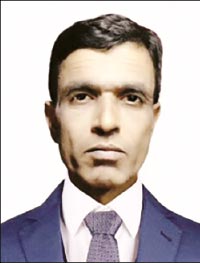
For Bangladeshi independent researcher Usman Jr Ibne Mahmood, Halzen’s Nobel has a personal meaning. His own interest in invisible phenomena began more than four decades ago.
In 1981, Usman began building and flying a handmade paper Golden Eagle Kite. He says he noticed differences in the kite before and after flight, including changes in its smell. Over the time, he developed his own interpretation and referred to what he perceived as a “neutrino smell.”
The idea is unusual, but it is important to distinguish personal observation from established science. There is currently no accepted scientific method for detecting neutrinos through smell, nor evidence that a kite can acquire a detectable neutrino signature. Usman’s idea should therefore be treated as an unverified hypothesis.
But an unusual hypothesis does not necessarily have to be dismissed.
It can be tested.
This is where Usman’s vision for a possible research laboratory in South Africa’s Kalahari region becomes interesting. He imagines a long-term research environment where scientists could study cosmic rays, radiation, atmospheric conditions, electromagnetic activity and other physical variables.
The Golden Eagle Kite could potentially become part of such research�"but not simply as a claimed neutrino detector. Instead, researchers could use modern instruments to revisit the original observations under controlled conditions.
Any unusual signal would have to be measured quantitatively. Experiments would need appropriate controls, repeated observations and independent verification. Possible environmental, chemical or instrumental explanations would also have to be investigated.
If a connection with neutrinos were proposed, it would need to be compared with independently verified neutrino observations.
The essential scientific journey is simple: Observation → Hypothesis → Measurement → Repetition → Independent Verification.
That principle is central to Halzen’s achievement. IceCube did not become important because scientists merely believed neutrinos could reveal the universe. It became important because researchers developed sophisticated instruments, collected evidence and subjected their findings to scientific scrutiny.
The same standard would have to apply to any future Kalahari experiment.
Usman says he has spent years pursuing the idea of a major research facility and is now using writing and public discussion to seek scientists and potential collaborators. Whether his original interpretation is ultimately supported, modified or rejected remains unknown.
And that uncertainty is perfectly acceptable.
Science does not require every hypothesis to be correct. It requires hypotheses to be testable.
Halzen’s Nobel is not only a celebration of what humanity has already discovered. It is also a reminder of how much remains unknown.
The next important cosmic messenger may come from Antarctic ice, a desert laboratory, a space-based detector�"or an instrument that has not yet been invented.
More than four decades ago, a young Bangladeshi researcher sent a handmade Golden Eagle Kite into the afternoon sky because he believed there was something worth observing.
Today, that curiosity has become a larger question: What else is the universe trying to tell us�"and have we yet built the right instrument to listen?
The writer is a journalist at The Daily Observer

Loading...
Loading...
Also read



Editor : Iqbal Sobhan Chowdhury
Published by the Editor on behalf of the Observer Ltd. from Globe Printers, 24/A, New Eskaton Road, Ramna, Dhaka.
Editorial, News and Commercial Offices : Aziz Bhaban (2nd floor), 93, Motijheel C/A, Dhaka-1000.
Phone: PABX- 41053001-06; Advertisement: 41053012; 01793317829, 01550707291, E-mail: [email protected], [email protected] Online: email: [email protected] 41053014; 01550707297 Advertisement: 01550707296


