



| HEADLINE |

|

From Foundation to Finishing
What Goes inside Building a Home
Published : Friday, 23 October, 2026 at 12:00 AM
Staff Correspondent


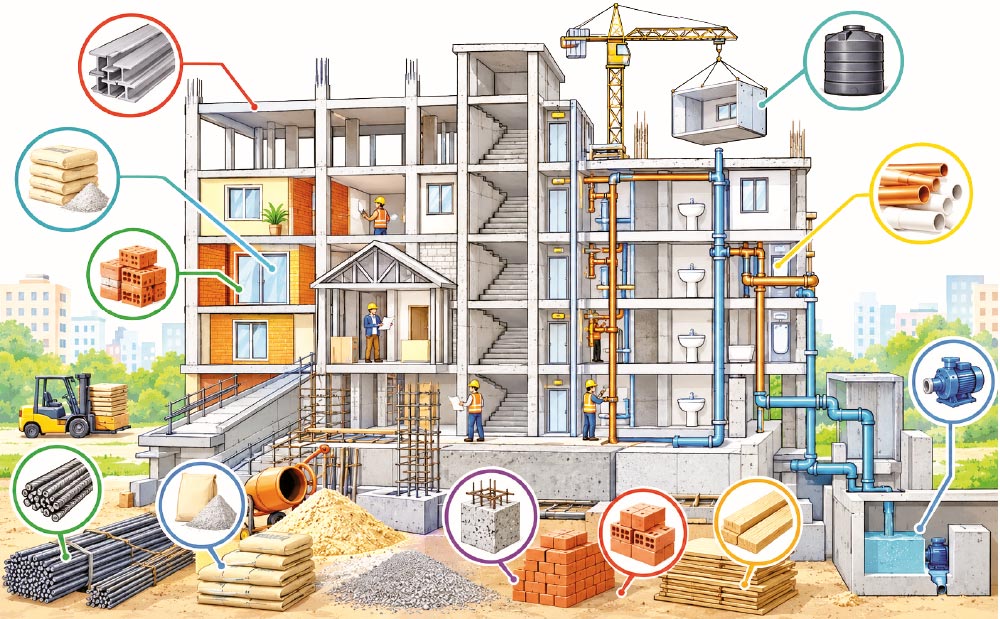 For the real estate and housing sector, construction materials are more than building essentials they are key factors in determining property costs, quality and durability. Understanding these materials can help homebuyers, landowners and developers make informed decisions before investing in a property.
Understanding these requirements before construction begins and buying an apartment can help owners prepare a realistic budget and avoid unnecessary expenses.
Steel, cement and concrete: The foundation of a building
The structure is the most important part of a building. Foundations, columns, beams, roofs and staircases are generally built with reinforced concrete, which combines cement, sand, stone aggregates, water and steel rods.
Steel rods strengthen the concrete, while cement binds the other materials together. Sand and stone aggregates also play an important role in making concrete strong and durable.
The quality of these materials and the correct proportions are essential for the building’s safety. Depending on the project, ready-mix concrete or other approved materials may be used.
All structural materials must follow the building design and the engineer’s specifications. Cutting costs by using poor-quality materials can put the entire structure at risk.
Bricks and blocks for walls
Burnt-clay bricks remain common in Bangladesh, but concrete blocks and autoclaved aerated concrete (AAC) blocks are also used in construction.
Building walls requires bricks or blocks, cement-sand mortar and, where necessary, lintels above doors and windows.
The choice of wall materials depends on the building design, insulation needs, construction costs and local availability. Homeowners should compare the overall cost and performance of a wall rather than choosing materials based only on the price of individual bricks.
Roof construction and waterproofing
A concrete roof needs steel reinforcement, cement, sand, stone aggregates and water. But completing the concrete work does not mean the roof is fully protected.
Waterproofing materials, drainage pipes and a proper slope are needed to prevent rainwater from entering the building. Some buildings may also require thermal insulation, depending on their design and environmental conditions.
Poor waterproofing can cause damp walls, damaged paint and expensive repairs. Choosing suitable materials and ensuring proper installation can reduce these problems.
Plaster, paint and finishing
After the structure and walls are completed, plaster, putty, primer and paint are used to finish the surfaces. Some buildings may use gypsum plaster or other specialised materials.
Exterior walls need paints and protective coatings that can withstand local weather conditions.
The cost of finishing depends on the brand, quality and quantity of materials, as well as labour costs. This is one reason why two apartments of the same size can have very different construction costs.
Tiles, floors and wall finishes
Ceramic and porcelain tiles, marble, granite and other materials are used for floors, kitchens, bathrooms and staircases.
The budget should include more than the price of the tiles. Tile adhesive, grout, cutting, installation labour and material wastage can also add to the total cost.
The choice of flooring and wall finishes should reflect the owner’s budget, design preferences and maintenance needs.
Doors, windows and glass
Doors and windows affect a home’s security, ventilation, natural light and appearance.
Doors may be made of wood, engineered wood or steel. Windows commonly use aluminium or uPVC frames with suitable glass.
Locks, hinges, handles, sealants and other fittings are also necessary. Durability, security, maintenance and resistance to weather should be considered alongside price.
Electrical materials and safety
A home’s electrical system requires wires and cables, conduits, junction boxes, switches, sockets, distribution boards and circuit breakers. Lights, fans, earthing systems and other electrical fixtures are also needed.
Substandard electrical materials and poor installation can increase the risk of short circuits, fires and other accidents.
Homeowners should use materials that meet approved quality standards and hire skilled professionals to install the system. Depending on the building’s design, lightning protection may also be required.
Water supply, bathrooms and sanitation
Water supply and drainage systems are essential for a functional home. These systems require pipes, fittings, valves, water tanks and pumps.
Bathrooms and kitchens need toilets, washbasins, taps, showers and floor traps. Depending on the location and available infrastructure, sewer connections or septic tanks may also be necessary.
Poor-quality pipes, weak connections and inadequate waterproofing can lead to leaks, dampness and costly repairs. Proper installation and suitable materials can help prevent such problems.
Lifts, generators and fire safety
Multi-storey residential buildings need equipment for common use, in addition to materials required inside individual apartments.
Lifts, generators, backup power systems, water pumps and staircase handrails are among the major requirements. Depending on the design, buildings may also need fire alarms, firefighting equipment, CCTV cameras and access control systems. Some projects include solar panels.
These facilities can add significantly to construction costs. The budget should cover not only purchase prices but also installation, testing, maintenance and future repairs.
Fire safety equipment is particularly important and should be selected and installed according to applicable standards and building requirements.
Other materials used during construction
Construction also requires formwork, shuttering materials, plywood, timber, scaffolding, binding wire, nails, screws and other fasteners.
Materials used to cure concrete are important for proper setting. Workers also need safety equipment, including helmets, safety shoes and gloves.
Some auxiliary materials can be reused, while others may be damaged or discarded after use. Their purchase or rental costs and possible wastage should therefore be included in the budget.
Boundary walls, drainage and outdoor work
Construction costs do not end with the main building. Boundary walls, gates, entrances, parking areas, pathways, external drainage and gardens also require materials.
These may include bricks, steel rods, cement, sand, paving blocks, drainage pipes and landscaping materials. Depending on the project, provisions for rainwater harvesting and the drainage of excess water may also be needed.
Ultimately, building a safe and durable home requires careful planning, quality construction materials and skilled workmanship. From the foundation to the finishing touches, every material affects the building’s cost, safety and long-term maintenance needs.
Homebuyers, landowners and developers should prepare a realistic budget, compare material prices and check quality before making decisions. However, reducing costs should never mean compromising on structural strength, electrical safety or fire protection. Choosing the right materials and ensuring proper installation can help protect investment and make homes safer, more comfortable and durable for years to come.

Loading...
Loading...
Also read



Editor : Iqbal Sobhan Chowdhury
Published by the Editor on behalf of the Observer Ltd. from Globe Printers, 24/A, New Eskaton Road, Ramna, Dhaka.
Editorial, News and Commercial Offices : Aziz Bhaban (2nd floor), 93, Motijheel C/A, Dhaka-1000.
Phone: PABX- 41053001-06; Advertisement: 41053012; 01793317829, 01550707291, E-mail: [email protected], [email protected] Online: email: [email protected] 41053014; 01550707297 Advertisement: 01550707296


